
Labored breathing in cats is urgent. Think asthma, heart disease, pain, or fluid.
If you’re asking why is my cat's breathing labored, you’re in the right place. I’ve worked with many worried cat parents, and I know that a wheezy, open-mouth, belly-heaving kitty can turn anyone into a late-night doom-scroller. This guide explains why is my cat's breathing labored, what to do right now, how vets diagnose it, and how to help your whiskered roommate breathe easy again.

What Labored Breathing Looks Like In Cats (And What It’s Not)
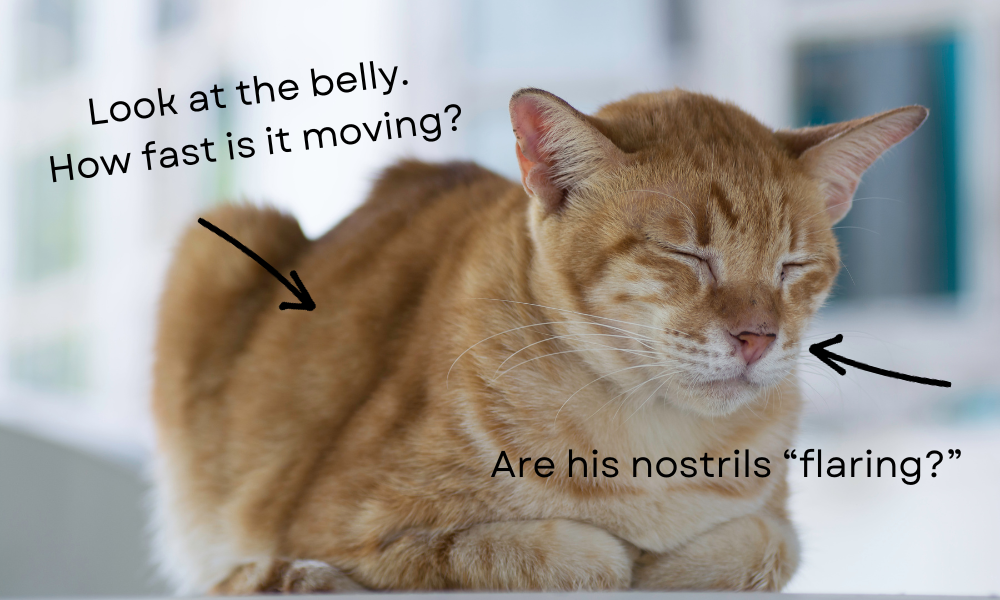
If you wonder why is my cat's breathing labored, start by spotting the signs. Cats hide trouble well, so small clues matter. Labored breathing is not just fast breathing. It is hard, noisy, or looks like work.
Common signs:
- Open-mouth breathing or panting outside of heat stress or play.
- Sides or belly push in and out with effort.
- Neck stretched, elbows out, head low.
- Nose flaring, blue or gray gums, or glassy eyes.
- Breathing rate over 30 breaths per minute at rest.
What it’s not:
- A few fast breaths after a hard zoomie. That should pass fast.
- A quick snuffle from dust, then back to normal.
- Soft purring that looks like chest movement.
Tip: Count breaths when your cat is asleep. One breath is in and out. Over 30, steady for 10 minutes, is a red flag.
Why is my cat's breathing labored can have many causes. Spotting the pattern helps your vet act fast.
Why Is My Cat’s Breathing Labored? The Most Likely Causes
Cats do not pant for fun. If you ask why is my cat's breathing labored, think lungs, heart, airways, blood, or pain. Here are the big groups I see most.
Feline asthma
Asthma is common. The lungs get inflamed and tight. Triggers include dust, smoke, sprays, and even scented litter.
- Signs: Cough, wheeze, squat position, open-mouth effort.
- Good news: With inhalers and triggers cut, many cats do great.
- Watch for: Stress. It can spark flares fast.
Heart disease and fluid build-up
Heart muscle disease (HCM) is common in cats. The heart can fail and fluid can flood the lungs or chest.
- Signs: Fast, shallow breaths, tired, cold paws, blue gums.
- Clues: Maine Coon and Ragdoll cats have higher risk.
- Treatment: Oxygen, diuretics, and heart meds help many.
Pneumonia and respiratory infections
Bacteria, fungi, or viruses can hit the lungs. Kittens and older cats are at risk.
- Signs: Fever, cough, poor appetite, thick sounds in lungs.
- Treatment: Oxygen, antibiotics or antifungals, and care.
Pleural effusion (fluid around the lungs)
Fluid builds in the chest space, not inside the lungs. This makes it hard for lungs to expand.
- Signs: Wide elbows, fast shallow breaths, low energy.
- Treatment: A vet can drain the chest. It helps fast.
- Causes: Heart failure, cancer, FIP, chyle, or infection.
Upper airway blockages
Nasal polyps, laryngeal paralysis, or a stuck object can block flow.
- Signs: Loud raspy noise, gagging, head and neck stretch.
- Action: This needs urgent care. Do not try to fish things out.
Pain, heat, stress, or obesity
Pain can make cats breathe fast and shallow. Heat can cause panting and even heat stroke. Extra weight makes air flow harder.
- Signs: Restless, hiding, panting, tongue out in heat.
- Fix: Cool room, gentle handling, pain care, and weight loss plans.
Anemia, toxins, and metabolic issues
Low red cells mean less oxygen. The body then breathes harder to cope. Some toxins or diabetic ketoacidosis can also cause labored breaths.
- Signs: Pale gums, weak, odd breath smell, or vomiting.
- Fix: Treat the root cause fast with your vet.
If you’re thinking why is my cat's breathing labored, any of these could fit. Your vet will sort it out with targeted tests.

When It’s An Emergency (And What To Do Right Now)
Use this rule: If you can see your cat breathe, and it looks hard, it’s urgent. If you’re still asking why is my cat's breathing labored, it is time to act, not guess.
Red flags:
- Open-mouth breathing at rest.
- Blue, gray, or very pale gums.
- Sides heaving, elbows splayed, head low.
- Collapse, wobble, or near-faint.
Do this now:
- Keep your cat calm. Less handling is best.
- Place the carrier in a quiet, cool room.
- Call your vet or an ER clinic on the way.
- Drive with windows cracked or AC on low.
- Do not give human meds. Do not force food or water.
What not to do:
- Don’t wait for hours to “see if it passes.”
- Don’t use steam in a small bathroom if your cat looks severe.
- Don’t search for a magic hack on social media.
Fast, calm action saves lives.

How Vets Diagnose Labored Breathing
If you ask why is my cat's breathing labored, your vet has a plan. The team will reduce stress first. Then they run tests that fit the likely cause.
Common steps:
- Exam and oxygen. Stabilize first, talk later.
- Resting respiratory rate and effort check.
- Chest X-rays to view lungs and chest space.
- Ultrasound of the heart (echocardiogram) if heart disease is likely.
- Chest tap (thoracocentesis) if there is chest fluid.
- Lab work: CBC, chemistry, thyroid, FeLV/FIV.
- Airway tests: Bronchoscopy or wash if safe.
Vets aim to get answers fast without pushing your cat too hard. Short, gentle care rounds matter a lot.

Treatment And At-Home Care After The Vet Visit
Once you know why is my cat's breathing labored, treatment gets focused. Many cats improve within hours. Some need longer plans. Expect a calm, stepwise approach.
In-clinic treatments:
- Oxygen cage or mask.
- Diuretics for fluid in lungs or chest.
- Steroids and bronchodilators for asthma.
- Antibiotics or antifungals for infections.
- Chest fluid drainage to help breathing fast.
- Sedation for stressful, severe cases.
At-home care:
- Use inhalers with a spacer for asthma. Ask for a demo.
- Switch to low-dust, unscented litter.
- Use an air purifier and keep smoke and sprays away.
- Keep a cool, quiet space for rest.
- Give meds exactly as directed. Set phone alarms.
- Recheck on time. Early tweaks prevent crises.
Tricks I use at home:
- Turn “pill time” into “treat time” with a routine.
- Warm the spacer mask gently with your hands. Cats hate cold plastic.
- Reward after every tiny step. Yes, even sniffing the inhaler counts.
Most cats forgive you faster than you think. Bribery helps.

Prevention And Monitoring: Breathe Easy Every Day
If you wonder why is my cat's breathing labored, you can also ask how to stop it next time. Small habits add up.
Simple wins:
- Track resting breathing rate during sleep, weekly.
- Normal is about 20 to 30 breaths per minute at rest.
- Over 30, steady for 10 minutes, is a vet call.
- Keep weight lean. Less fluff, more life.
- Avoid smoke, incense, and strong cleaners.
- Try low-dust litter and wash bedding often.
- For heart-prone breeds, ask about screening.
Tools that help:
- A phone app for counting breaths.
- A small journal or notes app log.
- Reminders for refills and checkups.
These steps catch change early. That is how you win this game.
What I Learned From Three Breathless Cats
I have sat on many kitchen floors with anxious owners. Three cases stick out and still guide me.
- Milo, the “snorer.” He had asthma, not “cute snorts.” A spacer and trigger cleanup turned him into a silent ninja. Lesson: A cough in a cat is not just a cough.
- Daisy, the “lazy loaf.” She had heart failure. Draining her chest gave instant relief. Meds kept her comfy for years. Lesson: Slow changes matter. Don’t ignore “just tired.”
- Pickles, the “panting potato.” He panted in heat and stress. He was also overweight. A cool room and weight plan made the panting stop. Lesson: Fix the room, not just the cat.
If you wonder why is my cat's breathing labored, think bigger than one symptom. Look at the whole scene: air, stress, weight, and health.

Frequently Asked Questions Of Why Is My Cat’s Breathing Labored
Why is my cat's breathing labored after playing?
Play can speed breathing for a minute or two. If effort, noise, or open-mouth panting lasts, stop play and call your vet.
Why is my cat's breathing labored at night?
Night rest should calm breathing. If breathing is labored at night, think asthma triggers, heart fluid, or infections and seek a check.
Why is my cat's breathing labored but there’s no cough?
Cats with heart disease or chest fluid often do not cough. Labored, silent breathing still needs urgent vet care.
Why is my cat's breathing labored and fast?
Fast and hard breathing points to pain, heat, asthma, or heart or lung disease. Count breaths at rest and call your vet if over 30.
Why is my cat's breathing labored with mouth open?
Open-mouth breathing in a calm cat is an emergency. Go to a vet or ER clinic right away.
Can stress make my cat’s breathing look labored?
Yes, stress can spike breathing. But if effort or noise is clear, treat it as medical until a vet rules out danger.
What tests will my vet use to find the cause?
Most start with an exam, oxygen, and chest X-rays. Blood work and an ultrasound of the heart may follow.
Conclusion
If you’re asking why is my cat's breathing labored, treat it as urgent and solvable. Spot the signs, act fast, and partner with your vet for a clear plan. Many cats breathe easy again with the right care.
Take one step today. Count your cat’s resting breaths, clean up air triggers, and save your vet’s ER number. Want more helpful cat care guides? Subscribe, share your story, or drop a question below. Your calm action can be the breath of fresh air your cat needs.