
Clean, align, and lightly hone the blades, then oil and test for smooth cuts.
You came for a clean answer on how to sharpen hair clipper blades, and you got it. Now let me show you the full playbook. I have tuned, sharpened, and saved many clippers in busy barbershops and at home. This guide breaks down how to sharpen hair clipper blades step by step, what tools to use, the mistakes to dodge, and when to call in a pro. Stick around and your clippers will hum like a new sports car on fresh oil.
What Makes Clipper Blades Dull and When to Sharpen
Hair is soft, but dust, skin, and tiny grit are not. That grime rides into your blades and wears them down. Dull blades pull hair, bite skin, and heat up fast. If your cut feels tuggy, leaves lines, or sounds louder than normal, it is time to sharpen.
Good clipper care keeps the edge longer. Clean the blades after each cut. Oil before every use. Keep the guard clean too. But even with care, steel loses bite. Most home users should sharpen every 3 to 6 months. For pros, plan for every few weeks.
If you want to know how to sharpen hair clipper blades the right way, think system. Clean. Hone. Align. Oil. Test. Each step matters more than brute force.

Tools and Materials You Need
You can sharpen at home with simple tools. Use what you have, but the right gear makes it easy.
- Small Phillips or flat screwdriver
- Blade cleaning brush or old toothbrush
- Isopropyl alcohol or blade wash
- Lint-free cloth or paper towels
- Light machine oil or clipper oil
- Fine and extra-fine sharpening surface:
- 1000–3000 grit whetstone, or
- Lapping film on glass, or
- 1000–2000 grit wet/dry sandpaper on a flat plate
- Optional but handy:
- Blue painter’s tape to mark passes
- Magnetized parts tray
- Compressed air
- Diamond plate for ceramic blades
- Loctite blue for screws if they back out
If you lack stones, sandpaper on glass works fine. Flat is king. If the surface is not flat, you get a wavy edge and a chattery cut.

Step-by-Step: How to Sharpen Hair Clipper Blades at Home
Here is how to sharpen hair clipper blades from start to finish. Unplug the clipper first. Keep fingers clear of the teeth. Take your time and enjoy the zen of shiny steel.
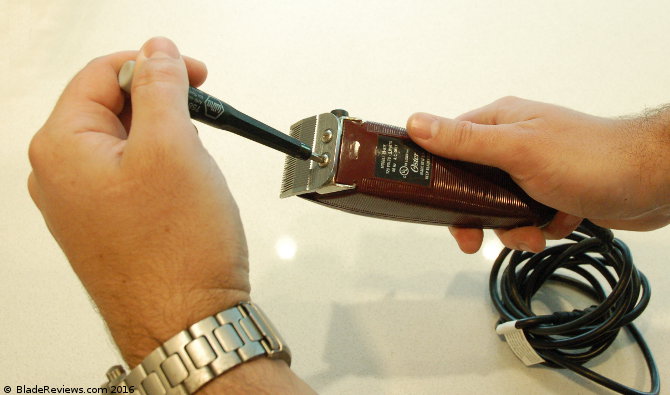
Remove the blades
- Take a photo of the blade stack so you know the order.
- Unscrew the two back screws. Catch the springs and tiny parts in a tray.
Clean the gunk
- Brush out hair, oil, and grit from both the moving and fixed blades.
- Soak in alcohol for a few minutes. Wipe dry. No rust left behind.
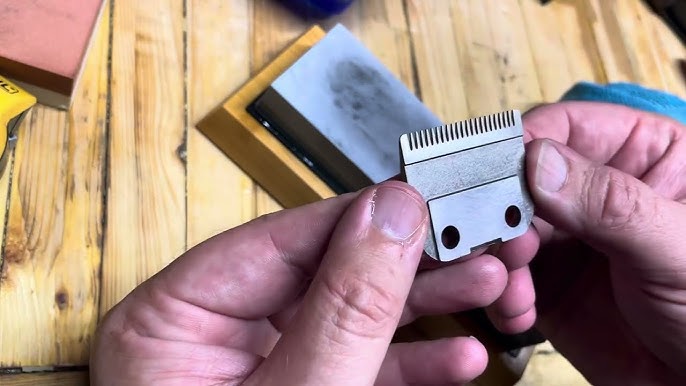
Mark the faces
- Use a marker to color the flat faces of both blades.
- The color helps you see even contact on the stone.
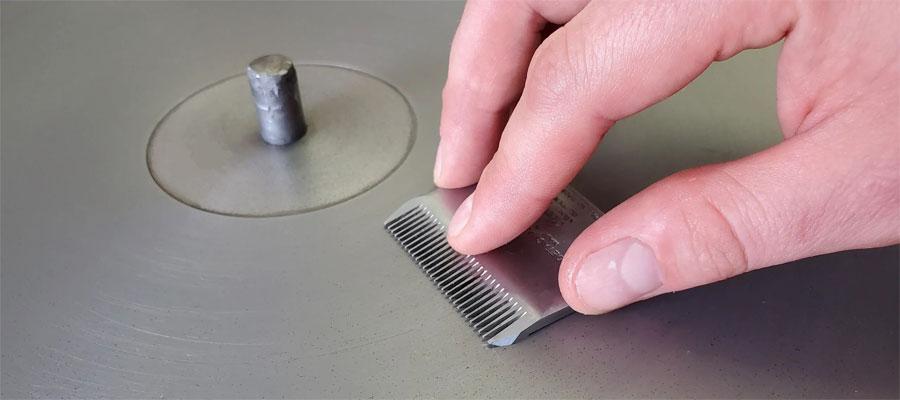
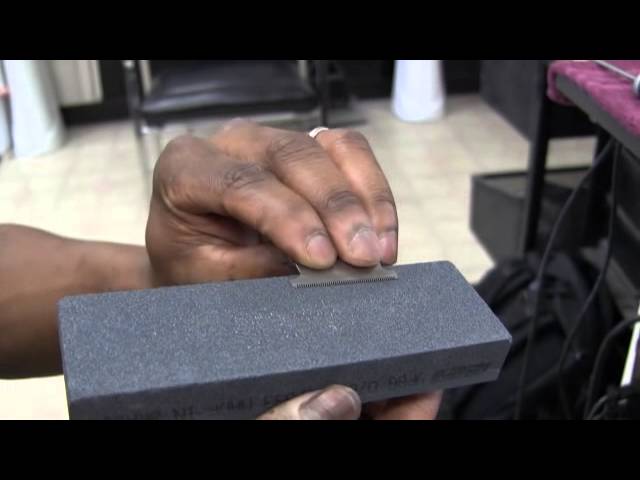
Lap the fixed blade
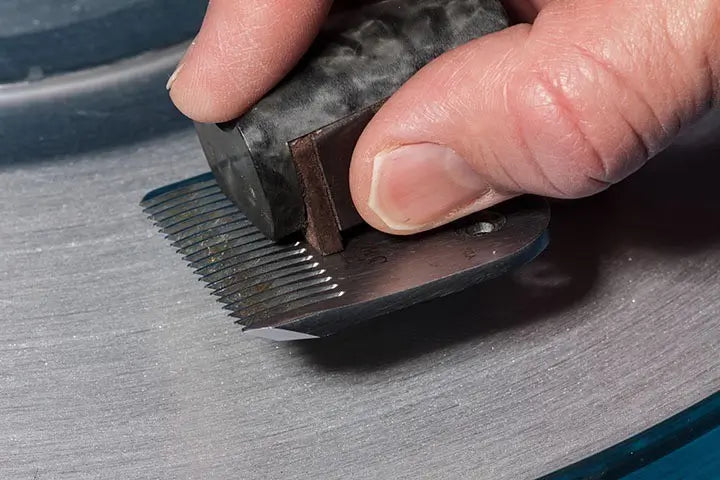
- Place your stone or film on a flat, non-slip surface. Add a bit of water if needed.
- Hold the blade flat with the teeth pointing away. Keep it level.
- Push and pull the blade in straight strokes. Use light, even pressure.
- Do 10 to 15 strokes on 1000–1500 grit. Check the marker wear. The color should fade evenly.
- Repeat 10 light strokes on 3000 grit for a polish. Wipe clean.
Lap the moving blade
- Repeat the same process. Keep the blade flat. Watch your fingers.
- Less is more here. The moving blade is thin. 8 to 12 strokes per grit is often enough.
Deburr and clean
- Wipe both blades. A light pass on a paper towel removes burrs.
- Blow off dust with air. No grit should remain.
Reassemble the stack
- Put the moving blade back on the guide. Set the fixed blade on top.
- Hand-tighten screws. Do not crank them yet.
If you want the short version of how to sharpen hair clipper blades: keep the blades flat on a fine stone, use light strokes, and check your work often. Flat contact is the secret.
Aligning, Oiling, and Testing After Sharpening
Alignment is where many people slip. Bad alignment can nick skin or leave tracks. Good alignment makes the trim clean and safe.
Align the teeth
- The moving blade should sit just behind the fixed blade by a hair. No tips should poke past.
- Check that both ends are even. No tilt. Tighten the screws while holding the set square.
Oil points
- Add one small drop on each end of the teeth and one in the middle.
- Add a tiny drop on the guide rails. Wipe any excess.
Test and tune
- Turn the clipper on. Let it run for 30 seconds.
- If it buzzes or gets hot at once, loosen, realign, and try again.
- Test on a neck brush or a piece of thread. It should slice clean with no pull.
This is still part of how to sharpen hair clipper blades. The edge is only as good as the alignment and oil that support it.

Special Cases: Ceramic, Self-Sharpening, and Rusted or Nicked Blades
Not all blades are the same. A few quick notes save you time and grief.
Ceramic blades
- Ceramic stays sharp longer but needs diamond to hone.
- Use a 1200–3000 grit diamond plate. Very light strokes. Do not drop it. It can chip.
Self-sharpening clippers
- These use a grind in the guide to keep a small edge. They still dull.
- You can still follow how to sharpen hair clipper blades with a light lap. Do not overdo it.
Rust or big nicks
- Remove rust first with a rust eraser or fine sandpaper on a flat plate.
- Deep chips may need a pro grind or a blade replacement. Steel is cheap. Skin is not.
Common Mistakes and How to Avoid Them
Learning how to sharpen hair clipper blades also means learning what not to do. I made these mistakes so you do not have to.
Too much pressure
- Heavy hands round the edge and make it worse. Use a light touch.
Lifting the heel
- If you tilt the blade, you create a belly. Keep it flat the whole time.
Skipping the clean
- Grit on the stone equals scratches on the edge. Clean both often.
Over-sharpening
- Each pass eats steel. Stop once you have a fresh, even land.
Bad alignment
- Teeth past the guard can cut skin. Check both ends and the center every time.
Maintenance Schedule and Storage Tips
Think of this as dental care for clippers. Brush, floss, and checkups.
Before each use
- One drop of oil. Wipe the housing. Check heat after one minute.
After each use
- Brush out hair. A quick dip in alcohol or spray of disinfectant. Dry fast.
Monthly
- Take off the blade. Deep clean. Check screws and cord strain relief.
Storage
- Keep dry and covered. A silica pack in the case helps. Do not toss in a damp bag.
A good routine means you will ask how to sharpen hair clipper blades less often. Your blades, motor, and wallet will all thank you.

Troubleshooting After Sharpening
If your clipper still acts up, track the symptom to the cause.
Pulling hair
- Likely dull or misaligned blades. Re-lap lightly and realign. Oil again.
Loud chatter
- Loose screws or bent spring. Tighten or replace the tension spring.
Hot blades
- Too little oil, too much friction, or motor strain. Oil, clean the drive, and check voltage.
Uneven cut lines
- Blade is not flat or the teeth are not square. Recheck the stone work and alignment.
If you are still stuck, you may need new blades. Sometimes the fastest way to learn how to sharpen hair clipper blades is to compare your work to a fresh set.
Cost, Time, and When to Call a Pro
Home sharpening is cheap and quick. For most sets, plan 20 to 30 minutes once you get the hang of it.
Cost breakdown
- Stones or films: 10 to 40 dollars.
- Oil and cleaner: 5 to 10 dollars.
- Replacement blade set: 15 to 40 dollars if things go south.
Call a pro when
- You see deep chips, bent teeth, or warped faces.
- You use high-end ceramic or custom fades daily and need perfect zero gaps.
- The clipper still pulls after two careful tries.
Even if you hire it out, knowing how to sharpen hair clipper blades helps you talk to the tech and care for the edge between services.
Frequently Asked Questions of how to sharpen hair clipper blades
How often should I sharpen clipper blades?
For home use, every 3 to 6 months is fine. Pros should plan for every few weeks, based on volume and hair type.
Can I sharpen blades with regular sandpaper?
Yes, if it is wet/dry 1000–2000 grit on a flat plate. Keep the blade flat and use light, even strokes.
Do self-sharpening clippers need sharpening?
Yes. The built-in grind only slows wear. You can still follow how to sharpen hair clipper blades with a gentle lap and good alignment.
What oil should I use after sharpening?
Use clipper oil or a light sewing machine oil. Avoid heavy oils, WD-40, or cooking oil, which gum up and trap debris.
How do I know if I aligned the blades safely?
The moving blade should sit a hair behind the fixed blade. No tooth tip should pass the edge, and both ends should be even.
Can I sharpen ceramic blades at home?
Yes, but use a diamond plate and very light pressure. Ceramic chips if you push too hard or drop it.
Why do my blades get hot after sharpening?
Likely due to lack of oil, too much tension, or misalignment. Add a drop of oil, loosen and reset, and test again.
Will sharpening void my warranty?
It can, depending on the brand. Check your manual and keep receipts if you use a service center.
What grit should I use for best results?
Start with 1000–1500 grit to refresh the edge. Finish with 3000 grit for a smooth, cool cut.
Can I use a honing guide?
Yes, but most clipper blades are easy to hold flat by hand. If you use a guide, make sure it keeps the face fully flat.
Conclusion
You now know how to sharpen hair clipper blades like a pro: clean well, keep the blade flat on a fine stone, use light strokes, align with care, and oil before the test. The magic is in the small steps and steady hands. With this routine, your cuts will be smooth, fast, and tug-free.
Set a reminder, gather your tools, and sharpen one set today. Then enjoy the sound of a clipper that glides, not grinds. If you found this helpful, share it with a friend, subscribe for more simple care guides, or drop a question in the comments.