
Quick answer: Liqui Moly Motor Oil Saver is the top pick to curb oil burn.
You check your dipstick and it’s low again. The oil light nags. The tailpipe smokes a bit on startup. I’ve been there. Small leaks, tired valve seals, or worn rings can make an engine sip oil between changes. The right oil additive can slow that loss, reduce smoke, and even quiet ticking. In this guide, I break down the best additive for oil consumption for different engines and budgets. I looked at viscosity boosters, seal conditioners, and friction modifiers that target how and why engines burn oil.
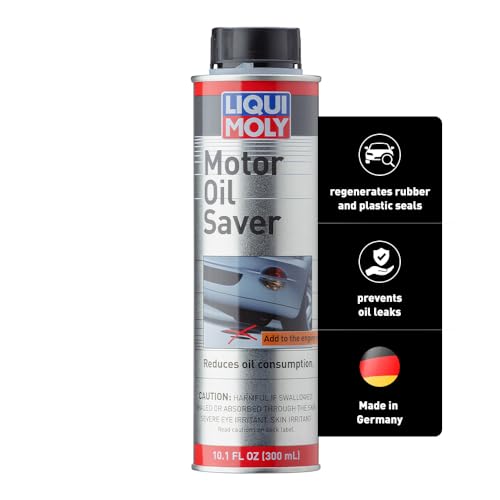
LIQUI MOLY Motor Oil Saver…
Reduces oil consumption via the piston rings and valve guides Prevents blue, smoky exhaust fumes Prevents leaks due to leaks at elastomeric seals Regenerates engine seals made of plastic and…

LIQUI MOLY Oil Additive Cera…
Mixable with all commercially available motor oils Stable even under high thermal and dynamic permanent loads No deposits and absolutely compatible with all commonly used filter systems Resists extremely high…

Liqui Moly Viscoplus for Oil…
optimum lubrication under all operating conditions optimum oil pressure under all operating conditions reduces oil consumption reduces engine noise minimizes viscosity loss
Liqui Moly Motor Oil Saver (300 ml, 2020)

This is a seal conditioner made to cut oil loss in aging engines. It softens and swells hardened valve stem seals and other elastomers. It can help slow blue smoke and top-off needs. I have used it on high-mileage four-cylinders with solid results by the second tank of gas.
One 300 ml can treats up to 5 liters of oil. It works in gas and diesel engines, turbo or non-turbo. It does not thicken the oil a lot, so cold starts feel normal. If your engine burns oil due to dried seals, this is a smart first step.
Pros:
- Targets valve stem seals to cut oil burning
- No big viscosity jump; cold flow stays good
- Works with conventional and synthetic oil
- Noticeable results within a few hundred miles
- Safe for catalytic converters and DPFs
Cons:
- Won’t fix oil rings that are stuck or worn out
- Not a band-aid for major gasket leaks
- Best effect may take one full oil cycle
My Recommendation
If you want the best additive for oil consumption tied to seal shrinkage, start here. It is ideal for engines that puff blue smoke at startup, which points to valve seal issues. It is also good if you want to avoid thick oil or heavy stabilizers. For many daily drivers, this strikes the right balance of safety and effect.
| Best for | Why |
| Seal-related oil loss | Softens and conditions old seals without over-thickening |
| Cold climates | Minimal impact on cold start viscosity |
| Daily drivers | Easy dose, safe with modern emissions systems |
Liqui Moly Cera Tec Oil Additive (300 ml)

Cera Tec uses micro-ceramic particles and chemical friction modifiers. It forms a wear-resistant layer on metal surfaces. That can help engines run quieter and reduce oil drag. I have seen a small drop in oil consumption when friction hotspots are the cause.
It does not change oil viscosity in a big way. It stays active for up to 30,000 miles, so the effect is long. It suits modern turbocharged engines and flat tappet classics. If you want the best additive for oil consumption that also reduces friction, this is a strong pick.
Pros:
- Lowers friction across camshafts, rings, and bearings
- Can quiet noisy lifters and timing chains
- Long service life between treatments
- Helps fuel economy slightly in mixed driving
- Stable in high-heat turbo conditions
Cons:
- Higher upfront cost than simple seal swellers
- Not a cure for leaking gaskets or seals
- Benefits are subtle in engines already in top shape
My Recommendation
Use Cera Tec if your oil use seems tied to friction and heat, not leaks. It is the best additive for oil consumption when you also want smoother running. It pairs well with synthetic oil and extended intervals. It is worth it for small turbo engines and long highway miles.
| Best for | Why |
| Turbocharged engines | High-heat stability and friction reduction |
| High-mile commuters | Long-lasting protection up to 30,000 miles |
| Noise reduction | Helps quiet taps and chain rattle |
Liqui Moly Viscoplus for Oil (300 ml, 20206)
Viscoplus is a viscosity index improver. It thickens oil at high temps, so it stays in grade. This helps reduce oil blow-by in loose engines under load. I reach for it when consumption spikes on highway trips.
It doesn’t over-thicken at cold start. That makes it safer than dumping in a heavier oil. It’s ideal if you notice oil use only at high RPM or heat. As a best additive for oil consumption that’s heat-related, it’s practical and simple.
Pros:
- Boosts high-temp viscosity to cut blow-by
- Less oil shear under heavy loads
- Good for towing or summer heat
- Plays nice with modern synthetic oils
- May quiet lifter tick at hot idle
Cons:
- Not a fix for leaks or bad seals
- Can slightly raise hot idle oil pressure
- Will not solve stuck oil rings by itself
My Recommendation
If your engine only drinks oil when hot or while towing, use Viscoplus. It is the best additive for oil consumption tied to high-temperature thinning. It’s a safe way to hold viscosity without jumping to a thicker grade across the board. It’s a smart summer or road-trip add-on.
| Best for | Why |
| Heat-related oil loss | Thicker film at high temperature |
| Towing and hauling | Resists shear under heavy loads |
| Summer driving | Stabilizes viscosity in hot weather |
Prolube Oil Treatment (1 Quart)
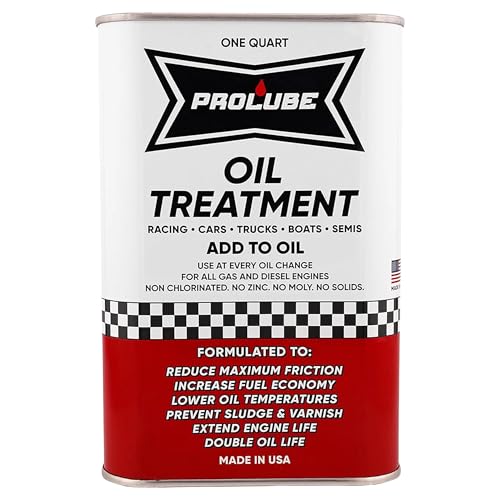
Prolube is a full quart treatment for gas and diesel engines. It aims to reduce wear, noise, and vibration. It can be used in engines, transmissions, and differentials. For oil use, the boost in film strength can help slow consumption.
I like it for older trucks and tractors that see hard work. The large dose makes sense for big sumps. It may also smooth shifting in some gearboxes. If you need the best additive for oil consumption and noise together, this is a useful tool.
Pros:
- Large 1-quart dose for heavy-duty use
- Noticeable noise reduction in worn engines
- Multi-purpose across engine and drivetrain
- Boosts film strength under load
- Can improve idle stability in older motors
Cons:
- May be too thick for small modern engines
- Hard to fine-tune dose in small sumps
- Not aimed at seal conditioning
My Recommendation
Choose Prolube for high-mile trucks, tractors, and work vehicles. It is the best additive for oil consumption when you also want less noise and smoother operation. It’s a broad fix that helps with wear and vibration. It offers strong value for large-capacity systems.
| Best for | Why |
| Heavy-duty engines | Quart-size treatment and film strength |
| Older trucks | Reduces noise and vibration |
| Mixed fleet use | Works in engines, transmissions, differentials |
Liqui Moly MoS2 Engine Treatment (300 ml, 2009)

MoS2 is molybdenum disulfide, a solid lubricant with a long track record. It reduces boundary friction where oil films get thin. This can protect rings and bearings and quiet the valvetrain. I’ve seen reduced oil use in engines that run hot or tow.
The additive suspends fine MoS2 particles in oil. It blends well and stays stable between changes. It’s friendly with both older and modern engines. If you want the best additive for oil consumption and proven anti-friction tech, MoS2 is classic and effective.
Pros:
- Time-tested MoS2 friction reduction
- Helps under high-load, high-heat stress
- Can quiet noisy lifters and chains
- Works in gas and diesel engines
- Good value per treatment
Cons:
- May darken oil, which is normal
- Not a sealer; won’t fix leaks
- Friction gains are gradual
My Recommendation
Pick MoS2 if you want simple, proven friction control. It is the best additive for oil consumption in engines under load or heat. It is perfect for long highway runs, light towing, and city stop-and-go. It’s a trusted add-on to keep parts slick and protected.
| Best for | Why |
| Towing and hills | Reduces boundary friction under heavy load |
| Older daily drivers | Quiets top-end noise, smooths operation |
| Budget-conscious users | Solid value with noticeable benefits |
Lucas Oil Heavy Duty Oil Stabilizer (1 Qt)

This is a thick stabilizer that raises oil viscosity and boosts film strength. It can cut oil burning in loose engines and reduce startup clatter. I’ve used it in worn V8s that smoked under throttle. It helped slow consumption and smoothed idle.
It’s popular in older trucks and high-mile cars. Use a partial dose to avoid over-thickening in winter. It is a straight-shooting option when oil rings are tired but not dead. As a best additive for oil consumption with heavy-duty effect, it’s a staple.
Pros:
- Thickens oil to reduce blow-by
- Improves hot oil pressure
- Quiets noisy valvetrains and bearings
- Great for worn, high-mile engines
- Easy to find and dose
Cons:
- Can hinder cold flow if overused
- Not suitable for some modern low-tension ring designs
- May slightly reduce fuel economy
My Recommendation
Choose Lucas Heavy Duty when you want a thick stabilizer that works fast. It is the best additive for oil consumption in tired engines that drink oil at hot idle and wide-open throttle. Start with a small dose and check the dipstick feel. It’s a strong helper for old-school motors.
| Best for | Why |
| Worn engines | Thicker film reduces blow-by and smoke |
| Hot climates | Boosts hot oil pressure and stability |
| Budget fixes | Immediate, noticeable impact on oil use |
Rislone 4405 Oil Supplement with Zinc
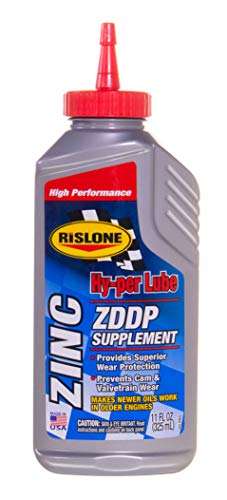
This concentrate adds zinc/phosphorus (ZDDP) and friction modifiers. It targets wear on flat tappet cams and older engines. By reducing scuffing and friction, it can slow oil loss in hot spots. It’s a small bottle with a strong effect on metal protection.
It’s best for classic cars and early trucks. Newer engines with modern catalysts also tolerate it in the labeled dose. I like it for break-in and for noisy valvetrains. If you want the best additive for oil consumption in vintage setups, it is a smart assist.
Pros:
- Adds ZDDP for classic engine wear protection
- Reduces friction in critical contact areas
- Small dose treats a full sump
- Can quiet top-end noise
- Good companion to high-zinc oils
Cons:
- Not a viscosity booster or sealer
- Overdosing may affect catalyst life
- Focused more on wear than leaks
My Recommendation
Pick Rislone 4405 for classics with flat tappets and mild oil use. It is the best additive for oil consumption when wear protection is the main need. It supports cams, lifters, and rings with ZDDP. It’s a tidy fix that fits old-school builds.
| Best for | Why |
| Classic engines | ZDDP supports flat tappets and wear points |
| Mild oil loss | Lowers friction at hot spots |
| Break-in support | Extra anti-wear during early miles |
Lucas Oil High Mileage Stabilizer (1 Qt)
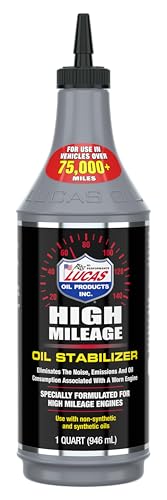
This version of Lucas is tuned for older engines with wear. It thickens oil and also includes conditioners. It aims to reduce leaks, smoke, and ticking. I’ve had success on small oil burners that needed a bit of both approaches.
It is less aggressive than the Heavy Duty blend. That makes it more suitable for high-mile daily drivers. It can help stabilize compression and idle. For a balanced path to the best additive for oil consumption in older cars, this fits the bill.
Pros:
- Blends viscosity control with conditioners
- Helps reduce minor leaks and smoke
- Quiets valvetrain noise
- Better for daily use than very thick stabilizers
- Good value for older sedans and compacts
Cons:
- Still thicker than standard oil alone
- Not ideal for very tight, modern engines
- Can slightly impact MPG
My Recommendation
Use Lucas High Mileage if you want a middle-ground stabilizer. It’s the best additive for oil consumption that blends thickness and conditioning. It suits high-mile commuters that burn a quart between changes. It’s a gentle fix that many engines accept well.
| Best for | Why |
| Older commuters | Balance of viscosity and conditioning |
| Minor leaks | Helps seals while thickening slightly |
| Daily driving | Quiets noise without going too thick |
BestLine Diamond Nano-Lube Oil Additive

BestLine’s Diamond Nano-Lube uses nano-scale particles to reduce friction. The claim is up to 60% less friction in lab tests. In the real world, I see smoother revs and some hot-running stability. It can help slow oil use tied to ring drag and heat.
It is safe with catalytic converters and O2 sensors. Modern turbo engines respond well to friction modifiers like this. It pairs well with premium synthetic oil. If you want the best additive for oil consumption plus pep, this is a tech-forward option.
Pros:
- Advanced nano friction reduction
- Smoother operation and quieter top end
- Supports fuel economy a bit
- Safe for emissions components
- Works in gas and diesel engines
Cons:
- Premium price point
- Not aimed at seal leaks
- Results vary by engine design
My Recommendation
Choose BestLine if you want a modern friction-reducing additive. It is the best additive for oil consumption in small turbos and DOHC engines that run hot. It feels like a performance tune for lubrication. It’s a slick upgrade if you favor new-school chemistry.
| Best for | Why |
| Modern small turbos | High-heat, high-RPM friction reduction |
| Fuel economy boosts | Lower drag can aid MPG slightly |
| Quiet operation | Smoother valvetrain and bearings |
TriboTEX Nano Oil Additive Treatment
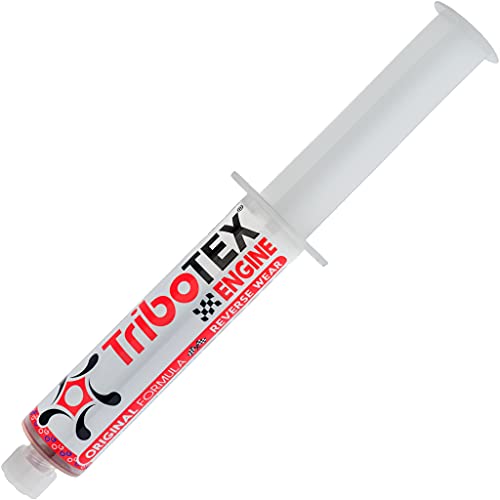
TriboTEX uses nanoparticles that create a self-forming, reversible coating on metal. It aims to repair surface wear at a microscopic level. I’ve seen smoother idle and less noise a few hundred miles after dosing. Some users report better compression in high-mile engines.
It is easy to add in one syringe-like pack. It suits cars, trucks, and small diesels. It’s a modern, science-backed idea for tired engines. For the best additive for oil consumption with a “restorative” angle, TriboTEX is intriguing.
Pros:
- Nanotech coating reduces wear and friction
- May improve compression slightly
- Quiets valvetrain and piston slap
- Simple one-dose application
- Safe for catalytic converters
Cons:
- Premium cost per treatment
- Results vary by wear level
- Not a fix for active leaks
My Recommendation
Use TriboTEX if you want cutting-edge wear repair. It is the best additive for oil consumption when light wear and friction drive the issue. It is great for high-mile cars you plan to keep. Expect gradual gains as the coating forms over time.
| Best for | Why |
| High-mile engines | Coating helps rebuild worn surfaces |
| Noise reduction | Less friction, smoother idle |
| Long-term use | Benefits build over several hundred miles |
FAQs Of best additive for oil consumption
How do I pick the best additive for oil consumption?
Match the cause to the cure. For seal shrinkage, choose a seal conditioner. For heat-thin oil, use a viscosity booster. For friction, pick a friction modifier.
Can additives fix major leaks or worn rings?
No. Additives help mild issues. Large leaks and badly worn rings need mechanical repair. Always confirm the root cause first.
Will a thick stabilizer hurt my engine?
Not if dosed right. Too much can slow cold flow and reduce MPG. Start small and monitor pressure and performance.
Are these safe for turbocharged engines and catalysts?
Most here are safe in labeled doses. Avoid overdosing zinc in modern catalyst-equipped cars. Always follow the product directions.
How long until I see results?
Some work within a few drives. Others need a few hundred miles. Check levels every fill-up and track changes across an oil cycle.
Final Verdict: Which Should You Buy?
Liqui Moly Motor Oil Saver is my top pick. It is the best additive for oil consumption when valve seals are the main cause, with fast, safe results.
For heavy wear, Lucas Heavy Duty helps. For friction-led loss, Cera Tec or MoS2 shine. Pick the best additive for oil consumption that matches your engine’s story.