
When you’re tackling a home improvement project or planning your next DIY construction venture, you might find yourself wondering: “Mortar vs Concrete—what’s the difference, and which should I choose?” Understanding the right material to use can save you time, money, and frustration.
Whether you’re building a sturdy foundation or simply fixing a few bricks, choosing between mortar and concrete is crucial. The decision impacts the durability and strength of your project. But don’t worry! You’re not alone in this. By the end of this article, you’ll have a clear understanding of both materials, empowering you to make the best choice for your needs.
So, let’s dive in and decode the mystery of mortar and concrete, ensuring your project is a success from the ground up.
Credit: lordsbm.co.uk
Differences Between Mortar And Concrete
When building or renovating, you might find yourself wondering about the differences between mortar and concrete. Both play crucial roles in construction, yet they serve distinct purposes and possess unique characteristics. Understanding these differences can help you make informed decisions in your projects, ensuring durability and strength in your structures.
Composition And Ingredients
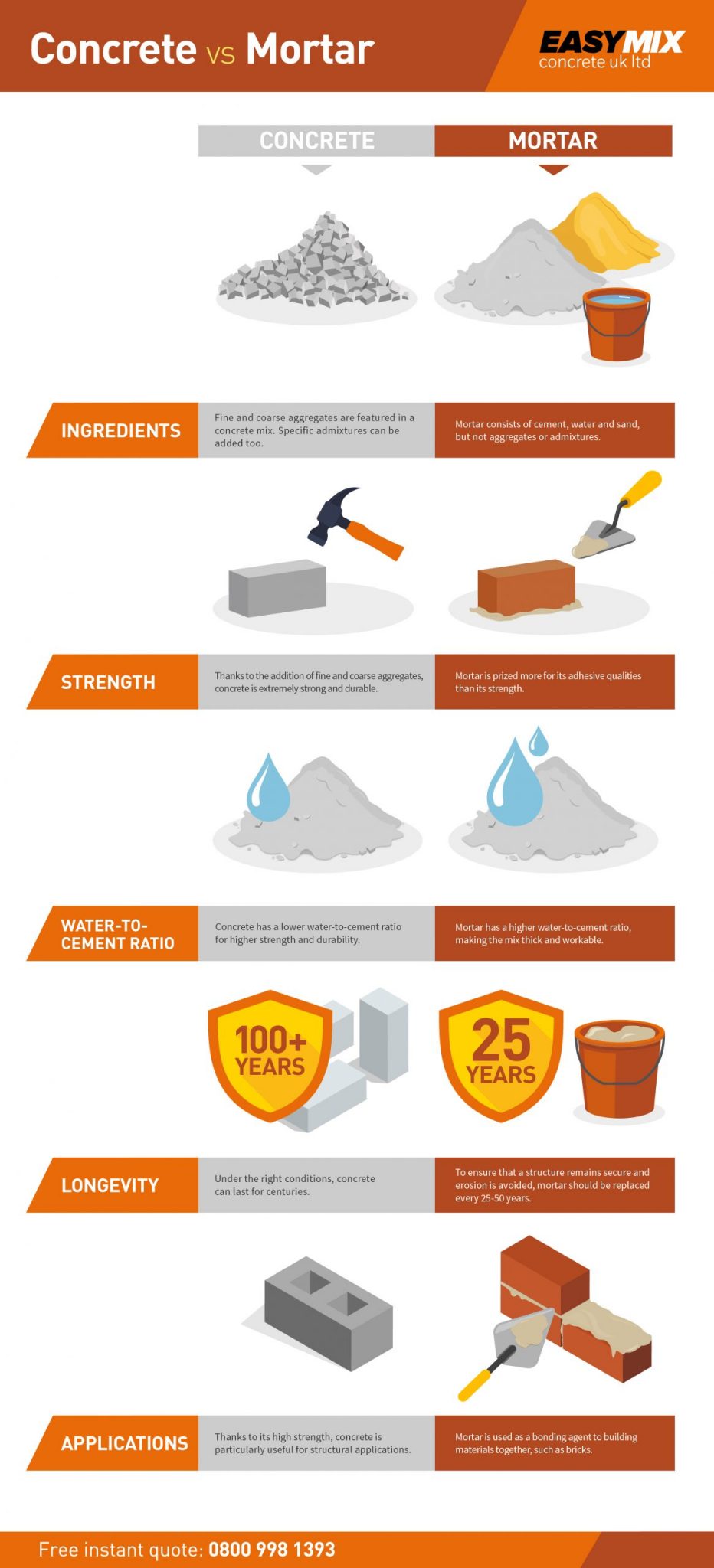
Mortar and concrete both contain cement as a primary ingredient, but their composition differs. Mortar is a mixture of cement, sand, and water. This combination creates a thick paste that is excellent for binding bricks and stones.
Concrete, on the other hand, includes cement, sand, water, and aggregates like gravel or crushed stone. The aggregates give concrete its robust structure, making it suitable for creating solid foundations and large structures.
Think about the last time you worked with these materials. Did you notice how mortar was smoother, while concrete had a gritty texture? That’s the aggregates at work in concrete!
Strength And Durability
Concrete is known for its strength and durability. It’s designed to support heavy loads and withstand harsh conditions. This makes it ideal for constructing foundations, beams, and slabs.
Mortar, while not as strong as concrete, excels at holding masonry units together. It’s designed for bonding rather than bearing loads. This means you shouldn’t rely on mortar for structural support.
Have you ever leaned against a brick wall and felt its sturdiness? That’s concrete in action, reinforced by the mortar’s binding capabilities.
Applications In Construction
Mortar is typically used in masonry work. It’s the glue that holds bricks, stones, and tiles in place. Its ability to adhere and fill gaps makes it essential in projects where precision and aesthetics are key.
Concrete’s applications are broader. From sidewalks and bridges to skyscrapers, concrete’s versatility allows it to be molded into various forms and structures. It’s also used in decorative applications, like stamped concrete patios.
Have you ever wondered if you could use mortar instead of concrete for a project? Consider the structure’s purpose and load-bearing needs before making your choice.
Understanding these differences can guide you in selecting the right material for your next project. Which do you think will suit your needs better, mortar or concrete?
Mortar: Characteristics And Uses
When you’re building or repairing something, choosing the right material is crucial. Mortar is one of those materials that might seem simple but holds significant importance. Whether you’re fixing a brick wall or laying tiles, understanding the characteristics and uses of mortar is essential. Let’s dive into its types, its role in masonry, and its advantages and limitations.
Types Of Mortar
Did you know mortar comes in different types, each suited for specific tasks? There’s Type N for general work, Type S for stronger walls, and Type M for heavy-duty jobs. Knowing which type to use can make or break your project. Choose the wrong one, and you might end up with a crumbling wall. It’s like choosing the right tool for a job – the right type of mortar ensures stability and longevity.
Role In Masonry
Mortar is the glue that holds masonry together. Imagine building a puzzle; without the right adhesive, it falls apart. Mortar fills gaps between bricks or stones, creating a solid structure. It acts as a cushion, absorbing stress and preventing cracks. Think about your walls enduring storms and temperature changes; mortar ensures they stand strong. Isn’t it amazing how such a simple mix can play such a vital role?
Advantages And Limitations
Mortar has its perks. It’s easy to work with and bonds well with bricks and stones. It allows for minor adjustments during construction, giving you flexibility. But it’s not without limitations. Mortar isn’t as strong as concrete and may not withstand heavy loads. If you’re building a foundation, mortar isn’t your best bet. Consider where and how you’ll use it to make the most of its strengths.
Have you ever tried to repair a wall with the wrong material? It’s frustrating, isn’t it? Mortar, when used correctly, can save you from that hassle. Choose wisely, and you’ll enjoy a sturdy, long-lasting structure.
Concrete: Characteristics And Uses
Concrete is a fascinating material that plays a crucial role in modern construction. It boasts a unique blend of strength, versatility, and durability, making it indispensable in various applications. Whether you’re building a skyscraper or laying a simple sidewalk, understanding the characteristics and uses of concrete can enhance your project and ensure its success.
Types Of Concrete
Concrete comes in several types, each tailored for specific purposes. Ordinary concreteis the most common, used for general construction tasks. It consists of cement, water, and aggregates like sand and gravel.
Then there’s reinforced concrete, which incorporates steel bars or mesh to increase strength. This type is ideal for structural elements like beams and columns.
Precast concreteis manufactured off-site and transported to the construction location. It’s perfect for projects that require uniformity and precision.
Have you ever noticed the distinct appearance of decorative concrete? It’s designed to be aesthetically pleasing, often colored or stamped to mimic natural stone.
Role In Structural Elements
Concrete is the backbone of many structural elements. Its compressive strength makes it ideal for foundations and load-bearing walls.
Think about the skyscrapers you’ve seen. Their towering heights rely heavily on concrete’s ability to support immense weight.
Concrete’s versatility allows it to be molded into various shapes, providing architects the freedom to design innovative structures. Does your home have concrete flooring or countertops? These elements not only add stability but can be a stylish choice.
Benefits And Challenges
Concrete offers numerous benefits. Its durability means it can withstand harsh weather conditions, ensuring long-lasting projects.
Do you appreciate concrete’s fire resistance? This characteristic enhances safety in residential and commercial buildings.
However, concrete has challenges. It can crack over time if not properly maintained. Are you aware of the environmental impact of its production? It’s essential to consider sustainable practices when using concrete.
Balancing these benefits and challenges is key. How do you plan to use concrete in your next project? Embracing its strengths while addressing its weaknesses can lead to impressive results.
Credit: www.sakrete.com
Mixing Techniques
Mixing mortar and concrete requires specific techniques for the best results. Both materials serve different purposes and require careful preparation. Understanding the mixing techniques ensures strength and durability. This section explores the tools, proportions, and safety measures needed.
Tools And Equipment
Proper tools make mixing mortar and concrete easier. For small jobs, use a wheelbarrow and a shovel. For larger tasks, consider a cement mixer. A bucket and a mixing hoe are also helpful. Always clean your tools after use. This prevents material buildup and ensures longevity.
Proportions And Ratios
Using the correct proportions is crucial. Mortar typically requires one part cement, one part lime, and six parts sand. Concrete needs one part cement, two parts sand, and three parts gravel. Add water gradually to achieve the desired consistency. Too much water weakens the mixture. Always follow the recommended ratios for strength.
Safety Measures
Safety is important when mixing mortar and concrete. Wear protective gear like gloves and goggles. Avoid inhaling dust by using a mask. Mix in a well-ventilated area. Keep children and pets away from the mixing zone. Clean up spills immediately to prevent accidents. Always prioritize safety during the mixing process.
Choosing The Right Material
Deciding between mortar and concrete can be challenging. Each material has unique properties. Understanding their differences helps ensure project success. Factors like strength, durability, and application play crucial roles. Selecting the right material impacts project longevity and performance.
Project Requirements
Evaluate the specific needs of your project. Mortar is ideal for binding bricks or stones. It offers flexibility and adhesion. Concrete provides strength and durability. It’s perfect for structural applications like foundations and slabs. Always match the material to the task.
Environmental Considerations
Consider environmental impacts when choosing materials. Mortar often suits smaller, contained projects. It may have less environmental footprint. Concrete is durable but requires more resources. Assess the local climate and conditions. This ensures material longevity and performance.
Cost Implications
Budget constraints often influence material choice. Mortar is usually less expensive. It suits projects with limited budgets. Concrete, while more costly, offers lasting value. Weigh the initial cost against long-term benefits. Consider both material and labor costs.
Credit: www.easymixconcrete.com
Case Studies And Real-life Examples
Explore how real-life projects highlight the differences between mortar and concrete. Case studies reveal their unique strengths in construction. Understanding these examples helps in choosing the right material for specific building needs.
When choosing between mortar and concrete, real-life case studies can offer valuable insights. These examples provide a glimpse into how these materials perform in various scenarios, helping you make informed decisions. Here, we delve into successful projects, lessons learned, and innovations in material use.Successful Projects
In a bustling city, a construction team faced a challenging task: building a pedestrian bridge over a narrow river. They opted for concrete due to its strength and durability. The result? A robust structure that has withstood the test of time, traffic, and weather. Another notable project involved restoring an ancient stone wall. The team used mortar to match the original material and maintain historical accuracy. This approach not only preserved the wall’s appearance but also its cultural significance. Have you considered how the choice of material could impact your project’s longevity?Lessons Learned
One key takeaway from these projects is the importance of selecting the right material for the job. In the bridge project, concrete proved ideal due to its load-bearing capacity. However, using concrete in the stone wall restoration would have been inappropriate, highlighting the need for context-specific choices. Unexpected challenges can arise, such as weather conditions affecting setting times. In both projects, teams learned to anticipate and adapt to these factors. This adaptability is crucial in ensuring project success. What unexpected challenges might you face in your next project?Innovations In Material Use
Recent innovations have expanded the possibilities for mortar and concrete. Self-healing concrete, for instance, is gaining popularity for its ability to repair cracks automatically. This innovation was applied in a high-rise building, significantly reducing maintenance costs. On the mortar front, eco-friendly options incorporating recycled materials are emerging. A community project used such mortar, reducing environmental impact while still achieving structural integrity. Could these innovations transform the way you approach construction projects? Understanding these case studies and real-life examples can guide your choices in future construction endeavors. Whether you’re building a bridge, restoring a historical site, or innovating with new materials, these insights can lead to more successful outcomes.Frequently Asked Questions
What Is The Main Difference Between Mortar And Concrete?
Mortar is used for binding bricks. Concrete is stronger, used for structural purposes.
Can Mortar Be Used Instead Of Concrete?
No, mortar lacks the strength of concrete. It’s not suitable for structural work.
Which Is Stronger, Mortar Or Concrete?
Concrete is much stronger than mortar. It is used for building foundations.
Why Is Mortar Used In Construction?
Mortar binds bricks and stones together. It creates a firm, stable structure.
How Do You Make Mortar And Concrete?
Mortar uses cement, sand, and water. Concrete has cement, sand, gravel, and water.
Conclusion
Choosing between mortar and concrete depends on your project needs. Mortar works best for binding bricks or stones. Concrete is stronger and suitable for building foundations. Both materials have unique properties. Mortar offers flexibility and ease of use. Concrete provides durability and strength.
Consider your budget, project size, and required strength. Think about the specific application. Each material serves a distinct purpose. Careful selection ensures success in construction. Understanding these differences helps make informed choices. Make sure to choose wisely for your next project.