
Displaying tea cups is both an art and a delightful personal project. These small, beautiful pieces carry stories, memories, and sometimes even family history. Whether you collect antique porcelain, modern designs, or cups with sentimental value, showing them off can bring daily joy and spark conversations.
But how do you turn a shelf of cups into an eye-catching display? What options work for small apartments, large homes, or even cafes? This guide will help you understand the best ways to display tea cups, protect them, and make them part of your living space or special events.
You will find practical tips for beginners and creative solutions even experienced collectors might not know. From wall-mounted racks to shadow boxes, every method includes details, real-world examples, and advice on what to avoid. You’ll learn how to blend style, safety, and function, so your tea cups look stunning and stay safe.
Understanding Your Tea Cup Collection
Every tea cup collection is unique. Some people have just a few special cups, while others own dozens or even hundreds. Before you decide on a display method, take time to understand your collection.
Ask yourself:
- How many tea cups do you have?
- Are they all the same size and style?
- Are some more valuable or fragile than others?
- Do you want to display only cups, or also saucers and teapots?
Knowing the size and nature of your collection helps you choose the right display. For example, rare bone china cups may need more protection than sturdy everyday ceramics. Matching saucers or sets will need more space than single cups.
Non-obvious insight: Even the same cup can look very different depending on the background color, lighting, and display height. Try placing a few cups in different spots before committing to a large display.
Choosing The Right Location
Where you display your tea cups matters as much as how you display them. The right spot will highlight your collection and keep it safe.
- Natural light makes colors pop but can fade old designs. Avoid strong sunlight for antiques.
- High-traffic areas (like hallways) are risky for fragile cups.
- Kitchen and dining rooms are popular, but grease and steam can damage fine china.
- Living rooms and display cabinets keep cups visible and safe.
If you have rare or valuable tea cups, consider areas with stable temperature and humidity. Basements and attics can be risky for ceramics due to moisture and temperature swings.
Practical tip: Place your most precious cups higher, out of reach of pets and children. Everyday cups can be kept lower for easy access.
Classic Display Methods
1. Open Shelves
Open shelves are the most popular way to display tea cups. They allow easy viewing and quick changes to your arrangement.
Benefits:
- Easy to install and adjust
- Fits almost any wall space
- Allows for creative arrangements
Tips for open shelves:
- Use floating shelves for a modern look, or wooden shelves for a classic touch.
- Space shelves at least 8 inches apart for most tea cups.
- Add a lip at the shelf edge to prevent cups from sliding.
- Display cups with saucers, stacking them carefully or using small stands.
Example Arrangement
Place your cups in small groups of 3-5, with similar colors or themes together. Vary cup angles—some facing forward, others showing the handle or pattern. Add a small plant or framed photo to break up the row and add interest.
2. Glass-front Cabinets
Glass-front cabinets are perfect for prized or fragile tea cups. They protect from dust and accidents while keeping everything visible.
Benefits:
- Keeps dust and grease off cups
- Adds elegance to any room
- Locks can protect valuable items
Tips:
- Use LED strip lighting inside the cabinet to highlight colors and patterns.
- Place heavier cups on lower shelves.
- Add a felt or soft liner to prevent scratches.
- For a vintage look, use a repurposed china hutch or curio cabinet.
Non-obvious insight: Small silica gel packs inside the cabinet absorb moisture and help prevent mold, especially in humid climates.
3. Wall-mounted Racks
Wall racks can turn your tea cups into wall art. These racks come in many shapes, from simple pegs to custom ironwork.
Benefits:
- Uses vertical space
- Makes each cup a focal point
- Easy to switch out cups for seasons or events
Tips:
- Space pegs or hooks at least 4 inches apart to avoid crowding.
- Ensure the rack is anchored to wall studs for safety.
- Choose a rack with a backplate to protect the wall from cup scratches.
Wall-mounted racks work well in small kitchens, breakfast nooks, or above a sideboard.
4. Shadow Boxes
Shadow boxes are deep frames used to display single cups or small groups. These are ideal for very special cups with stories attached.
Benefits:
- Protects from dust and breakage
- Allows for creative backgrounds (fabric, wallpaper, photos)
- Can be hung on walls or placed on shelves
Tips:
- Use removable adhesive or small stands to keep cups in place.
- Add a label or card with the cup’s history.
- Choose acid-free materials to protect old porcelain.
Shadow boxes are great for gifts or displaying family heirlooms.
5. Tiered Trays
Tiered trays are popular in tea rooms and for party displays. These stands hold cups on multiple levels, creating a dramatic centerpiece.
Benefits:
- Makes a strong visual impact
- Easy to move for events or cleaning
- Good for small collections
Tips:
- Place heavier cups on the bottom for stability.
- Use doilies or felt pads to stop cups from sliding.
- Balance colors and shapes for a pleasing look.
Tiered trays are perfect for a rotating display or afternoon tea parties.
Creative And Modern Display Ideas
If you want something unique, there are many creative ways to show off your tea cups.
6. Hanging Displays
Hanging your tea cups from hooks under shelves or cabinets saves space and creates a playful look.
Benefits:
- Frees up shelf space
- Cups are easy to grab for daily use
- Adds movement and charm
Tips:
- Use sturdy cup hooks spaced at least 3 inches apart.
- Only hang cups with strong handles—fine porcelain handles can crack under weight.
- Mix cups and mugs for an eclectic style.
7. Upcycled Furniture
Old furniture can be repurposed for tea cup displays. Try using a small ladder, spice rack, or even a wine rack.
Ideas:
- Stand a wooden ladder against the wall, with cups on each step.
- Use a wine rack to hold cups by their handles.
- Convert an old drawer into a wall shelf.
This approach adds personality and can save money.
8. Tea Cup Trees
A tea cup tree is a vertical stand with arms or pegs for hanging cups. You can find them in metal, wood, or even DIY versions.
Benefits:
- Compact, fits on tables or counters
- Easy to move
- Shows off multiple cups at once
Tips:
- Choose a sturdy, wide-base model to prevent tipping.
- Don’t overload; 6-8 cups is ideal.
- Perfect for everyday cups you use often.
9. Window Sill Displays
If you have a wide window sill, line up your tea cups to catch the light. The sun will make colors and patterns shine.
Benefits:
- Makes use of natural light
- Easy to change arrangement
- Doubles as decor and storage
Tips:
- Avoid direct sunlight for old or valuable cups.
- Use a soft liner under cups to prevent sliding.
- Rotate cups every few weeks to prevent fading.
10. Miniature Shelves And Cubbies
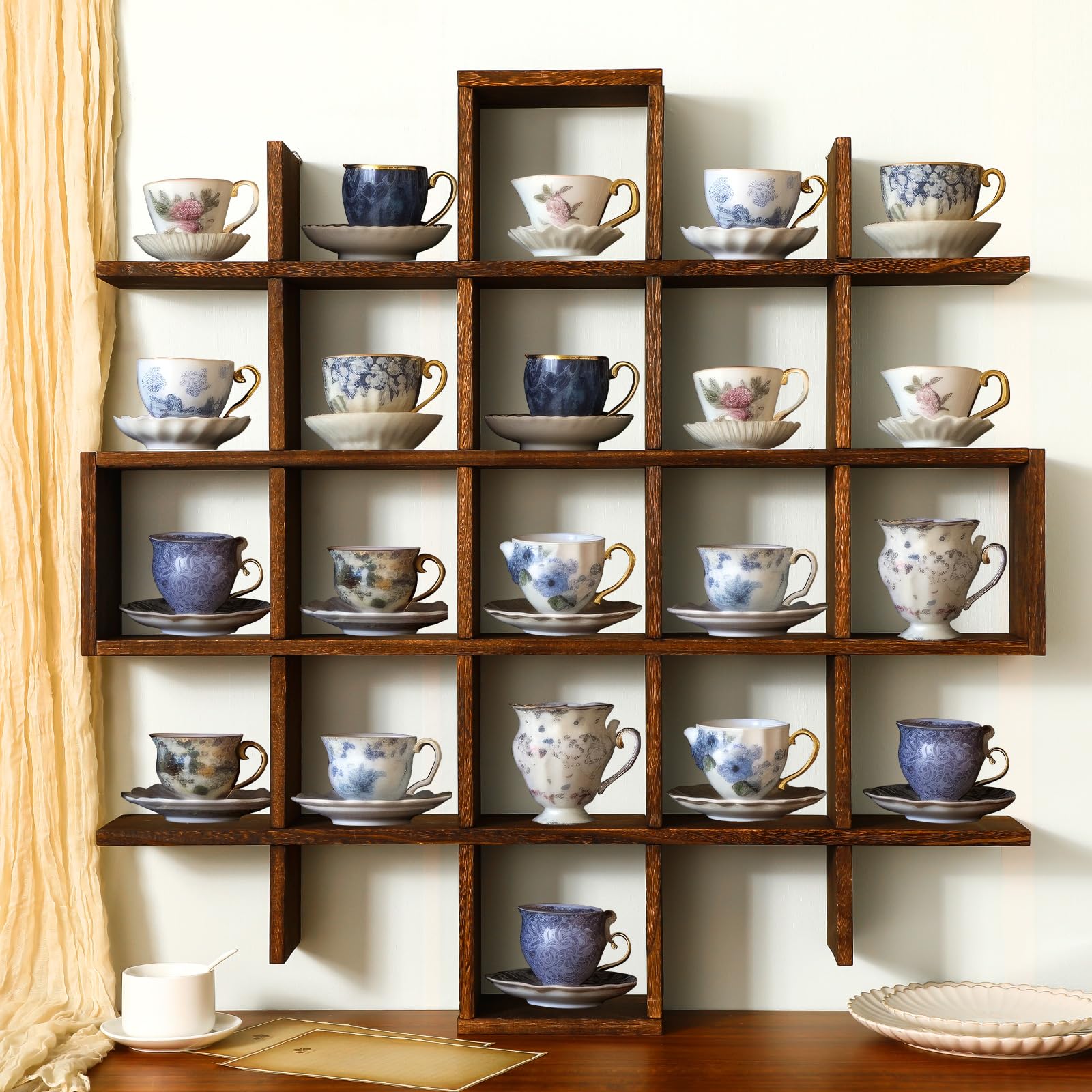
Small cubby shelves, like those used for toys or crafts, are perfect for displaying tea cups. Each cup gets its own “home. ”
Benefits:
- Keeps cups separate and safe
- Makes it easy to add labels or tags
- Great for large, varied collections
Tips:
- Measure cubby size before buying—most tea cups need at least 4×4 inches per space.
- Arrange by color, pattern, or era for visual interest.
Displaying Tea Cups With Saucers
Many collectors keep saucers with their cups. This adds beauty but also needs more planning.
Stacking
You can stack a cup on its saucer, but use a non-slip pad or small dot of museum putty to keep the cup stable.
Side-by-side
Place the saucer behind or beside the cup. For a formal look, use small plate stands to hold saucers upright.
Hanging Together
Some racks and hooks let you hang the cup by the handle and the saucer by a slot or clip. Make sure the rack is strong enough for both.
Display Table: Saucer Display Methods
Here’s a simple comparison of ways to display saucers with cups:
| Method | Space Needed | Protection | Best For |
|---|---|---|---|
| Stacked | Low | Medium | Small shelves, casual displays |
| Side-by-Side | Medium | High | Formal arrangements, cabinets |
| Hanging | Low | Low | Modern, artistic displays |
Protecting Your Tea Cups
Display is not just about looks—protection is key, especially for old or delicate cups.
Dust And Grease
Dust can scratch fine glazes. Use glass cabinets or cover open shelves with clear acrylic sheets if your area is dusty. In kitchens, keep displays away from the stove to avoid grease buildup.
Sunlight
Sunlight can fade colors, especially on old hand-painted porcelain. Place displays away from windows or use UV-blocking window film.
Temperature And Humidity
Rapid changes can crack ceramics. Avoid spots near heaters, air conditioners, or windows that get hot and cold.
Handling
Handle cups with clean, dry hands. Avoid wearing rings that can chip the glaze. When cleaning, use a soft cloth and mild soap.
Expert tip: Never stack cups too high or put heavy items on top. Even strong cups can develop hairline cracks over time.

Credit: designthusiasm.com
Organizing Large Collections
If you have dozens or even hundreds of tea cups, organization is vital.
Cataloging
Keep a simple catalog with photos, purchase dates, and any history. This helps with insurance and can make sharing your collection more fun.
Rotating Displays
Don’t try to show everything at once. Rotate cups by season, theme, or color. Store extras in padded boxes with labels for easy access.
Grouping
Group cups by maker, era, or color for a visually pleasing display. For example, keep all Royal Albert cups together, or create a “spring flowers” section.
Displaying Tea Cups For Special Events
Tea cups can be the star of your next party or gathering.
Afternoon Tea
Arrange cups and saucers on a linen-covered table. Use tiered trays for cakes and sandwiches, and add small flower vases. Mix and match cups for a casual feel, or use matching sets for formal events.
Weddings And Showers
Use shadow boxes as table centerpieces, or hang cups from branches as whimsical decor. Let guests use the displayed cups for tea, then send each home as a keepsake.
Seasonal Displays
Change your cups with the seasons—floral patterns for spring, gold-rimmed cups for holidays. Add small decorations like pinecones or pastel eggs.
Data Table: Event Display Types
Compare popular event display options:
| Event | Display Style | Guest Interaction | Setup Time |
|---|---|---|---|
| Afternoon Tea | Table with mixed cups | High | Short |
| Wedding | Shadow boxes/centerpieces | Low | Long |
| Seasonal Party | Hanging/creative displays | Medium | Medium |
Credit: www.amazon.com
Lighting Your Tea Cup Display
Lighting is often overlooked but makes a huge difference.
- LED strip lights are safe, low-heat, and easy to add to shelves or cabinets.
- Spotlights can highlight special cups or groups.
- Warm white bulbs make gold and pastel colors glow.
Non-obvious insight: Place lights behind cups for glowing effects or under glass shelves for an even spread. Avoid harsh, direct lighting which can create glare.
Mixing Tea Cups With Other Decor
Tea cups don’t have to stand alone. Mixing them with other items adds interest and tells a story.
- Add books about tea or travel for a cozy look.
- Place cups among plants for a garden feel.
- Use art prints or family photos as backgrounds.
- Add teapots, sugar bowls, or small trays for a complete tea scene.
Expert tip: Odd-numbered groups (3, 5, 7) look more natural and balanced than even-numbered ones.
Mistakes To Avoid When Displaying Tea Cups
- Overcrowding: Too many cups look messy and increase risk of breakage.
- Ignoring safety: Unstable shelves or weak hooks can lead to disaster.
- Using strong adhesives: Tape and glue can damage delicate surfaces.
- Placing cups near heat sources: This risks cracks and fading.
- Not dusting regularly: Dust dulls shine and can hide cracks.
Advanced Tips For Serious Collectors
- Use museum putty to keep cups stable on open shelves.
- Install motion-sensor lights in cabinets for extra wow factor.
- Create a digital catalog with QR codes that link to cup history or stories.
- Network with other collectors for inspiration and display ideas.
Pro insight: If you ever exhibit your collection, check insurance options and pack cups in double-boxed, padded cartons.
Sourcing Display Materials
Finding the right shelves, racks, or cabinets can be a challenge. Look at:
- Home goods stores for ready-made options
- Antique shops for vintage cabinets
- Online marketplaces for unique or custom racks
If you’re handy, building your own display can be rewarding and ensures a perfect fit.
For more on tea cup history and collecting, visit the Wikipedia Teacup page.
Frequently Asked Questions
How Do I Clean Tea Cups On Display?
Dust cups regularly with a soft, dry cloth. For deeper cleaning, use mild dish soap and lukewarm water. Avoid strong chemicals and never put antique cups in the dishwasher. Dry carefully with a lint-free cloth.
What Is The Safest Way To Display Valuable Or Antique Tea Cups?
Glass-front cabinets offer the best protection from dust, accidents, and sunlight. Add soft shelf liners and keep cabinets away from direct sunlight and heat. For very valuable cups, consider insurance and display them higher up, out of reach.
Can I Display Tea Cups In The Kitchen?
Yes, but keep them away from the stove, oven, and sink to avoid heat, grease, and steam. Hanging displays under cabinets or shelves in a low-traffic kitchen area work well for everyday cups.
How Can I Make A Small Tea Cup Collection Look Impressive?
Use lighting and creative arrangements. Try shadow boxes, tiered trays, or a tea cup tree to add height and interest. Mix in small decor items and change displays seasonally to keep things fresh.
What Is Museum Putty, And Should I Use It?
Museum putty is a removable, non-damaging adhesive used to secure items on shelves. It’s ideal for open displays, especially if you live in an area with vibrations or minor earthquakes. Use a small amount under each cup to prevent sliding.
Displaying tea cups is more than storage—it’s a celebration of beauty and history. With the right methods and a little creativity, your collection can become a favorite part of your home, sparking joy every day.

Credit: www.daintydressdiaries.com