Choosing the right hot water system for your home or business can seem confusing. The terms hot water boiler and water heater often get mixed up, but they are not the same. Picking the wrong one can cost you extra money, waste energy, or even fail to meet your needs. This guide untangles the differences, explains how each works, and helps you decide which system fits your situation best.
Let’s explore the main features, benefits, and drawbacks of both options. You’ll also learn about installation, maintenance, costs, and common mistakes most first-time buyers make. By the end, you’ll know exactly what to look for when choosing between a hot water boiler and a water heater.
What Is A Hot Water Boiler?
A hot water boiler is a device that heats water and circulates it through pipes or radiators to warm up spaces or provide hot water for other uses. Most boilers use gas, oil, or electricity as fuel. They’re common in colder climates and larger buildings because they can provide both space heating and domestic hot water.
How Hot Water Boilers Work
Hot water boilers use a closed-loop system. Water is heated inside the boiler, then pumped through pipes to radiators or underfloor heating systems. The water then returns to the boiler to be reheated and used again. Some boilers, called combi boilers, can also deliver hot water directly to faucets and showers.
A key point: boilers heat water to a high temperature (often 140–180°F or 60–82°C) for space heating. If they supply drinking or bathing water, the temperature is adjusted for safety.
Types Of Hot Water Boilers
There are several main types:
- Gas-fired boilers: Use natural gas or propane. Efficient and common in the US and Europe.
- Oil-fired boilers: Use heating oil. More popular in rural areas.
- Electric boilers: Use electricity. Easier to install but can be more expensive to run.
Some boilers are designed for steam (not hot water), but in homes, hot water boilers are more common.
Where Hot Water Boilers Are Used
- Homes with radiator or underfloor heating
- Large buildings (schools, hospitals, offices)
- Industrial facilities needing both heat and hot water
What Is A Water Heater?
A water heater is a device that heats water for use in showers, sinks, washing machines, and dishwashers. Unlike boilers, water heaters do not provide space heating. They focus only on providing domestic hot water.
How Water Heaters Work
There are two main types:
- Tank water heaters: Store a large volume (20–80 gallons) of heated water for use anytime.
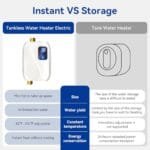
- Tankless water heaters (on-demand): Heat water instantly as it flows through the unit, so there is no storage tank.
Both types use gas or electricity as their energy source.
Where Water Heaters Are Used
- Homes and apartments (showers, sinks, laundry)
- Hotels, gyms, and restaurants
- Any place needing a steady supply of hot water
Key Differences Between Hot Water Boilers And Water Heaters
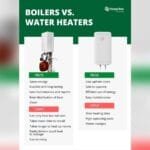
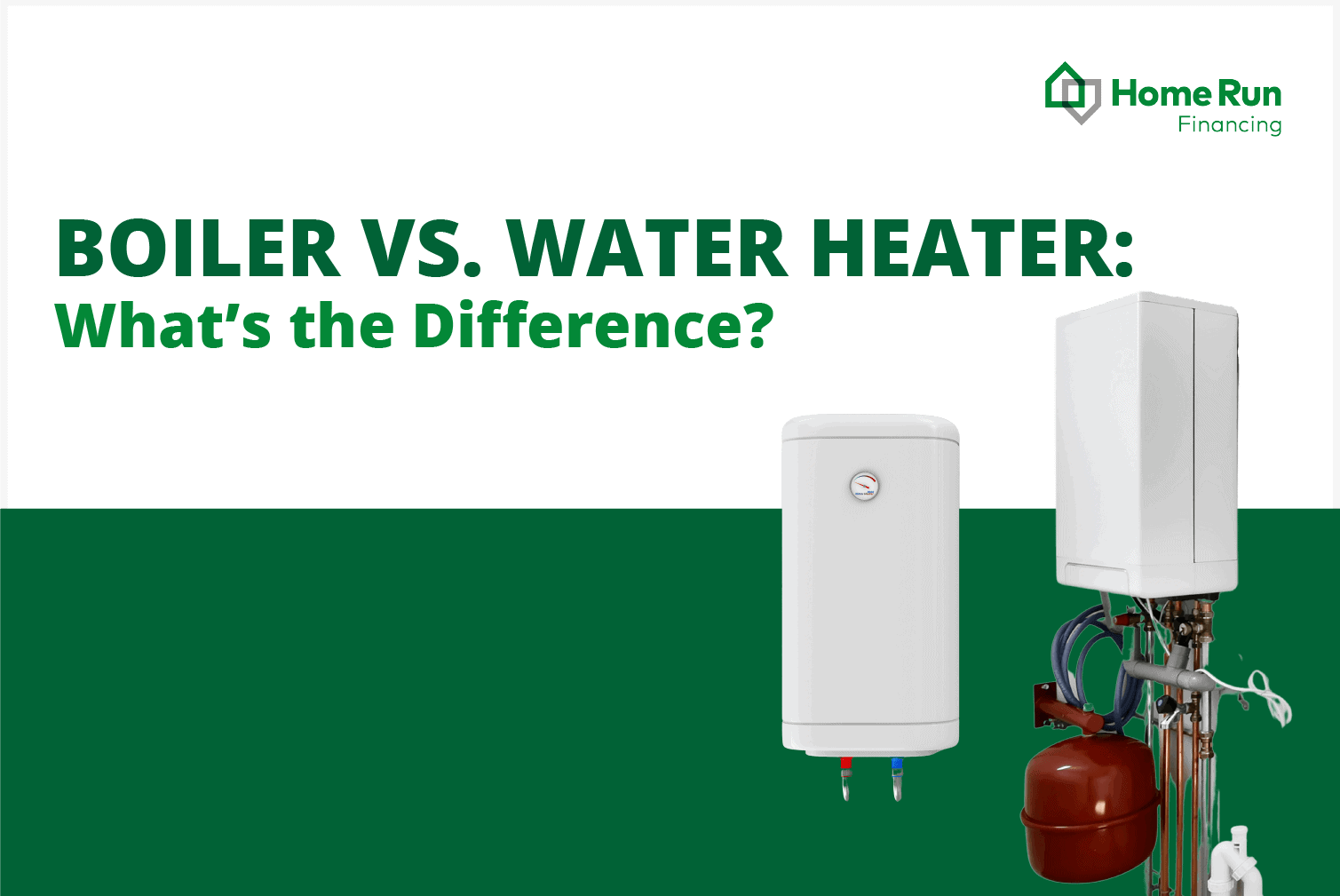
Many people think these two systems do the same thing, but they have important differences. To make things clearer, here’s a simple comparison.
| Feature | Hot Water Boiler | Water Heater |
|---|---|---|
| Main Function | Heats water for space heating (and sometimes domestic use) | Heats water only for domestic use |
| Water Storage | Closed-loop (reuses water for heating) | Stores (tank type) or heats instantly (tankless) |
| Temperature Range | 140–180°F (60–82°C) for heating | 120–140°F (49–60°C) for use |
| Installation Cost | Higher | Lower |
| Space Required | More (pipes/radiators needed) | Less (compact units available) |
| Best For | Heating large spaces + hot water | Supplying hot water only |
Example Scenario
If you have a house with radiators and need both heating and hot water, a combi boiler might be the best choice. If you only need hot water for showers and sinks, a water heater is usually enough.
Advantages And Disadvantages
Both systems have strengths and weaknesses. Understanding these can help you avoid costly mistakes.
Hot Water Boiler: Pros And Cons
Pros:
- Can heat large spaces efficiently
- Provides both heating and hot water (combi models)
- Good for cold climates
Cons:
- More expensive to install
- Requires more space and complex piping
- Maintenance is more involved
Water Heater: Pros And Cons
Pros:
- Lower installation cost
- Simple to operate and maintain
- Compact models available (especially tankless)
Cons:
- Only heats water for use, not spaces
- Can run out of hot water if undersized (tank types)
- Less efficient for whole-house heating
:max_bytes(150000):strip_icc()/boiler-vs-water-heater-5223066-hero-f285b2dbd4f6461db8f3dfb7d6e8b041.jpg)
Credit: www.thespruce.com
Energy Efficiency And Operating Costs
Energy efficiency is a top concern for most people, as it affects both the environment and your bills.
Hot Water Boilers
Modern boilers can be very efficient, especially condensing boilers that reuse heat from exhaust gases. Look for models with an AFUE (Annual Fuel Utilization Efficiency) rating of 85% or higher.
However, older boilers can waste energy. Also, heating water to high temperatures for space heating uses more energy than only heating water for showers or sinks.
Water Heaters
Newer water heaters, especially heat pump water heaters and high-efficiency tankless models, can save a lot of energy. The Energy Factor (EF) or Uniform Energy Factor (UEF) rating tells you how efficient a unit is. The higher the number, the better.
Tankless water heaters are usually more efficient than tank types because they only heat water when needed.
Typical Operating Costs
| System Type | Average Annual Cost | Energy Source |
|---|---|---|
| Hot Water Boiler (gas) | $800–$1,500 | Natural gas/propane |
| Hot Water Boiler (oil) | $1,300–$2,500 | Heating oil |
| Electric Boiler | $1,000–$2,000 | Electricity |
| Tank Water Heater (gas) | $200–$600 | Natural gas/propane |
| Tankless Water Heater (gas) | $150–$500 | Natural gas/propane |
| Electric Water Heater | $300–$700 | Electricity |
Note: Actual costs depend on energy prices, usage patterns, and system size.
Installation: What To Expect
The installation process for a hot water boiler is more complex than for a water heater. Knowing what’s involved can help you plan and budget.
Hot Water Boiler Installation
- Needs professional design and permits
- Requires special venting, gas lines (for gas models), and water connections
- Radiators or underfloor heating must be installed
- Takes several days and costs $5,000–$15,000, depending on the system and home size
Water Heater Installation
- Simpler and quicker (often within a few hours)
- Can often use existing gas or electric connections
- Tankless models may need new venting or wiring
- Costs $500–$2,500 for tank models, $1,000–$4,000 for tankless
Common Installation Mistakes
- Undersizing the unit – leads to running out of hot water or poor heating.
- Poor venting – can cause dangerous carbon monoxide buildup (especially for gas systems).
- DIY installation – may void warranties or cause code violations.
Always use a licensed installer and size the system carefully for your needs.

Credit: www.mdmmechanical.ca
Maintenance And Longevity
Regular maintenance can make your system last longer and run more efficiently.
Hot Water Boilers
- Need annual servicing (checking controls, cleaning burners, inspecting heat exchangers)
- Flushing the system to remove sludge or limescale is important
- Most last 15–30 years if maintained well
Water Heaters
- Tank models: Flush the tank yearly to prevent sediment buildup
- Check pressure relief valve and replace anode rod every few years
- Tankless models: Descale as needed (especially in hard water areas)
- Typical lifespan: 8–12 years for tank, 15–20 years for tankless
Non-obvious tip: Hard water can cut the lifespan of both systems. Installing a water softener can reduce buildup and maintenance needs.
Health And Safety Considerations
Safety is often overlooked but is very important. Both systems carry risks if not installed or maintained properly.
Hot Water Boilers
- Gas leaks can cause fire or carbon monoxide poisoning
- Overheated water or pressure buildup can cause explosions (rare, but possible)
- Need regular safety checks and carbon monoxide detectors nearby
Water Heaters
- Tank rupture can flood your home
- Scalding risk if water is too hot (keep below 130°F for safety)
- Electric models can cause shocks if not grounded
Insight: Most scalding accidents happen with water heaters set too high. Always check the thermostat after installation.
Credit: www.homerunfinancing.com
Environmental Impact
Energy use and emissions matter if you want to be eco-friendly.
Hot Water Boilers
- Gas and oil boilers release carbon dioxide and other pollutants
- Electric boilers are only as green as the electricity source
- Modern condensing boilers reduce emissions compared to older types
Water Heaters
- Heat pump and solar water heaters have a much lower impact
- Tankless heaters use less energy overall, but manufacturing impacts still matter
Practical tip: If you want to reduce your carbon footprint, look for ENERGY STAR certified models and consider renewable energy options.
Cost Comparison: Purchase, Operation, And Lifetime
Understanding total costs helps you avoid surprises. It’s not just about the purchase price—installation, maintenance, and energy use add up over time.
| System | Purchase Cost | Install Cost | Annual Energy Cost | Average Lifespan | Total Cost (20 Years) |
|---|---|---|---|---|---|
| Hot Water Boiler | $2,500–$6,000 | $2,500–$9,000 | $800–$2,500 | 15–30 years | $20,000–$70,000 |
| Tank Water Heater | $400–$1,500 | $500–$2,000 | $200–$700 | 8–12 years | $7,000–$20,000 |
| Tankless Water Heater | $800–$2,500 | $1,000–$3,000 | $150–$700 | 15–20 years | $7,000–$18,000 |
Non-obvious insight: Even though a boiler can last much longer, the higher upfront and yearly costs often make water heaters more affordable for small homes.
Which System Is Right For You?
The best choice depends on your needs, climate, budget, and home type.
Choose A Hot Water Boiler If:
- You need both space heating and hot water
- Your home has existing radiators or underfloor heating
- You live in a cold climate where heating is a priority
Choose A Water Heater If:
- You only need hot water for showers, sinks, and appliances
- You want a simple and affordable system
- You have limited space or live in a warmer climate
Special Cases
- Combi boilers can be a smart choice for small homes or apartments that need both heating and hot water from one unit.
- Tankless water heaters work well in homes with low-to-moderate hot water use and limited space.
Common Mistakes When Choosing A System
Many people make the wrong choice because they misunderstand these systems or listen to poor advice.
- Confusing the functions: Buying a water heater for space heating, or a boiler just for hot water, leads to inefficiency.
- Sizing errors: Picking a unit too small (runs out of hot water) or too large (wastes energy and money).
- Ignoring installation needs: Not planning for venting, space, or electrical upgrades.
- Focusing only on price: Cheap units often cost more in repairs, energy, and early replacement.
- Skipping maintenance: Leads to early breakdowns and higher repair costs.
Tip: Always ask a local expert to check your home’s needs before buying.
How To Choose: Key Factors To Consider
Before making a decision, think about these points:
- How many people live in your home? More people = more hot water needed.
- Do you have radiators or in-floor heating? If yes, a boiler may be required.
- What is your climate? Cold places benefit from boilers; warm climates can use water heaters.
- How much can you spend upfront? Boilers cost more to install, but last longer.
- Is space limited? Tankless water heaters or wall-mounted boilers save space.
- Do you want the most energy savings? Look for high-efficiency or ENERGY STAR models.
Hot Water Boiler And Water Heater: Real-world Examples
To make the differences clearer, here are two real-life examples:
Example 1: Family Home In Minnesota
The Smith family lives in a 2,500 sq. ft. house with cold winters. They have radiators in every room and need a lot of hot water for showers and laundry. They choose a gas-fired hot water boiler with an indirect water heater tank. This system provides both space heating and plenty of hot water, even during the coldest months.
Example 2: Apartment In Florida
Maria lives in a two-bedroom apartment in a warm climate. She only needs hot water for showers, cooking, and cleaning. She installs a tankless electric water heater under her kitchen sink. It’s compact, energy-efficient, and provides endless hot water for her needs.
Future Trends And Smart Home Integration
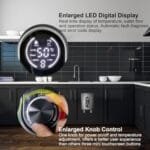
Hot water systems are getting smarter and more efficient. Some new models connect to Wi-Fi, letting you control temperature or monitor usage from your phone. Heat pump water heaters are growing in popularity because they use less energy by capturing heat from the air.
Smart thermostats for boilers can adjust heating schedules based on your habits, saving money and energy. If you plan to upgrade, ask about smart controls and remote monitoring.
For more technical details on how these systems work, you can visit this Wikipedia page on water heating.
Frequently Asked Questions
What Is The Main Difference Between A Hot Water Boiler And A Water Heater?
A hot water boiler heats water for space heating (like radiators or underfloor heating), and sometimes also provides hot water for taps. A water heater only heats water for domestic use, such as showers, sinks, and appliances. Boilers are more complex and can heat large spaces, while water heaters are simpler and focus only on hot water supply.
Can A Water Heater Be Used For Space Heating?
Most water heaters are not designed for space heating. Some special systems can use a water heater to heat small spaces, but this is usually less efficient and can damage the unit. For whole-house heating, a hot water boiler is the better choice.
Which System Lasts Longer: Boiler Or Water Heater?
A hot water boiler usually lasts longer—15 to 30 years—if maintained well. Tank water heaters typically last 8 to 12 years, while tankless water heaters can last 15 to 20 years. Maintenance and water quality affect lifespan.
Are Tankless Water Heaters Better Than Tank Models?
Tankless water heaters save energy and never run out of hot water, but they cost more to install and may not keep up with very high demand. Tank water heaters are cheaper and easier to install but can run out of hot water during heavy use. The best choice depends on your needs and budget.
What Size System Do I Need?
The right size depends on your hot water needs (number of people, bathrooms, appliances) and, for boilers, the size of your home. Undersized units won’t provide enough hot water or heat, while oversized units waste energy and money. Ask a professional to calculate the correct size before buying.
Making the right choice between a hot water boiler and a water heater will help your home stay comfortable, save energy, and avoid headaches down the road. Take your time, ask questions, and always check with a local expert before making a final decision.