Gcse Percentage To Grade Converter: A Complete Guide
The GCSE grading system in England can feel confusing, especially if you are a student, parent, or teacher trying to interpret percentage marks as final grades. With the shift from the old A*-G grades to the current 9-1 system, it is not always clear how a percentage on an exam paper converts into a GCSE grade.
This uncertainty often leads to stress, misunderstandings, and even wrong expectations about results.
In this guide, you will learn exactly how GCSE percentages are converted into grades, why this process can change each year, and how to make sense of your marks with confidence. We will explain the history and logic behind the system, show real examples, and provide practical tools to help you estimate grades. By the end, you will have a clear understanding of how the GCSE percentage to grade converter works, and be able to use this knowledge to your advantage.
How The Gcse Grading System Works
The General Certificate of Secondary Education (GCSE) is the main qualification for students in England, Wales, and Northern Ireland at age 16. In 2017, England moved from the familiar A*-G grades to a new 9-1 grading scale, where 9 is the highest grade and 1 is the lowest (with U for ungraded). The rest of the UK still mainly uses A*-G.
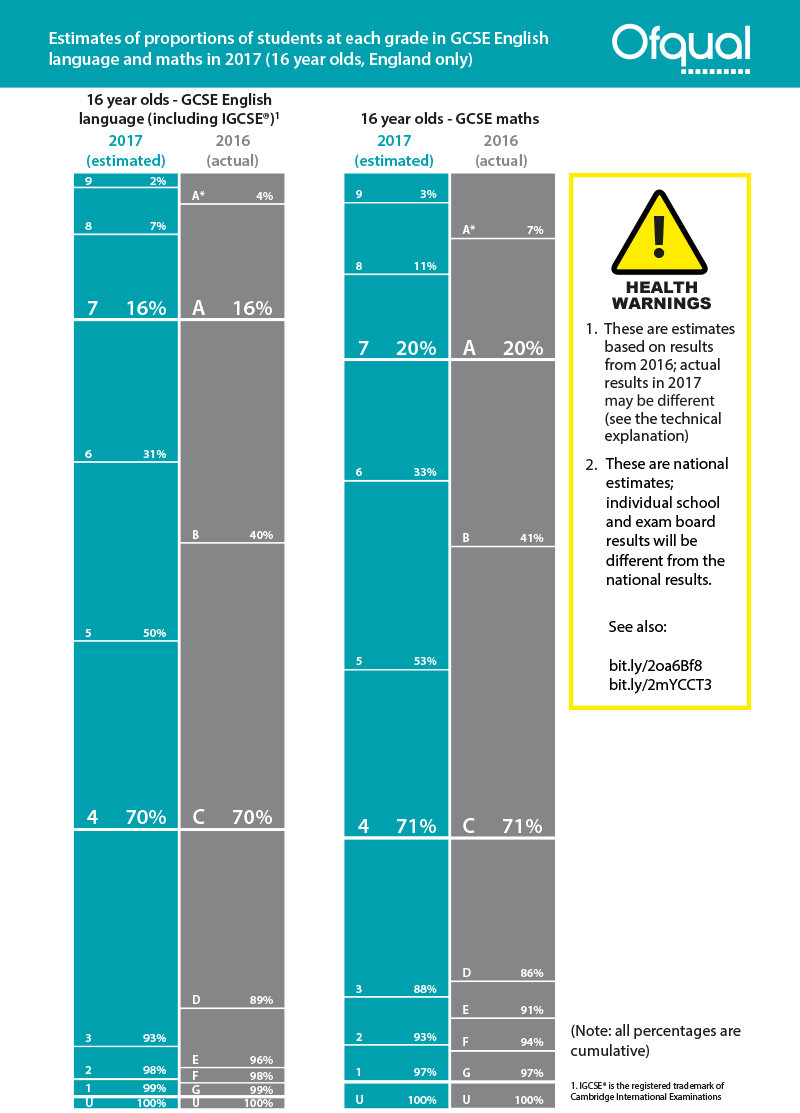
The new system was designed to create more differentiation at the top end and to make it harder to compare with the old grades directly. For example, a grade 9 is higher than the old A*, and a grade 4 is roughly equivalent to a C.
However, the boundaries are not fixed percentages and can change every year based on how students perform.
Key Features Of The 9-1 System
- 9 is the highest grade (even higher than the old A*)
- 4 is a standard pass (similar to a C)
- 5 is a strong pass (slightly higher than a C)
- 1 is the lowest grade (above ungraded, U)
- Boundaries change each year depending on exam difficulty and student performance
Why Percentage To Grade Conversion Is Not Fixed
A common misunderstanding is to think that a certain percentage always equals a certain grade (e.g., 70% always equals a 7). In reality, the system uses a method called “comparable outcomes” and “grading boundaries”.
What Are Grade Boundaries?
Grade boundaries are the minimum marks needed to achieve a particular grade. For example, in one year, getting 67% might earn you a grade 7 in Maths, but in another year, you might need only 64% due to a harder exam. These boundaries are set after exams are marked, not before.
Why Do Boundaries Change?
The main reason is fairness. If one year’s exam is harder, students should not be punished. If it is easier, grades should not be inflated. Exam boards look at how students performed overall and adjust boundaries to keep standards consistent. This process is called “awarding”.
Example
If many students score low marks on a difficult Chemistry paper, the grade boundaries will drop, so students still get the grades they deserve. If the paper is easier, the boundaries rise.
Typical Gcse Percentage To Grade Boundaries
While exact boundaries change yearly, we can look at recent years to see typical percentages needed for each grade in major subjects like Maths, English, and Science.
Here is a sample table based on recent boundaries for GCSE Maths (Edexcel board, 2023):
| Grade | Raw Mark (%) |
|---|---|
| 9 | 79-100% |
| 8 | 70-78% |
| 7 | 62-69% |
| 6 | 54-61% |
| 5 | 46-53% |
| 4 | 37-45% |
| 3 | 29-36% |
| 2 | 21-28% |
| 1 | 13-20% |
| U | 0-12% |
Keep in mind, these numbers are for one subject, one year, and one exam board. Every subject and board (AQA, Edexcel, OCR, etc. ) Will have slightly different boundaries.
How To Convert Gcse Percentage To Grade
If you have your percentage mark and want to estimate your grade, here are the steps:
- Find the Exam Board and Subject: Boundaries differ by board (AQA, Edexcel, OCR, etc.) And subject (Maths, English, Science, etc. ).
- Look Up the Latest Grade Boundaries: Go to the exam board’s website and download the grade boundaries for the correct year.
- Compare Your Mark: Find your raw mark as a percentage and see which grade boundary it fits.
- Consider Paper Weighting: Some GCSEs have multiple papers. Each paper might have different marks and weights. Add up your total marks and divide by the total possible marks to get your overall percentage.
- Use a Converter Tool: Some websites offer calculators where you can enter your mark and get an estimated grade. But always check with official boundaries.
Example Calculation
Suppose you took GCSE Maths (Edexcel) and scored 145 out of 240 marks total.
- First, calculate your percentage: (145/240) x 100 = 60.4%
- Check the table above. 60.4% falls in the 6 grade boundary (54-61%).
- Your estimated grade is a 6.
Non-obvious Insight
Do not just use the percentage on the paper. Check if your mark is raw or UMS (Uniform Mark Scale). Most boards now use raw marks, but some old data or websites might still use UMS. If you see UMS, you need to convert it using the board’s tables.
How Exam Boards Set Grade Boundaries
The process of setting grade boundaries is detailed and careful. Here’s how it works:
- Marking: All exam papers are marked according to a strict mark scheme.
- Statistical Analysis: Boards look at how all students performed compared to previous years.
- Expert Judgment: Senior examiners review scripts at the grade boundaries to check the quality of answers.
- Final Boundary Setting: Boards set boundaries to match national standards and fairness.
This means a percentage for grade 7 in 2022 could be slightly different from 2023 if the paper was harder or easier.
Gcse Grades And Old A-g Grades Compared
Many parents and teachers still think in terms of A*-G. So, how do the new grades compare to the old ones?
Here’s a quick comparison:
| New Grade (9-1) | Old Grade (A*-G) |
|---|---|
| 9 | A* |
| 8 | A* |
| 7 | A |
| 6 | B |
| 5 | High C / Low B |
| 4 | C |
| 3 | D / E |
| 2 | F |
| 1 | G |
| U | U |
Grade 4 is considered a “standard pass” (like a C), while grade 5 is a “strong pass”.
Common Myths About Gcse Percentage To Grade Conversion
There are several myths and misunderstandings around GCSE grades:
- A fixed percentage always means the same grade: False. Boundaries change every year.
- You need 50% for a pass: Not true. Sometimes, a grade 4 (pass) can be below 50%.
- Grade 9 is only for perfect scores: Also false. The percentage needed for a 9 can be as low as 80% in some subjects.
- All subjects have the same boundaries: Each subject and board is different.
- Online calculators are always accurate: They are good for estimates, but only official boundaries are exact.
Tools For Converting Gcse Percentages To Grades
If you want to convert your percentage to a grade quickly, you have several options:
- Exam Board Boundary Sheets: The most accurate source. Download from AQA, Edexcel, or OCR websites.
- Online Calculators: Some sites offer “GCSE percentage to grade converters.” Enter your subject, board, and score for an estimate. Always double-check with the official sheets.
- School Reports: Your school may provide breakdowns of your marks and estimated grades based on past data.
- Apps: Some education apps include grade boundary calculators.
Remember, these tools give estimates. For final results, only the exam board’s official grades count.
Examples From Different Subjects
The percentage needed for each grade can be very different in each subject. Let’s look at some real examples from popular GCSE subjects (based on 2023 data, Edexcel and AQA):
Gcse English Language
- Grade 9: 83%+
- Grade 8: 76-82%
- Grade 7: 68-75%
- Grade 6: 60-67%
- Grade 5: 52-59%
- Grade 4: 44-51%
- Grade 3: 36-43%
- Grade 2: 28-35%
- Grade 1: 20-27%
Gcse Combined Science
- Grade 9-9: 87%+
- Grade 9-8: 82-86%
- Grade 8-8: 77-81%
- Grade 7-7: 69-76%
- Grade 6-6: 59-68%
- Grade 5-5: 49-58%
- Grade 4-4: 39-48%
Gcse History
- Grade 9: 80%+
- Grade 8: 72-79%
- Grade 7: 64-71%
- Grade 6: 56-63%
- Grade 5: 48-55%
- Grade 4: 40-47%
You can see that Science requires a higher percentage for top grades compared to History or English.
How To Use A Gcse Percentage To Grade Converter
When using an online converter, make sure to:
- Select the correct subject and exam board.
- Choose the right year (boundaries change).
- Enter the total marks, not just one paper if your subject has multiple papers.
- Understand that these are estimates. Official exam boards decide the actual grade.
Example
If you scored 120 out of 200 in GCSE English (AQA, 2023):
- 120/200 = 60%
- Using the boundaries above, this would be a 6.
Some converters allow you to enter marks for each paper and weight them automatically. This can give a more accurate estimate if your subject has coursework or controlled assessment.
Why Not All Percentages Are Equal
Two students might both score 60%—one in Maths, one in Drama—but get different grades. This is because each subject has its own grade boundaries, based on how students as a whole perform in that subject. For example, a 60% in Drama might be a grade 7, while in Maths it could be a grade 6.
This is why it’s important to always check subject-specific boundaries.
The Role Of Non-examined Assessment
Some GCSEs include coursework or controlled assessment. These are marked by teachers and moderated by the board. The marks from these are combined with exam marks to get the final grade.
- For example, GCSE English Language often has a spoken language endorsement.
- Art subjects may be 60% coursework, 40% exam.
When converting your percentage to a grade, always include both exam and coursework marks.
Insights For Parents And International Students
If you are a parent or an international student, it’s important to know:
- GCSEs are not just about percentages. The grade boundaries are set to keep standards fair across years.
- Universities and employers often look for a grade 4 or 5 in English and Maths as the minimum requirement.
- The new grades are not always easy to compare with old ones (A-G), but grade 4 is the key pass mark.
If you want to learn more about the official process, see this page from UK Government.
Common Mistakes When Using Percentage To Grade Converters
- Not checking the right year: Boundaries change each year.
- Ignoring paper weighting: Some papers count for more marks.
- Using the wrong exam board: Boundaries are not the same for AQA, Edexcel, OCR.
- Assuming all subjects are the same: Each subject is different.
- Confusing raw marks with UMS or scaled marks: Always check what your mark represents.
- Missing coursework: Don’t forget non-exam assessment.
- Expecting exact results from online tools: Only the official board result is final.
Advanced Tips For Students
- If you are close to a grade boundary (e.g., 1 mark below a 7), consider asking your teacher if a review or remark is possible.
- Keep track of your marks for all papers and coursework. Add them together to get the most accurate percentage.
- Learn how to use the “grade boundary” sheets published by exam boards. These have all the raw marks needed for each grade.
- In some cases, schools may use “predicted grades” based on past performance and mock exams. These are estimates, not final results.
The Impact Of Covid-19 And Grade Inflation
During the COVID-19 pandemic, exams were replaced with teacher-assessed grades or center-assessed grades. This led to higher grades overall (“grade inflation”). In 2022 and 2023, boards tried to return to pre-pandemic standards, so boundaries may appear higher or lower than usual.
If you are comparing your grades to previous years, keep this in mind.
Gcse Percentage To Grade In Wales, Northern Ireland, And International Gcses
While England uses the 9-1 system, Wales and Northern Ireland mainly use A*-G, though some schools use 9-1. International GCSEs (IGCSEs) often use A*-G or 9-1 depending on the board.
Always check which system your school or exam is using before converting percentages.
Real-world Uses Of The Gcse Percentage To Grade Converter
- Students: Can estimate grades from mock exams and know what to aim for.
- Teachers: Use converters to set grade targets for students and analyze class performance.
- Parents: Understand their child’s progress and set realistic expectations.
- Tutors: Help students focus revision by identifying which grade boundary they are close to.
Credit: teapox.weebly.com
Sample Grade Calculation Scenarios
Here are three sample scenarios to show how the converter is used in practice:
Scenario 1: Single Subject, Single Paper
You score 65 out of 100 in AQA GCSE History. The grade boundaries for 2023 show:
- Grade 7: 64-70%
- Grade 6: 57-63%
65% is a grade 7.
Scenario 2: Multiple Papers With Weighting
GCSE Science has 3 papers, each worth different marks.
- Paper 1: 40/70
- Paper 2: 35/70
- Paper 3: 50/90
Total Marks: 40+35+50 = 125
Total Possible: 70+70+90 = 230
Percentage: (125/230) X 100 = 54%
Check grade boundaries for Science; 54% might be a grade 5 or 6, depending on the year.
Scenario 3: Including Coursework
GCSE Art: 60% coursework, 40% exam.
- Coursework: 60/80
- Exam: 28/40
Total Marks: (60+28) = 88
Total Possible: (80+40) = 120
Percentage: (88/120) X 100 = 73%
Check grade boundaries for Art; 73% could be a grade 7 or 8.
How To Find Official Grade Boundaries
The most reliable way to convert percentages to grades is to use the official grade boundary documents.
- Visit the exam board’s website (AQA, Edexcel, OCR).
- Look for the section on “grade boundaries” for the year and subject.
- Download the PDF. It will show the marks needed for each grade for every paper.
This ensures you use the most accurate information.

Credit: www.studying-in-germany.org
How Universities And Employers View Gcse Grades
Most universities and employers focus on Maths and English. A grade 4 (standard pass) is usually the minimum, but competitive courses may require higher grades.
Some jobs or apprenticeships may ask for “five GCSEs at grade 4 or above, including Maths and English. ” They do not usually look at percentages, only the grades.
How To Improve Your Grade
- Use past papers to practice.
- Find out the current grade boundaries and set a target above them.
- Ask your teacher for feedback on your weak areas.
- Focus on coursework if your subject includes it.
- Remember, even a few extra marks can sometimes push you up a grade.
How Grade Boundaries Are Announced
Grade boundaries are usually published by exam boards on results day or just before. If you are waiting for results, check the exam board website early on results day.
Frequently Asked Questions
What Is A Gcse Percentage To Grade Converter?
A GCSE percentage to grade converter is a tool or method that helps you estimate what grade you will get based on your exam percentage. It uses the latest grade boundaries from your exam board and subject to give an estimate. It is helpful for mock exams, revision, and understanding what marks you need.
Are Grade Boundaries The Same For Every Exam Board?
No, grade boundaries are different for each exam board (AQA, Edexcel, OCR, etc.) and each subject. They can also change each year depending on the difficulty of the exam and overall student performance.
Can I Use My Mock Exam Percentage To Predict My Gcse Grade?
You can use your mock exam percentage and compare it with the latest grade boundaries to get an estimate. However, mocks may be harder or easier than the real exam, and only the final GCSE results from the exam board are official.
What Happens If My Mark Is Just Below A Grade Boundary?
If your mark is just 1 or 2 marks below a grade boundary, you may request a remark or review, especially if you feel your paper was marked unfairly. Sometimes marks change, but it is not guaranteed.

Credit: www.reddit.com
Where Can I Find Official Grade Boundaries?
You can find official grade boundaries on your exam board’s website (AQA, Edexcel, OCR) for each year and subject. The UK Government also provides guides and resources at this link.
Getting your head around the GCSE percentage to grade conversion system may take a bit of time, but with the right information and tools, it becomes much clearer. Always use the latest boundaries, check your exam board, and remember that grades, not percentages, are what universities and employers care about most.
Understanding the system helps you plan, reduce stress, and aim for your best possible result.