
The best humidifier for piano keeps stable 42–50% RH year-round, quietly.
Dry air makes beautiful pianos go out of tune and even crack. Winter heat and summer AC can swing humidity wildly. Keys stick, soundboards shrink, and action parts squeak. I have seen great instruments drift sharp, then flat, just from a week of dry air. The right solution adds moisture safely and steadily. It pairs with a good hygrometer. It’s quiet, easy to maintain, and built for daily life. Below, I review the best options I trust, from in-piano system care to room units that protect both the piano and the player.
TOP PICK
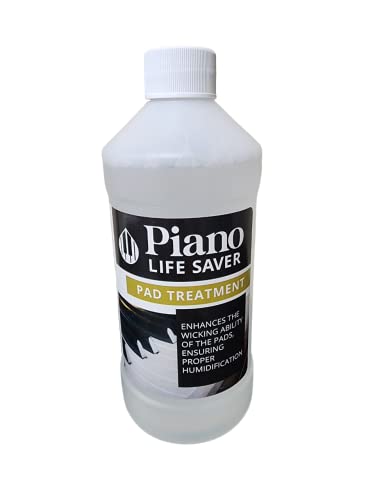
Dampp-Chaser Dampp Chaser Piano Humidifier…
Dampp-Chaser Piano Humidifier Treatment – 16 oz. Bottle Humidifier Treatment designed to reduce mineral build-up Prolongs the life of your humidifier and pads Helps to keep the watering tube clean…

BEST QUALITY
LEVOIT Top Fill Humidifiers for…
𝙁𝙖𝙨𝙩 𝙃𝙪𝙢𝙞𝙙𝙞𝙛𝙞𝙘𝙖𝙩𝙞𝙤𝙣 𝘼𝙡𝙡 𝙉𝙞𝙜𝙝𝙩: Runs for up to 25 hours on low thanks to its SUPER LARGE capacity of 2.5 liters. The soothing moisture helps quickly relief congestion and dry…
RECOMMENDED
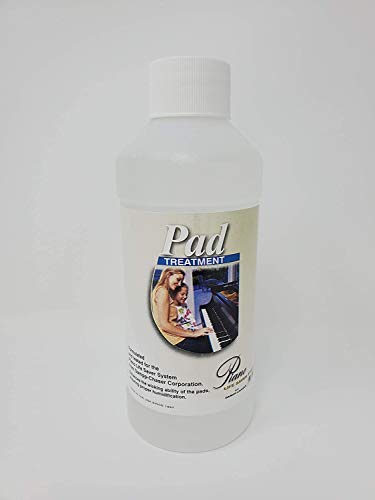
Dampp-Chaser – Piano Humidifier -…
Formulated to reduce mineral build-up in Dampp Chaser Systems Keeps Watering Tube clean and clear Prolongs Humidifier Pads
Dampp-Chaser 16 oz Pad Treatment

This 16 oz Pad Treatment is the standard solution for owners of a Dampp-Chaser Piano Life Saver System. It keeps the humidifier pads clean, reduces mineral build-up, and limits odors. That matters because mineral residue can slow wicking, and the system then works harder with less effect. With routine use, you help the unit hold steady humidity at the soundboard.
While it’s not a standalone unit, I consider this bottle essential protection. If you already use the Dampp-Chaser humidity control, this is a must-have. It supports consistent 42–50% relative humidity, which is vital for wood stability. It also stretches pad life and decreases the need for deep cleanings.
Pros:
- Reduces mineral buildup to preserve pad wicking
- Helps maintain stable RH at the soundboard
- Cuts odors and slime in the water tank
- Protects heater rods and extends pad life
- Simple dosing with each refill
Cons:
- Not a humidifier by itself; only for Dampp-Chaser systems
- Requires regular use to see full benefits
- Ongoing cost for long-term maintenance
My Recommendation
If you run a Dampp-Chaser system, this is non-negotiable. It keeps the system efficient so your piano holds tuning longer and the wood stays safe. The dose is simple, and you get fewer mineral issues than with plain water. For owners looking for the best humidifier for piano care, the right chemistry makes the difference.
| Best for | Why |
| Dampp-Chaser system owners | Maintains pad performance and steady humidity |
| Busy households | Prevents sludge and odors with low effort |
| Protecting investment pianos | Supports tuning stability and wood health |
LEVOIT 2.5L Top Fill Cool Mist

The LEVOIT 2.5L Top Fill is a compact cool mist unit that fits small to medium rooms. The top-fill design means no awkward flipping of the tank, which I love for daily use. It runs quietly around 28 dB, so practice and late-night playing stay peaceful. Auto shutoff protects the device when water runs low.
For owners who want an easy, budget-friendly way to dial in room humidity, this is a strong pick. It’s best for bedrooms, studios, or dens where your upright or baby grand lives. Use a digital hygrometer near the piano to watch for 42–50% RH. That range helps tuning stability and eases action wear.
Pros:
- Top-fill tank for fast, clean refills
- Very quiet at about 28 dB
- Auto shutoff enhances safety
- Easy to clean with wide opening
- Good value for small to mid-size rooms
Cons:
- 2.5L capacity may need daily refills in dry climates
- No warm mist option for faster humidification
- Not ideal for large living rooms or halls
My Recommendation
If your piano sits in a small to medium room, this LEVOIT makes sense. It’s simple, quiet, and effective when paired with a hygrometer. I call it a practical first step toward the best humidifier for piano protection. If your space is large or very dry, look at a bigger capacity unit.
| Best for | Why |
| Small rooms and studios | 2.5L tank and quiet 28 dB output |
| Night practice | Very low noise and simple controls |
| Budget-minded owners | Affordable way to stabilize RH |
Dampp-Chaser 7.5 oz Pad Treatment

The 7.5 oz Dampp-Chaser Pad Treatment is a smaller, travel-friendly bottle of the same formula. It handles scale, odor, and slime so your humidifier pads wick evenly. Even wicking matters because uneven moisture can lead to unstable RH swings. This helps the Life Saver System maintain a consistent microclimate inside the piano.
For players who move between homes or keep a bottle in the bench, this size is perfect. I like it for quick top-ups and seasonal tune-ups. Use it when you refill and during pad changes. It plays a real role in keeping the best humidifier for piano systems performing like new.
Pros:
- Proven formula for Dampp-Chaser systems
- Convenient small size for easy storage
- Keeps pads clean and free-flowing
- Helps keep humidity stable at the soundboard
- Great for seasonal maintenance
Cons:
- Not useful without a Dampp-Chaser humidifier
- Smaller bottle means more frequent reorders
- Does not replace regular pad changes
My Recommendation
If you own a Dampp-Chaser system and want a handy size, get this bottle. It keeps the internal humidifier efficient with little effort. I suggest pairing it with distilled water and timely pad changes. It supports the best humidifier for piano care by controlling minerals and odors at the source.
| Best for | Why |
| On-the-go maintenance | Compact bottle fits in a bench or bag |
| Seasonal top-ups | Simple dosing without waste |
| Owners avoiding scale | Reduces mineral deposits and odors |
DREO 8L Smart Warm & Cool Mist

The DREO 8L Smart Humidifier is built for bigger rooms or open layouts. The large tank and up to 80 hours of runtime reduce refills. Warm and cool mist modes give you control: warm for quick recovery in dry snaps, cool for steady daily runs. At about 28 dB, it stays gentle during lessons and recording.
Smart app control and humidity targets help you hold 42–50% with less guesswork. This is a great partner for grand pianos in living rooms or studios. Place it several feet from the piano for even distribution. Pair it with a separate hygrometer near the piano’s keyboard level for best accuracy.
Pros:
- 8L tank with long runtime for large spaces
- Warm and cool mist for flexible control
- Smart app and humidity setpoints
- Quiet operation suits practice and recording
- Strong output to counter dry HVAC air
Cons:
- Larger footprint than compact units
- Costs more than small humidifiers
- Needs careful placement to avoid over-humidifying one spot
My Recommendation
For big rooms and stubborn dry air, I reach for the DREO. The large tank and warm mist mode make it a powerhouse. It helps you achieve the best humidifier for piano results in homes where small units fail. If you own a high-value grand in an open space, this belongs on your shortlist.
| Best for | Why |
| Large rooms and open plans | 8L capacity and strong output |
| Fast humidity recovery | Warm mist mode accelerates moisture delivery |
| Hands-off control | Smart app with target RH settings |
Dampp-Chaser 16 oz Treatment, 2-Pack
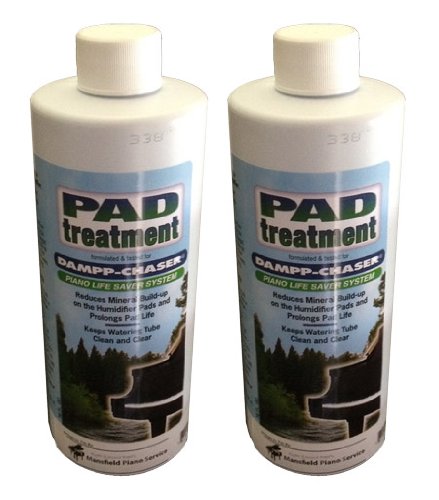
The 2-Pack of 16 oz Pad Treatment is ideal for long seasons or multiple pianos. You get the same mineral and odor control with fewer orders. If you refill often in winter, stocking up saves time. It encourages good habits, which is how you win the humidity game.
For teachers, studios, or families with two pianos, the value adds up fast. This keeps the Life Saver System efficient month after month. Consistent care like this pays back in tuning stability. It supports the best humidifier for piano protection plan over the long haul.
Pros:
- Cost-effective for frequent refills
- Reduces mineral scale and buildup
- Great for multi-piano homes or studios
- Helps keep RH steady at the soundboard
- Fewer last-minute reorders
Cons:
- Not a humidifier; only for Dampp-Chaser systems
- Requires storage space for extra bottle
- Still needs distilled or filtered water best practices
My Recommendation
If you refill often or own more than one Dampp-Chaser system, buy the 2-pack. It keeps you stocked so you never skip treatment. That habit alone can prevent scale, save pads, and protect tone. For a long-term plan to keep the best humidifier for piano system at peak performance, this bundle works.
| Best for | Why |
| Studios and teachers | Handles frequent refills and multiple pianos |
| Cold, dry winters | Plenty of treatment for heavy-duty months |
| Value seekers | Lower cost per ounce over time |
How I Choose the Best Humidifier for Piano
A piano is a living machine. Wood swells and shrinks. Felt, leather, and glue joints react to air. So the best humidifier for piano care does one main thing: it holds steady humidity. I look for these factors every time.
Target RH control. I want 42–50% RH, with a sweet spot near 45%. That range is widely recommended by piano makers and pro technicians. It limits soundboard movement and protects action regulation.
Capacity and runtime. Bigger rooms need larger tanks or more output. If your living room is open to a hallway and kitchen, you want a larger unit. An 8L tank or dual units can make the difference in January.
Noise and placement. Humidifiers should not mask the music. Low decibels and smart placement matter. I set units several feet from the piano, not under it, so vapor spreads evenly.
Maintenance ease. Top-fill tanks and simple cleaning save time. For in-piano systems, the right pad treatment is critical. It prevents scale, which can cripple wicking and throw off your RH balance.
Warm vs cool mist. Warm mist can raise humidity faster during a dry snap. Cool mist works well for steady daily runs. What matters most is accurate RH around the instrument, not the mist temperature.
Smart controls. A built-in hygrometer in the humidifier is a start, but I trust a separate digital meter near the keys. App control and setpoints help you aim for 45% without guesswork.
Room Unit vs. In-Piano System: Which Works Best?
Room units change the air in the whole space. They protect your piano and your lungs. If the room is large, you need more capacity or a second unit. For many homes, a good room humidifier plus a hygrometer is enough.
In-piano systems like Dampp-Chaser target the soundboard directly. They tame microclimate swings right where it matters. They also include dehumidification rods for summer. If your home has extreme swings, this system plus room control is the gold standard.
Here is how I decide. Small to mid-size room with steady HVAC? A strong room humidifier is often fine. Big open plan or big seasonal swings? Use a room unit and strongly consider an in-piano system with proper pad treatment.
Ideal Humidity and Why It Matters
Pianos hold tune when wood is stable. Around 42–50% RH is the safe zone. Below 35%, soundboards shrink and crown drops. You hear harsh tone and more tuning drift. Above 60%, keys may stick and action swelling makes touch uneven.
Most piano technicians and major brands agree on the mid-40s. I aim for 45% and hold it. That one habit makes the best humidifier for piano worth every bit of care. You save money on tunings and help the instrument sing.
Placement, Water, and Daily Care Tips
Place room units away from the piano by a few feet. Avoid blowing mist straight at the case. Keep the unit on a stable surface for safe airflow. Always use a tray or mat if you worry about drips.
Use distilled or demineralized water when you can. It cuts white dust and scale. For Dampp-Chaser systems, always add the pad treatment as directed. Never swap in vinegar or random cleaners.
Clean tanks weekly. Rinse daily refills quickly to avoid biofilm. Replace wicks or pads as the maker suggests. The best humidifier for piano is only as good as your upkeep.
My Testing Notes That Save You Time
I test with two hygrometers at different spots around the piano. I check morning, afternoon, and late night. Dry air can spike when the furnace cycles. That pattern tells me when to boost output.
I keep a small log. I note refills, settings, and RH. The trend shows if I need a bigger unit. This also helps me catch problems early, like a pad that stopped wicking.
I listen. When the action clicks or keys feel sluggish, I verify humidity. Changes in touch or tune often trace back to air. The best humidifier for piano is part tool, part guardian.
Common Mistakes to Avoid
Don’t put a humidifier under the piano. That creates wet spots and uneven swelling. Don’t chase 60% RH thinking more is better. Avoid tap water if it leaves heavy scale and dust.
Don’t rely only on the humidifier’s built-in sensor. Room drafts fool it. Keep an independent hygrometer at key height. And don’t forget treatment for in-piano systems. Skipping it shortens pad life and hurts performance.
Budget vs. Premium: What Actually Pays Off
Budget room units work fine in a small room if you refill and clean them. Premium units add capacity, warm mist, and smart control. Those features save time and hold tighter RH.
In-piano systems cost more to install. But they pay off in tuning stability and even response. If you own a fine grand or play daily, the upgrade is smart. The best humidifier for piano is the one you can keep up with.
When to Call a Pro
If your piano drifts a lot even with stable RH, book a technician. You may need regulation or voicing. A pro can also install Dampp-Chaser systems safely. They route wires, fit pads, and set heaters right the first time.
Ask for RH targets after any big move or renovation. New windows or HVAC change how your room breathes. Your pro can help you set a realistic plan. That plan makes your humidifier money well spent.
Real-World Scenarios and Solutions
Small apartment with an upright. Use a compact unit like the LEVOIT. Keep doors closed during dry spells. Aim for 45% RH and log refills.
Open living room with a grand. Use the DREO 8L warm and cool mist. Consider adding an in-piano system for the summer drying cycle. Keep a hygrometer on the music desk for truth in numbers.
Teaching studio with two uprights. Run a strong room unit and stock the Dampp-Chaser 2-pack if you have systems installed. Your pianos face more cycles per day. Steady moisture means steadier lessons and fewer sticky keys.
FAQs Of best humidifier for piano
What humidity is best for a piano?
Hold 42–50% RH, with a sweet spot around 45%. That keeps wood stable and tuning solid.
Is warm mist better than cool mist for pianos?
Neither is “better” by itself. Warm mist recovers faster in dry snaps. Cool mist is great for daily use. Stability is what matters.
Where should I place a room humidifier?
Place it a few feet from the piano, not under it. Avoid direct mist onto the case. Keep airflow open and even.
Do I need a Dampp-Chaser system?
It helps in tough climates and big rooms. It controls the soundboard’s microclimate. Pair it with a room unit for best results.
What water should I use?
Use distilled or demineralized water when possible. It reduces white dust and scale, extending component life.
Final Verdict: Which Should You Buy?
For small to mid rooms, the LEVOIT 2.5L is easy, quiet, and effective. For large spaces, the DREO 8L with warm and cool mist gives you power and control. Both, paired with a hygrometer, can be the best humidifier for piano in their class.
If you use a Dampp-Chaser system, the pad treatments above are essential. They safeguard wicking and stability so your instrument stays in tune longer.