
The best flat tooth table saw blade gives crisp, flat-bottom cuts for joinery.
You want grooves that look like they were machined, not chewed. I get it. Dados, box joints, and rabbets need flat-bottom cuts with clean shoulders. The right blade saves sanding, fixes fit, and lifts the whole project. In this guide, I break down the best flat tooth table saw blade options for clean joinery, fast ripping, and pro-level finish work. I’ll show you where a true FTG (flat-top grind) wins, where a combo ATB+FTG blade is smart, and how kerf, tooth count, and hook angle change results. I’ve used blades like these daily, and I’ll help you choose with confidence.
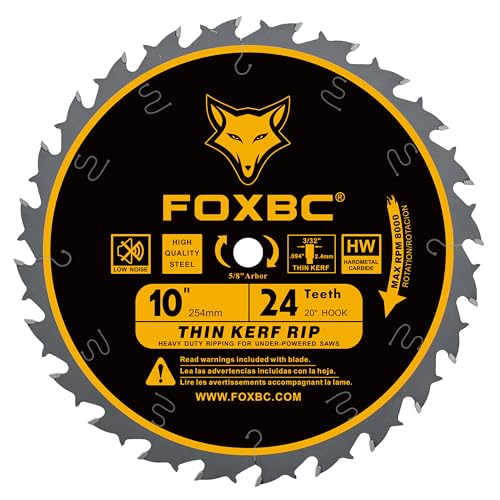
FOXBC 10-Inch Flat Tooth Ripping…
10 Inch Thin Kerf Rip Saw Blade, 24-Tooth, Flat Tooth, Kerf .094″, Plate .071″, Hook Angle 20°, Wood Cutting with 5/8″ Arbor The blades with high-quality thin kerf and plate…
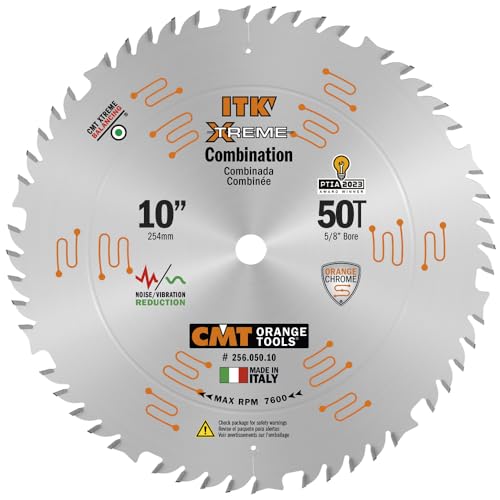
CMT Orange Tools 256.050.10 -…
Material: soft and hardwood, plywood.
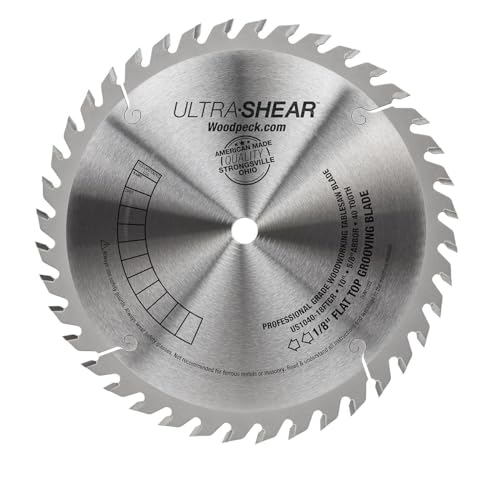
Ultra-Shear 10 Inch Flat-Top Grooving…
SPECS – US1040-18FTGR – 10 inch table saw blade. 40-tooth design. 1/8″ Kerf (0.125). 5/8″ Arbor. American-made steel plate & carbide tipped teeth. QUALITY USA MANUFACTURING – Ultra-Shear Flat Top…
FOXBC 10” Flat Tooth Ripping Blade, 24T Thin Kerf

This FOXBC 10-inch ripping blade uses a flat-top grind for straight, fast cuts. With 24 teeth and a thin kerf, it moves through hardwood without bogging down. The 5/8-inch arbor fits standard table saws, so setup is quick. If your saw is under 2 HP, thin kerf helps keep feed smooth.
I like it for clean rips and for flat-bottom kerfs on quick joinery. You still need a dado set for wide grooves, but this blade leaves a flat floor that pairs well with jigs. Carbide tips handle tough stock and stay sharp longer. For the price, it’s a solid entry into FTG performance.
Pros:
- True FTG teeth leave a flat-bottom kerf
- Thin kerf eases the load on smaller saws
- Good value for ripping hardwood and softwood
- 5/8-inch arbor fits most table saws
- Carbide tips offer decent edge life
Cons:
- 24T can leave rougher crosscuts
- Thin kerf may deflect in dense, thick stock
- Not ideal for plywood tear-out control
My Recommendation
If you need fast rips and a flat-bottom kerf from a budget blade, start here. It’s not the ultimate joinery cutter, but it hits a sweet spot for cost and performance. For anyone seeking the best flat tooth table saw blade on a budget, this FOXBC is a smart first step. It pairs well with a separate finish blade for crosscuts.
| Best for | Why |
|---|---|
| Budget FTG ripping | Flat-top teeth, low price, and thin kerf ease |
| Underpowered saws | Thin kerf reduces motor strain and burning |
| Quick kerf joinery | Flat-bottom cuts for simple grooves or jigs |
CMT 10” Combo Blade, ATB+Flat, 50T

This CMT combination blade uses the classic 4 ATB teeth plus 1 flat raker pattern. That design gives clean crosscuts and a near-flat kerf for nibbling dados. At 10 inches and 50 teeth, it’s a strong general-purpose pick. The orange coating helps reduce pitch buildup and friction.
I reach for this style when I need one blade to do most tasks. The raker tooth cleans the bottom of the cut, which is ideal for simple joinery. It won’t replace a dedicated FTG groover, but it makes life easier on a small shop. The plate runs true, and carbide quality is solid.
Pros:
- 4 ATB + 1 FTG raker leaves near-flat bottoms
- Great all-around blade for rip and crosscut
- Coating helps reduce burning and gumming
- Stable plate and consistent carbide tips
- Good value for a one-blade workflow
Cons:
- Not as perfectly flat-bottom as a pure FTG
- Not the best for ultra-fine plywood
- Kerf and hook balance favors general work, not one niche
My Recommendation
Want one blade that can cut and still handle basic joinery? This is it. If you’re after the best flat tooth table saw blade for a hybrid setup, this CMT gives you a flat raker and nice finish. It’s perfect for small shops or jobsite use where blade swaps cost time.
| Best for | Why |
|---|---|
| One-blade setups | Combination grind handles many cuts well |
| Nibbling dados | Raker tooth flattens the kerf floor |
| General carpentry | Balanced tooth geometry, clean finish |
Ultra-Shear 10” FTG Grooving Blade, 1/8” Kerf, 40T

This Ultra-Shear blade is a true FTG groover. It’s built for clean 1/8-inch dados, rabbets, and box joints. The 40 teeth and carbide tips give a crisp shoulder and a flat-bottom cut. It’s made in the USA and targets joinery-specific accuracy.
If the best flat tooth table saw blade for you means “perfectly flat grooves,” this fits. You can stack passes for wider dados with a gauge block. It excels at box joints cut with a jig at 1/8-inch spacing. Feed control is easy, and tear-out is minimal on solid wood.
Pros:
- True FTG for dead-flat grooves
- Dedicated 1/8-inch kerf for box joints
- Crisp shoulders on dados and rabbets
- Carbide-tipped teeth for long wear
- Made in the USA precision
Cons:
- Not a general-purpose blade
- Slower rip speed than 24T blades
- Costs more than budget FTG blades
My Recommendation
For joinery fans, this is a gem. If you build drawers, boxes, or picture frames, the accuracy pays off. If you want the best flat tooth table saw blade for 1/8-inch grooves and box joints, you’ve found it. Keep a sharp crosscut blade nearby for sheet goods.
| Best for | Why |
|---|---|
| 1/8-inch box joints | Exact kerf matches common joint size |
| Dados and rabbets | Flat-bottom, clean shoulders, repeatable |
| Hardwood joinery | Carbide tips keep edges crisp longer |
Ultra-Shear 10” FTG Grooving Blade, 1/4” Kerf, 40T

Need flat 1/4-inch grooves in one pass? This Ultra-Shear FTG blade nails it. It runs true and leaves a dead-flat floor for tight joinery. The 40T count balances cut quality with control. Like its 1/8-inch sibling, it’s made in the USA and built for precision.
This is one of my go-to picks when fitting panels or making 1/4-inch box joints. The best flat tooth table saw blade should save time and sanding, and this one does. Set your fence, make the cut, and check the fit. It delivers repeatable results that make glue-ups smooth.
Pros:
- True FTG for exact 1/4-inch grooves
- Clean, square shoulders reduce cleanup
- Carbide teeth hold an edge well
- Great for 1/4-inch box joints and rabbets
- USA-made with pro-grade build
Cons:
- Not ideal for ripping thick lumber
- Costs more than multi-purpose blades
- Limited to a specific kerf size
My Recommendation
If you cut 1/4-inch dados often, this blade pays for itself. It’s for serious joinery where fit and speed matter. For woodworkers searching for the best flat tooth table saw blade to cut perfect 1/4-inch grooves, this is a top-tier choice.
| Best for | Why |
|---|---|
| Cabinet panel grooves | Exact kerf for 1/4-inch plywood or panels |
| 1/4-inch box joints | Flat-bottom kerf gives tight, square joints |
| Repeatable joinery | Stable plate and precision grind |
Echo Corner 10” ATB+Flat Finish Blade, 60T

This Echo Corner blade blends ATB for finish with flat raker teeth for kerf cleanup. With 60 teeth, it’s aimed at miter saw and table saw finish cuts. It handles wood, plywood, plastic, veneer, and laminates. The result is a smoother edge with a cleaner floor than a pure ATB.
If I need finish work and still want flatter kerfs for shallow grooves, I use a combo like this. It’s not a dedicated FTG, but it helps reduce “bat ears” at the groove corners. It’s a smart middle path if you want one blade to do more. Keep your feed steady for best results.
Pros:
- ATB+Flat pattern improves kerf floor
- Great finish on crosscuts and trims
- Versatile on wood, plywood, and some plastics
- 60T reduces tear-out on veneered panels
- Good value for a finish-capable combo grind
Cons:
- Not a true flat tooth joinery blade
- Slower in heavy rips
- May burn if feed is too slow
My Recommendation
Choose this if you need fine finish and a flatter kerf than ATB alone. It’s great for trim carpentry and panel work. If you want the best flat tooth table saw blade feel in a finish blade, this is a practical choice with wide material coverage.
| Best for | Why |
|---|---|
| Finish crosscuts | 60T ATB minimizes chip-out |
| Light joinery kerfs | Flat raker reduces “bat ears” |
| Mixed materials | Handles wood, laminates, and plastics |
CMT 10” Ripping Blade, 24T, 0.126” Kerf

This CMT ripping blade is built tough for hardwood. The full-kerf plate adds stability on long rips. With 24 teeth and a positive hook, it eats through stock while tracking straight. Many ripping blades like this use FTG, which helps leave a flatter floor in the kerf.
I’d use it when I need reliable tracking in thick oak or maple. The heavier plate resists vibration, which means fewer burn marks when your fence is dialed. If your saw has 2+ HP, full kerf is a plus. It’s a workhorse that pairs well with a dedicated crosscut blade.
Pros:
- Full kerf adds stability for straight rips
- 24T count chews through hardwood fast
- Flat-top style teeth help flatten the kerf
- Durable plate and carbide hold up to heavy use
- Ideal for thick stock and long cuts
Cons:
- Needs a stronger saw for best results
- Rougher crosscuts and panel work
- More material removed than thin-kerf blades
My Recommendation
If you rip thick hardwood often, choose this blade. It tracks true and survives long sessions. For pros who want the best flat tooth table saw blade for heavy ripping, a full-kerf 24T like this is a safe, fast bet.
| Best for | Why |
|---|---|
| Heavy hardwood ripping | Stable plate and aggressive tooth count |
| Flat kerf floors | FTG style smooths the bottom of rip cuts |
| Cabinet stock prep | Fast, straight feeds on long boards |
Freud LU83R010 10” 50T Thin Kerf Combo Blade
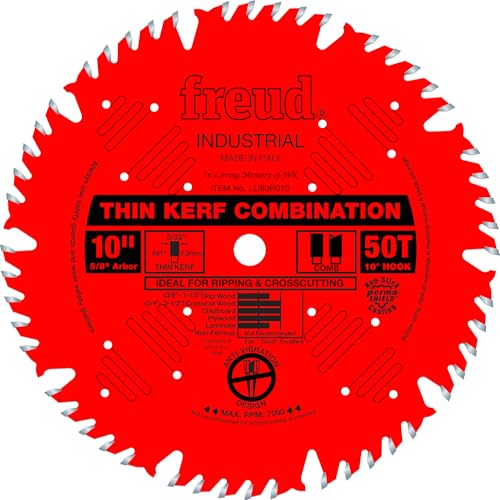
Freud’s LU83R010 is a thin-kerf 50T combination blade with a raker tooth. It runs with less power and leaves a smooth cut. Anti-vibration design improves accuracy and feel. It’s a trusted pick for general woodworking.
If you need flat kerfs often, a dedicated FTG is better. But as a daily driver, this blade punches above its price. The raker tooth cleans the groove floor well. It’s one of the best “do most of it” blades I’ve used.
Pros:
- Thin kerf works well on smaller saws
- Combination grind with raker cleans the kerf
- Good finish on both rips and crosscuts
- Reduced vibration for smoother cuts
- Strong brand support and resharpening options
Cons:
- Not a pure flat tooth joinery blade
- Thin kerf can wander in thick hardwood
- Not the cleanest on melamine
My Recommendation
I recommend this for small shops and jobsite saws. It’s efficient, versatile, and leaves a flatter groove than ATB-only designs. If you want the best flat tooth table saw blade feel without swapping often, this Freud is a strong answer.
| Best for | Why |
|---|---|
| General woodworking | Combo teeth balance rip and crosscut |
| Underpowered saws | Thin kerf reduces load and heat |
| Quick joinery passes | Raker tooth flattens the groove floor |
CMT 10” Laminate/Chipboard Blade, 60T

This CMT blade targets laminates and chipboard with a high tooth count. Expect low chip-out on melamine and veneered panels. It’s a specialist for finish cuts on sheet goods. When you need clean edges, 60T is a sweet spot.
It’s not a flat tooth joinery blade. But if your workflow blends cabinet panels with joinery, you’ll want this in the rack. Use it for scoring-style cuts and slow, steady feeds. Keep a dedicated FTG on hand for grooves.
Pros:
- Excellent on melamine, laminate, and plywood
- Clean edges reduce sanding and edge tape issues
- Reliable CMT plate and carbide quality
- Good value for panel finishing
- Pairs well with FTG joinery blades
Cons:
- Not flat-bottom in dado cuts
- Slower in hardwood ripping
- Requires careful feed to prevent burn
My Recommendation
Pick this if sheet goods are in your lineup. Use it for cabinets, closets, and built-ins. If the best flat tooth table saw blade is your joinery star, this is the finishing co-star that makes panels shine.
| Best for | Why |
|---|---|
| Melamine panels | High tooth count reduces chip-out |
| Veneered plywood | Smoother edges save time on finishing |
| Cabinet work | Clean, repeatable cuts in sheet goods |
CMT 10” Thin Kerf Ripping Blade, 24T

Need ripping speed on a smaller saw? This CMT thin-kerf 24T is a match. It removes less material, so your motor works less. Expect fast rips and a near-flat kerf with a flat-top style grind.
Thin kerf helps projects move faster without burning. Keep your fence aligned and your feed steady. Pair it with a finish blade for crosscuts. It’s a great option if you want ripping muscle without a big motor.
Pros:
- Thin kerf reduces load and heat
- 24T rips fast through hardwoods
- Flat-top style improves kerf bottom
- Good price-to-performance ratio
- Less strain on jobsite saws
Cons:
- More prone to deflection in thick stock
- Crosscuts are not as smooth
- Not the best choice for sheet goods
My Recommendation
Use this on contractor or portable table saws. It’s quick, efficient, and kind to your motor. If you’re chasing the best flat tooth table saw blade for small-shop ripping, this thin-kerf option is hard to beat.
| Best for | Why |
|---|---|
| Jobsite saws | Thin kerf lowers power demands |
| Fast hardwood rips | 24T tooth count powers through |
| Budget-friendly ripping | Solid performance at a fair price |
Diablo 8-1/4” Fine Finish Blade, 60T (D0860X)
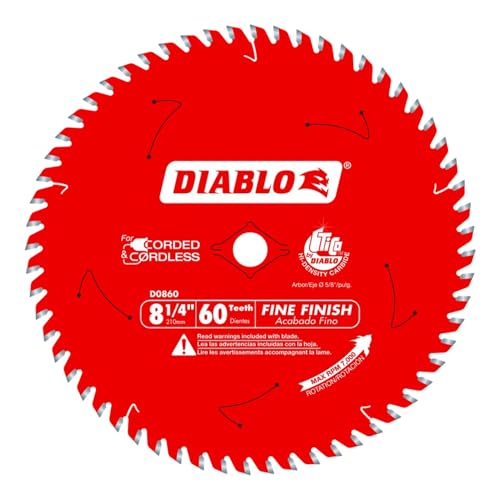
This Diablo 8-1/4-inch blade is a finish star for compact saws. It uses high-density carbide and a low-friction coating. With 60 ATB teeth, it excels at smooth crosscuts in wood and melamine. It’s not a flat tooth, but it’s a finish champ for smaller setups.
If you run an 8-1/4-inch table saw, this blade is a no-brainer for panel work. It pairs nicely with a dedicated FTG blade for joinery. The coating resists pitch buildup, and the plate runs quiet. Keep your feed steady for glassy edges.
Pros:
- Great finish on portable table saws
- Carbide holds an edge with tough workloads
- Coating reduces heat and gumming
- Strong on melamine and plywood
- Good control and lower noise
Cons:
- Not a flat tooth joinery blade
- 8-1/4-inch size limits cut depth
- Slower in rip cuts
My Recommendation
Get this if you need pro-level finish on a compact saw. Use it with a true FTG for joinery and you’ll cover all bases. If you aim to build a kit around the best flat tooth table saw blade, this Diablo adds the finish you need.
| Best for | Why |
|---|---|
| Portable saw finishing | 60T ATB gives clean edges |
| Melamine and plywood | Low-friction coat resists chip-out |
| Quiet, smooth cuts | Refined plate and tooth geometry |
Product-by-Product Insights: How I Choose the Right FTG Blade
Picking the best flat tooth table saw blade starts with your main task. For ripping solid wood fast, I want 24T and a stable plate. For joinery, I want a true FTG with a set kerf, like 1/8-inch or 1/4-inch. For mixed work, a combo grind with a raker is worth it.
Fit and setup matter too. Match kerf to your riving knife so stock does not pinch. Thin kerf helps a small motor. Full kerf tracks straighter on long rips. Check hook angle as well. Positive hook feeds faster; lower hook gives more control.
Material decides a lot. Hardwoods need sharp carbide and stable plates. Laminates want high tooth counts and careful feed. If you cut many dados, a dedicated groover saves hours. That is why the best flat tooth table saw blade is the one tuned to your core workflow.
Project Playbook: Matching Blades to Jobs
For box joints, I lean on the Ultra-Shear FTG groovers. They drop flat floors and square walls. For cabinet panels, I swap to a high-tooth finish blade. That keeps veneer edges clean. When I prep rough lumber, I grab a 24T FTG ripper.
On a jobsite, I like a combo blade with a raker tooth. It keeps the kerf cleaner and saves swaps. In a small shop, I run two blades most days. One dedicated FTG for joinery. One finish blade for crosscuts and panels.
Your saw power matters. If it’s under 2 HP, thin kerf helps. If it’s 3 HP or more, full kerf tracks best. These small choices decide how close you get to “perfect” fits with less fuss. That is the heart of finding the best flat tooth table saw blade for your bench.
FAQs Of best flat tooth table saw blade
What does “flat tooth” or FTG mean on a blade?
Flat tooth, or FTG, means each tooth top is flat. It cuts a flat-bottom kerf, ideal for dados, grooves, and box joints.
Can a combo blade replace a true FTG for joinery?
It can work for light joinery. Combo blades with a raker clean the floor. But a true FTG gives the flattest bottoms.
Is thin kerf or full kerf better for FTG cuts?
Thin kerf is easier on small saws. Full kerf tracks straighter in thick hardwood. Match kerf to your riving knife.
What tooth count is best for flat-bottom dados?
Dedicated FTG groovers with 40T or similar work well. They balance clean walls and flat floors with good control.
Do I still need a dado set if I have an FTG blade?
For wide dados, a dado set is faster. A single FTG blade excels at fixed kerfs like 1/8 or 1/4 inch.
Final Verdict: Which Should You Buy?
The Ultra-Shear FTG Grooving Blades are my top picks. Choose 1/8-inch for box joints and fine dados, or 1/4-inch for panel grooves.
If you want the best flat tooth table saw blade for all-around use, pair that Ultra-Shear with a 24T FTG ripper. Simple kit, pro results.