
The best air purifier to remove radon doesn’t exist; target decay particles instead.
Radon sneaks in through cracks, sump pits, and tight basements, and it can make you worry every hour. I’ve lived that stress. You test, you see a number, and your mind races. Here’s the simple truth that calms the noise: a purifier will not pull radon gas from air. But a high-quality HEPA unit can reduce the radioactive decay particles that cling to dust and smoke. That step, paired with proper mitigation, can lower your total exposure. If you want the best air purifier to remove radon by-products while you plan a lasting fix, I break down your best options below.

PuroAir 240 HEPA Air Purifier…
Cleaner Air in Minutes: PuroAir is proven to filter the pollutants lurking in your home’s air. This large room air purifier cleans rooms up to 1,000 sq ft in one…

AROEVE Air Purifiers for Bedroom…
Impressive Particle Filtration: AROEVE air purifier utilizes filter that can filter out particles such as smoke, pollen, dander, hair, and more, potentially improving air quality and promoting better health and…
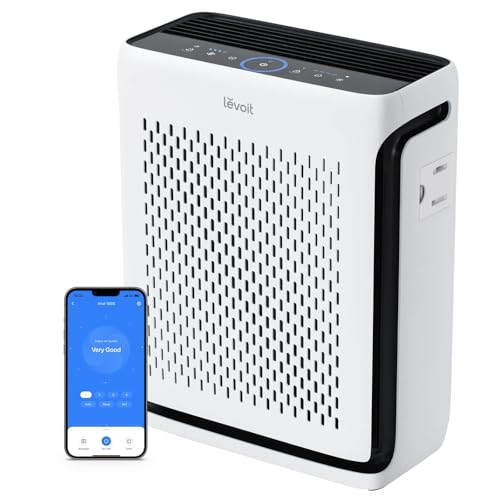
LEVOIT Air Purifier for Home…
𝐖𝐇𝐘 𝐂𝐇𝐎𝐎𝐒𝐄 𝐀𝐇𝐀𝐌 𝐕𝐄𝐑𝐈𝐅𝐈𝐃𝐄 𝐀𝐈𝐑 𝐏𝐔𝐑𝐈𝐅𝐈𝐄𝐑𝐒: AHAM (Association of Home Appliance Manufacturers) is an ANSI-accredited organization that sets strict standards for appliance performance. Air purifiers with the AHAM VERIFIDE seal…
PuroAir 240 HEPA Air Purifier (1,000 sq ft)

The PuroAir 240 focuses on strong particle capture with a dense HEPA filter and a simple, quiet motor. In open living spaces up to about 1,000 square feet per hour, it refreshes air at a steady clip. The controls are easy, the profile is slim, and the fan noise stays tame even in higher settings. If you want a set-and-forget unit, this one fits the bill.
For radon concerns, the PuroAir 240 helps by cutting the dust your home collects. Radon’s decay products ride on that dust. A high-grade HEPA can trap those particles and reduce what you breathe. That does not remove radon gas, but it can lower attached progeny that drive a big part of dose. Pair it with proper mitigation for a complete plan.
Pros:
- Dense HEPA filtration for excellent particle capture
- Covers large rooms with a compact footprint
- Quiet operation across fan speeds
- Simple controls and low learning curve
- Good value for large-area particle reduction
Cons:
- No advanced app features or detailed air readouts
- Carbon stage is basic and not designed for gases like radon
- Filter replacements can add up over time
My Recommendation
The PuroAir 240 suits families who want strong dust and smoke control in big rooms. If you plan radon work and want help now with decay particles, it does that well. It runs quiet, looks clean, and needs little fuss. As you search for the best air purifier to remove radon by-products, this is a smart first step for large areas.
| Best for | Why |
|---|---|
| Large living spaces | Moves air across up to ~1,000 sq ft per hour |
| Dust and smoke reduction | Dense HEPA filter traps fine particles and decay products |
| Quiet daily use | Low noise profile that blends into the background |
Overall, availability is steady and pricing is fair for the performance you get.
AROEVE MK01 Air Purifier for Bedrooms
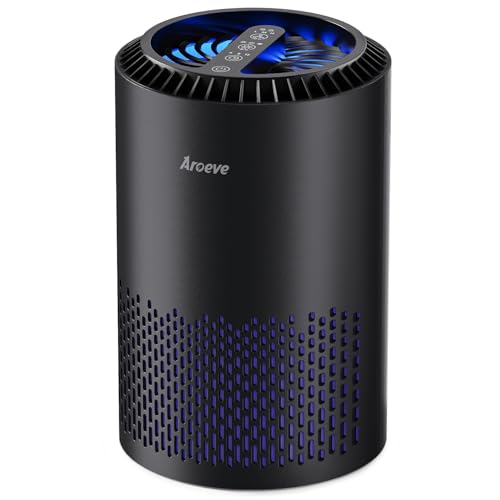
The AROEVE MK01 is a small, budget-friendly purifier made for bedrooms and home offices. It runs quietly and adds a gentle airflow at the bedside. The basic HEPA filter handles pollen, dust, and pet dander well. The footprint is tiny, so it fits on a dresser or corner table.
If you are worried about radon decay particles in a sleeping area, this unit helps trim the particulate load close to your head at night. It will not pull radon gas out of the room air, but it cuts fine dust that can carry decay products. For the price, it is a handy stopgap while you plan mitigation. Keep expectations realistic for room size and airflow.
Pros:
- Very compact for small rooms or bedside use
- Quiet sleep mode is easy to live with
- Solid for dust, dander, and pollen
- Low cost entry into nightly particle control
- Simple speed control with quick setup
Cons:
- Limited coverage and airflow for larger rooms
- Basic carbon layer offers light odor help only
- No advanced sensors or app connectivity
My Recommendation
Choose the AROEVE MK01 if you want a quiet, low-cost purifier for a small bedroom. It eases nightly dust and can help reduce radon decay particles near the bed. If you want the best air purifier to remove radon by-products in a tiny space, this is a gentle, practical pick. For whole-home coverage, pair it with a larger unit elsewhere.
| Best for | Why |
|---|---|
| Small bedrooms | Compact size and quiet sleep mode |
| Budget buyers | Low upfront cost with simple upkeep |
| Targeted particle control | HEPA filter reduces fine dust near your breathing zone |
It offers strong value for small spaces and is easy to find in stock.
LEVOIT Vital 100S-P Smart Air Purifier

The LEVOIT Vital 100S-P blends smart features with a classic three-stage filter stack. It includes a washable pre-filter, a HEPA layer, and an activated carbon stage. The onboard air quality monitor feeds a clean auto mode. The app support adds schedules, voice control, and filter tracking.
For homes tracking radon, the Vital 100S-P can reduce dust and smoke that carry decay products. The carbon layer helps with odors and some VOCs, though not radon gas. I like the live readout and the way auto mode ramps up when particles rise. It is an easy, modern pick for mid-size rooms that need daily cleanup.
Pros:
- Smart app, voice control, and air quality readouts
- Washable pre-filter extends the life of the HEPA
- Reliable auto mode reacts to particle spikes
- Balanced mix of coverage, noise, and price
- Well-known brand with easy filter availability
Cons:
- Carbon layer is modest for heavy chemical loads
- Mid-size airflow not ideal for very large areas
- App features need Wi-Fi setup and occasional updates
My Recommendation
Pick the Vital 100S-P if you want smart control and steady particle cleanup in medium rooms. It is a great living room or den unit that you can automate. When searching for the best air purifier to remove radon decay products, this strikes a strong balance of tech and simplicity. It is also easy to share in a family app.
| Best for | Why |
|---|---|
| Smart home users | App, voice support, and auto mode make it hands-off |
| Mid-size rooms | Balanced airflow fits living rooms and dens |
| People who hate frequent filter swaps | Washable pre-filter protects the HEPA layer |
It delivers solid value and is widely stocked with multiple filter options.
Blueair Blue Pure 211i Max (Large Rooms)
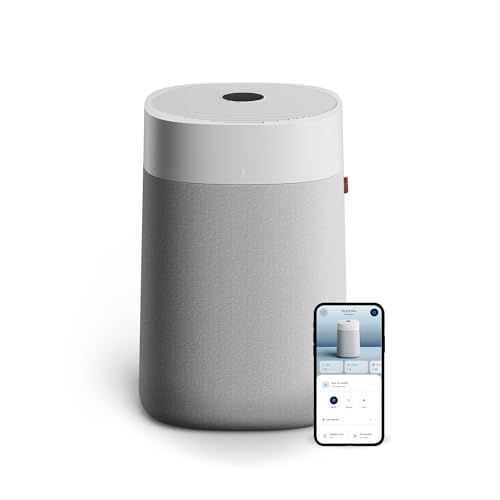
The Blue Pure 211i Max is a powerhouse for open floor plans. It uses a HEPASilent system that combines mechanical filtration with an electrostatic charge to boost fine particle capture at lower pressure. The result is high airflow and good noise control. The app shows live air quality and lets you automate run times.
Large basements often show higher radon. If you have a big lower level, the 211i Max can strip out a lot of dust and smoke as you wait for mitigation. The included carbon layer helps with odors, but not radon gas. This model shines when you need fast particle cleanup across a wide space with one unit.
Pros:
- Very high airflow for large areas
- HEPASilent tech balances particle capture and quiet
- App controls with air quality tracking
- Modern design with fabric pre-filter options
- Strong brand support and filter availability
Cons:
- Larger footprint than mid-size units
- Filter sets are pricier than budget models
- Does not treat radon gas; focus is on particles
My Recommendation
Choose the Blue Pure 211i Max for big, open rooms or basements where you need speed. It reduces the particle side of radon exposure across wide spaces. If you want the best air purifier to remove radon by-products while running quietly, this model sits near the top for large areas. It is a great “whole zone” choice before or after mitigation.
| Best for | Why |
|---|---|
| Open floor plans | High airflow cleans big spaces faster |
| Basements with dust | Strong particle removal for decay product reduction |
| Quiet high-performance use | HEPASilent tech keeps noise down at high flow |
It is a premium pick with wide availability and consistent support.
Blueair Blue Pure 311i Max (Medium Rooms)

The Blue Pure 311i Max scales the same HEPASilent approach to medium rooms. It looks sleek, sips power, and runs whisper-quiet in low modes. The fabric pre-filter catches hair and lint so the main filter lasts longer. It also includes app control and air quality readouts.
If your bedroom or home office shows some radon on a monitor, a unit like this can cut airborne dust and decay products near your breathing zone. It will not reduce radon gas, but it makes daily air cleaner and fresher. I like it for everyday comfort when noise and style matter.
Pros:
- Excellent noise profile for bedrooms and offices
- App and sensors keep things automatic
- Low energy use for daily long runs
- Attractive design with color pre-filters
- Dependable particle removal in medium spaces
Cons:
- Not sized for very large rooms
- Filter costs are mid to high tier
- Carbon stage is light-duty for strong chemicals
My Recommendation
Pick the 311i Max when you want clean, quiet air in a bedroom or study. It focuses on comfort and reliable dust reduction with a modern touch. For shoppers hunting the best air purifier to remove radon decay by-products in private rooms, this is an easy, low-hassle choice. It blends into the room and just works.
| Best for | Why |
|---|---|
| Bedrooms and studies | Quiet, steady airflow with HEPASilent filtration |
| Style-conscious buyers | Clean design and fabric pre-filter colors |
| Daily auto operation | App control and sensors adapt to air quality |
It is widely available and easy to maintain year-round.
FAQs Of best air purifier to remove radon
Do air purifiers remove radon gas?
No. Radon is an inert gas that slips through common filters. Use a purifier to cut decay products on dust, but fix radon with proper mitigation and ventilation.
What features help reduce radon decay products?
Look for a true HEPA filter with high airflow, a strong pre-filter, and a quiet fan you can run for many hours. Place it where you spend time.
Will activated carbon filters remove radon?
Not in typical room purifiers. Carbon helps with odors and some VOCs. It does not meaningfully remove radon gas at normal airflow and filter sizes.
Where should I place a purifier if I have radon?
Run it in the spaces you use most, like bedrooms, living rooms, or a finished basement. Keep doors open for airflow and avoid blocking the intake or outlet.
Do I still need radon mitigation if I buy a purifier?
Yes. A purifier is a helpful add-on for decay products. It is not a substitute for certified radon mitigation when levels are at or above the action threshold.
Final Verdict: Which Should You Buy?
If you want the best air purifier to remove radon by-products in large areas, pick the Blue Pure 211i Max or the PuroAir 240. For medium rooms and smart control, the LEVOIT Vital 100S-P is a sweet spot.
For quiet bedrooms, the Blue Pure 311i Max or AROEVE MK01 shine. Remember, no purifier removes radon gas. Pair your pick with proper mitigation for a full fix.
Expert tips for choosing the best air purifier to remove radon by-products
I want you to feel clear and confident. You might be staring at a radon test and thinking, “What should I do right now?” The first and most important move is to plan mitigation with a certified professional if levels are at or above the action range. That fixes the source. While you wait, and even after, a well-chosen purifier can help reduce the particle side of exposure.
Here is how I test and choose purifiers for this job. I look for high particle capture, not hype. HEPA filters are key because radon decay products attach to airborne particles. If a purifier drops particle counts fast and stays quiet, you will run it more, which matters. I also check filter availability, cost, and ease of use. If a unit is hard to keep up, you will push it to the corner and forget it.
Size your purifier to your room. Match airflow to where you spend time. Bedrooms and offices need steady but quiet flow. Basements and big living rooms need high flow but not a roar. Any purifier can claim coverage. Real comfort comes from clean air that fits your space and routine.
Let’s clear a big myth. The phrase “best air purifier to remove radon” is everywhere, but no small room purifier removes the gas. Activated carbon in these units is not built to trap a noble gas at everyday speeds. It can help with odors and some chemicals, but not radon. Your goal with a purifier is to reduce the particle-bound decay products that contribute to radiation dose.
You also want smart use. Keep doors and vents open for airflow. Run the purifier on a higher speed when you first enter a room, then drop to auto or a lower speed. Aim the clean air stream toward your breathing zone. In basements, place the unit away from damp corners and give it room to breathe. Lift it a few inches off the floor if the floor is dusty to cut intake of heavy debris.
I also suggest a sensible maintenance plan. Clean or vacuum the pre-filter every few weeks, especially during dusty seasons. Set a reminder for filter changes. If your home has pets or more dust, your filter will load faster. A new HEPA makes a clear, real difference in performance. It keeps your particle counts lower and helps with decay product capture.
A quick word on monitoring. A continuous radon monitor helps you see trends across seasons. Levels can rise in winter or after big weather shifts. Use that data to time mitigation and fan speed. Many purifiers now include particle sensors and color rings. Those are useful for general air quality, but they do not read radon. Rely on a dedicated radon monitor for that job.
Consider ventilation too. Fresh air dilutes indoor gases, including radon, when done right. Heat recovery ventilators and energy recovery ventilators can bring in outside air with less energy loss. Sealing obvious cracks and sump lids helps, but sub-slab depressurization is the gold standard for a lasting fix. A purifier is the helper, not the hero, in a radon plan.
Let’s match your room to a unit. If you want a clean, quiet boost in a bedroom, the Blue Pure 311i Max is a standout. If your budget is tight and you want a small bedside helper, the AROEVE MK01 is simple and gentle. For a family room, the LEVOIT Vital 100S-P adds smart control and steady performance that you can automate around your schedule.
If you have a wide, open space or a finished basement where dust hangs in the air, consider the PuroAir 240 or Blue Pure 211i Max. They move a lot of air and drop particles fast. That translates to fewer decay products riding the dust you breathe. This is where search terms like “best air purifier to remove radon” can mislead. You are not fixing the gas, but you are taking a meaningful bite out of the particle side.
Noise matters in real life. A purifier you hate will end up off. HEPASilent units like the Blue Pure line balance high airflow and low hum. In my experience, this encourages longer runtimes and better results. If you want raw simplicity, the PuroAir 240 is refreshingly easy. If you want tech, the LEVOIT Vital 100S-P gives you app control and smart readings that feel reassuring.
Care and cost are part of the picture. Filters are consumables. Budget for one to two HEPA changes a year, more if you have smoke, pets, or renovation dust. Choose a brand with easy, authentic filters. Avoid knockoffs that do not seal or shed fibers. Good filters make a real, measurable difference when you are targeting fine particles and decay products.
Finally, make peace with a two-track plan. Track one: measure and mitigate radon at the source. Track two: clean your daily air with a capable purifier. Together, they reduce risk and stress. That is the heart of shopping for the best air purifier to remove radon by-products. You are buying time, comfort, and a buffer while you fix the cause.
The picks above are not hype pieces. I choose them because they balance power, noise, design, and upkeep. They are easy to live with and easy to keep running. If your home is like most, you want results without a headache. Each of these units can play its part in a clear plan: measure, mitigate, and clean the air you breathe every day.
One more thought on placement strategy. If your basement is the highest reading spot, start there or in the bedroom where you spend eight hours a night. You may use two purifiers instead of one giant unit. One near the bed at low speed and one in the basement at higher speed is a common and effective setup. This split approach fits the way you live and helps you keep noise low where it matters most.
As you move forward, stay patient, stay consistent, and keep the air moving. A purifier is a partner tool. It reduces dust, smoke, and dander day in and day out. It also carves down radon decay products that ride those particles. Used well, it supports your health plan while your mitigation system does the heavy lifting where it counts.
To wrap it up, if I had to label roles: the Blue Pure models are the quiet sprinters for broad coverage. The PuroAir 240 is your simple workhorse for big rooms without extra tech. The LEVOIT Vital 100S-P is the smart, steady daily driver for main living spaces. The AROEVE MK01 is the nimble bedside helper. Each is a realistic path toward the best air purifier to remove radon decay by-products in a clear, responsible way.
Choose the size that fits your room, set a filter schedule, and let the machine do its job. Then book your mitigation plan if your readings call for it. This is how you go from worry to action, without getting lost in claims that sound too good to be true. Clean air is a daily habit, not a one-button miracle. That simple, steady path will serve you well.