Choosing the right water heater for your home is an important decision that affects comfort, energy use, and even safety. If you’re building a new house or replacing an old unit, you might hear about direct vent and power vent water heaters. These two types look similar at first, but they have important differences. Homeowners, plumbers, and builders often debate which is better. In this article, you’ll get a clear, detailed look at both options, with practical insights to help you make a smart choice.
Many people only learn the basics of water heaters—hot water comes out when you need it, and that’s it. But venting systems are key to how a heater works and how safe it is. If you pick the wrong type, you might face higher energy bills, costly repairs, or even dangerous gases in your home. By understanding direct vent and power vent heaters, you can avoid common mistakes and choose a system that fits your needs, home layout, and budget.
What Is A Water Heater Venting System?
To start, it’s helpful to know why water heaters need vents. Gas water heaters burn natural gas or propane to heat water. This process creates combustion gases—mainly water vapor and carbon dioxide, but also carbon monoxide, which is dangerous. These gases must leave your home safely, and that’s where venting comes in.
A venting system is the path that moves combustion gases from the heater to outside your house. The right venting system keeps you safe, helps the heater run efficiently, and meets building codes.
What Is A Direct Vent Water Heater?
A direct vent water heater uses two separate pipes: one brings air in from outside for burning the gas, and the other sends exhaust gases out. Both pipes go directly through the wall or roof, so the heater is sealed off from your home’s indoor air.
This design is called “sealed combustion. ” The heater doesn’t use indoor air, so it doesn’t affect the air pressure or temperature inside your house.
Key Features
- Two pipes: One for air in, one for gases out.
- Sealed system: No air from inside your home is used.
- No moving parts: Uses natural draft, not a fan.
- Usually installed near an exterior wall.
How It Works
Cold air from outside comes into the heater through a pipe. Inside, the heater burns gas using this air, heats the water, and sends exhaust gases back out through the second pipe. Because the system is sealed, it’s safer—carbon monoxide and other gases can’t leak into your home easily.
Where Direct Vent Is Used
Direct vent systems are best for homes where the heater can be placed next to an outside wall. This makes installation simpler, since the pipes don’t have to travel far.
What Is A Power Vent Water Heater?
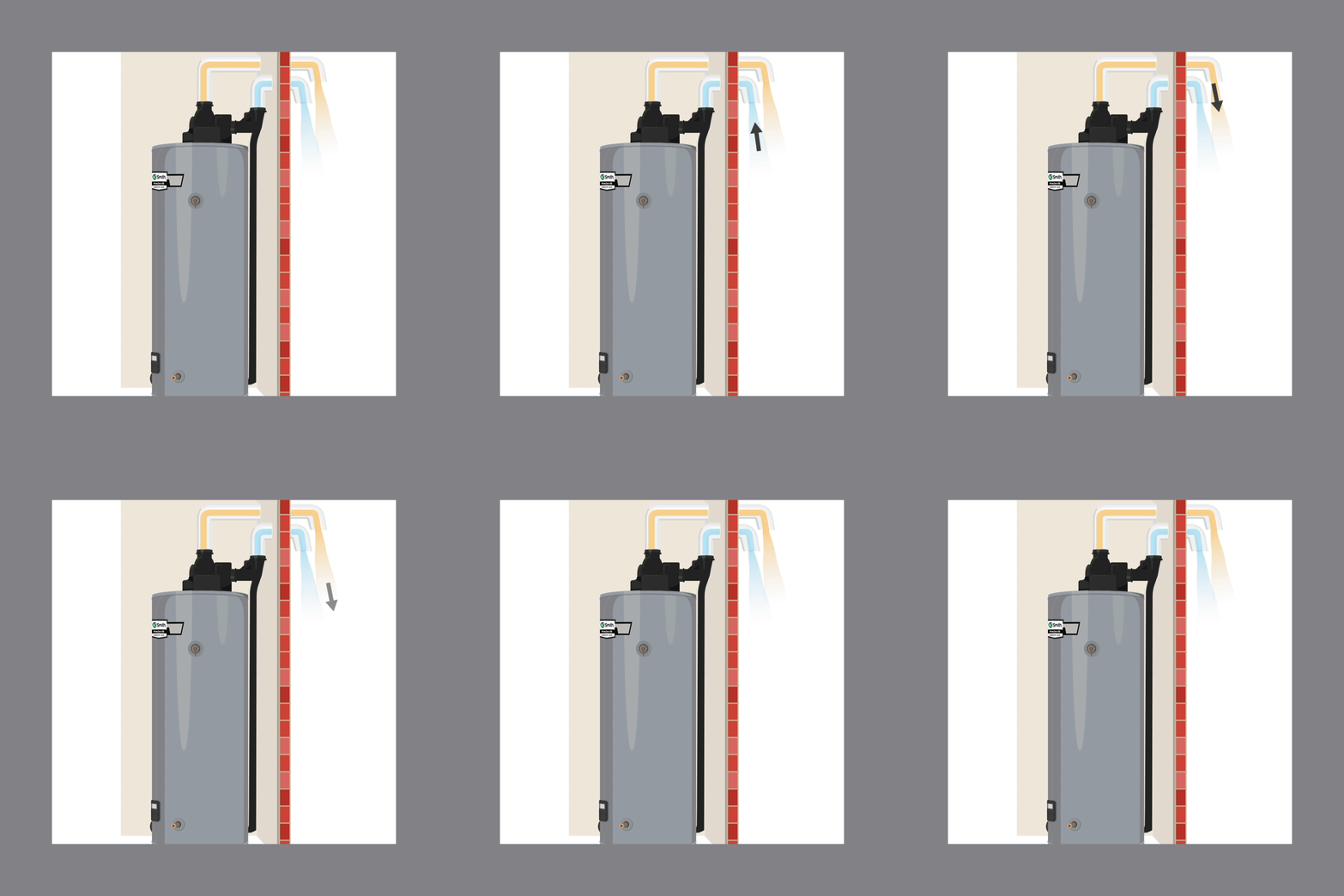
A power vent water heater uses a built-in fan or blower to push exhaust gases out of the home. It takes air from inside the house for combustion and uses a single pipe to send exhaust outside, usually through a side wall.
Unlike direct vent systems, power vent heaters don’t rely on natural draft. The fan moves the gases, so the vent pipe can be longer and more flexible.
Key Features
- One pipe: Exhaust only; air for combustion comes from inside.
- Fan or blower: Forces gases out.
- Flexible installation: Can be far from an exterior wall.
- Needs electricity: The fan won’t work during a power outage.
How It Works
The heater burns gas using air from the room it’s in. The fan pushes exhaust gases out through a vent pipe. Because of the fan, the pipe can be horizontal or vertical and can run longer distances, even around corners.
Where Power Vent Is Used
Power vent systems are ideal when the heater is far from an exterior wall—like in a basement or interior utility closet—because the vent pipe can snake through the house to reach outside.
Direct Vent Vs Power Vent: Core Differences
While both types make hot water and remove dangerous gases, they work in different ways. Here’s a head-to-head look at the main differences:
| Feature | Direct Vent | Power Vent |
|---|---|---|
| Air Source for Combustion | Outside air | Indoor air |
| Exhaust Method | Natural draft, no fan | Fan/blower pushes exhaust |
| Number of Pipes | Two (intake and exhaust) | One (exhaust only) |
| Installation Location | Near exterior wall | More flexible |
| Power Needed | No (unless electronic controls) | Yes, for fan |
| Noise Level | Very quiet | Fan makes noise |
| Backdraft Risk | Low | Low, but possible if fan fails |
Advantages Of Direct Vent Water Heaters
Choosing a direct vent system has several benefits, especially for certain home types and needs.
- Safety: Because the system is sealed, there’s little risk of carbon monoxide leaking into the home. Exhaust gases go straight outside, and no indoor air is used.
- No Electric Power Needed: Direct vent models use the natural draft (hot air rising) to move gases out. If there’s a power outage, the heater can still run (unless it has electronic controls).
- Quiet Operation: With no fan, these heaters operate almost silently. This is helpful if the heater is near living spaces.
- Energy Efficiency: Using outside air for combustion means indoor air isn’t lost through the vent. This can save on heating or cooling bills.
- Simple Maintenance: Fewer moving parts mean less chance of mechanical failure. Maintenance is usually limited to checking the vent pipes and cleaning as needed.
Non-obvious Insight
Many people don’t realize that direct vent water heaters can improve indoor air quality. Because they don’t use indoor air, they don’t create negative pressure, which can draw in dust, pollen, or radon from the ground. This is especially useful in tightly sealed, energy-efficient homes.
Disadvantages Of Direct Vent Water Heaters
While direct vent models have many strengths, they also have some limitations:
- Location Restrictions: These heaters must be installed near an outside wall for the vent pipes to work. If your heater is in the middle of the house, this may not be possible.
- Limited Pipe Length: The vent pipes usually can’t be longer than about 4-5 feet. This limits installation options.
- Higher Upfront Cost: Direct vent heaters can cost more to buy and install than standard atmospheric models.
- Fewer Models Available: There are fewer direct vent models on the market, so you may have less choice in size or features.
Non-obvious Insight
Some homeowners think a sealed system means no outside noise. However, if the vent is close to the ground outside a bedroom or patio, you may hear a faint “whoosh” as air moves in and out, especially on cold days.
Advantages Of Power Vent Water Heaters
Power vent systems are popular for their flexibility and other benefits.
- Flexible Installation: Because the fan pushes exhaust, the vent pipe can run 40-100 feet and go around corners. This allows installation in basements, closets, or interior rooms.
- No Chimney Needed: The vent can go out a side wall or through the roof, and it can be plastic (PVC or ABS), which is cheaper and easier to install than a metal chimney.
- Lower Risk of Backdraft: The fan helps prevent exhaust gases from leaking back into the home.
- Can Use Cheaper Vent Materials: Plastic vent pipes resist corrosion from acidic exhaust and are less expensive than metal.
- Better for Large Homes: If your water heater is far from an exterior wall, a power vent model is usually the best or only option.
Non-obvious Insight
Many people miss that power vent heaters can help with energy codes. Some local codes require sealed combustion or specific vent types for new homes. Power vent heaters often meet these requirements, making them a safer choice for new construction or remodels.
Disadvantages Of Power Vent Water Heaters
These systems are not perfect. Consider these drawbacks:
- Needs Electricity: If the power goes out, the water heater won’t work, even if you have gas. This can be a problem during storms or outages.
- Fan Noise: The fan or blower makes a noticeable sound, especially when the heater starts or stops. Some people find this annoying if the heater is near bedrooms or living areas.
- More Moving Parts: The fan can wear out or fail. Replacing a blower motor is more expensive and complicated than fixing a simple vent pipe.
- Higher Operating Cost: The fan uses electricity, which adds a small cost to your utility bill (usually $20-30 per year).
- Potential for Leaks: Because power vent pipes are often long and run through walls or ceilings, poor installation can lead to leaks or condensation problems.
Non-obvious Insight
Some buyers overlook that power vent heaters need a nearby electric outlet. If your utility room or basement isn’t wired for an extra plug, you’ll need an electrician—this adds to installation cost and time.
Performance And Efficiency Comparison
When it comes to performance, both types heat water well. But there are differences in energy efficiency and operating costs.
| Aspect | Direct Vent | Power Vent |
|---|---|---|
| Energy Factor (EF) | 0.50–0.65 (standard); up to 0.70 (high-efficiency) | 0.60–0.70 (standard); up to 0.80 (high-efficiency) |
| Average Operating Cost | $250–$400/year | $270–$420/year |
| Electricity Use | None (except controls) | 30–60 kWh/year |
| Recovery Rate | Similar to standard models | Similar to standard models |
Energy factor (EF) is a measure of how efficiently a water heater converts fuel into hot water. Higher EF means better efficiency. Power vent models often have slightly higher EF, but the difference is small. For most families, the main factors are installation cost, noise, and reliability.
Installation: Which Is Easier?
Installation difficulty depends on your house layout and existing venting.
Direct Vent Installation
- Needs to be near an exterior wall (ideally within 4-5 feet).
- Two vent pipes go straight outside.
- No need for electricity (unless electronic controls).
- Needs proper sealing to prevent drafts and leaks.
Power Vent Installation
- Can be installed almost anywhere—basement, interior closet, or garage.
- Needs a standard 120V electrical outlet nearby.
- Only one vent pipe required, which can run 40+ feet and around obstacles.
- Pipe must be sloped to drain condensation.
- Vent pipe is plastic (PVC, ABS, or CPVC), so it’s lighter and cheaper.
Common Installation Mistakes
- Wrong Slope on Power Vent Pipes: Power vent pipes must slope back to the heater so condensation doesn’t pool or leak.
- Improper Sealing: Both systems need airtight seals at the wall or roof. Bad seals can let in water, insects, or cold air.
- No Electric Outlet for Power Vent: Forgetting to add an outlet can delay installation or increase cost.
- Blocking Air Intake: For direct vent heaters, make sure the outside intake isn’t blocked by snow, leaves, or debris.
Cost Comparison: Upfront And Long-term
Upfront costs vary based on the heater’s size, efficiency, and installation complexity.
- Direct Vent Water Heater: $900–$2,000 (including installation)
- Power Vent Water Heater: $1,200–$2,500 (including installation)
Power vent models are usually more expensive to buy, and installation can cost more if you need an electric outlet or long vent pipe. However, if your home isn’t set up for a direct vent, running a short vent pipe for direct vent may require major remodeling, which adds cost.
Operating costs are similar for both types, but power vent models use more electricity (for the fan) and may cost more to maintain (fan replacement every 5–10 years).
Real-world Example
A family in the Midwest had an old water heater in the center of their house. Switching to a direct vent model would have meant tearing up walls to add a vent. Instead, they chose a power vent heater and ran a plastic pipe through the basement ceiling—saving over $1,500 in remodeling costs.
Noise Levels: What To Expect
Noise is often overlooked until after installation. Here’s what you need to know:
- Direct Vent: Nearly silent. The only sound is the burner (a soft “whoosh” or “click”), but no fan.
- Power Vent: The fan makes a “whirring” or “humming” sound. Some models are quieter than others, but noise is always present when the heater runs.
If your heater is in a bedroom, hallway, or living space, direct vent models are usually better for peace and quiet.
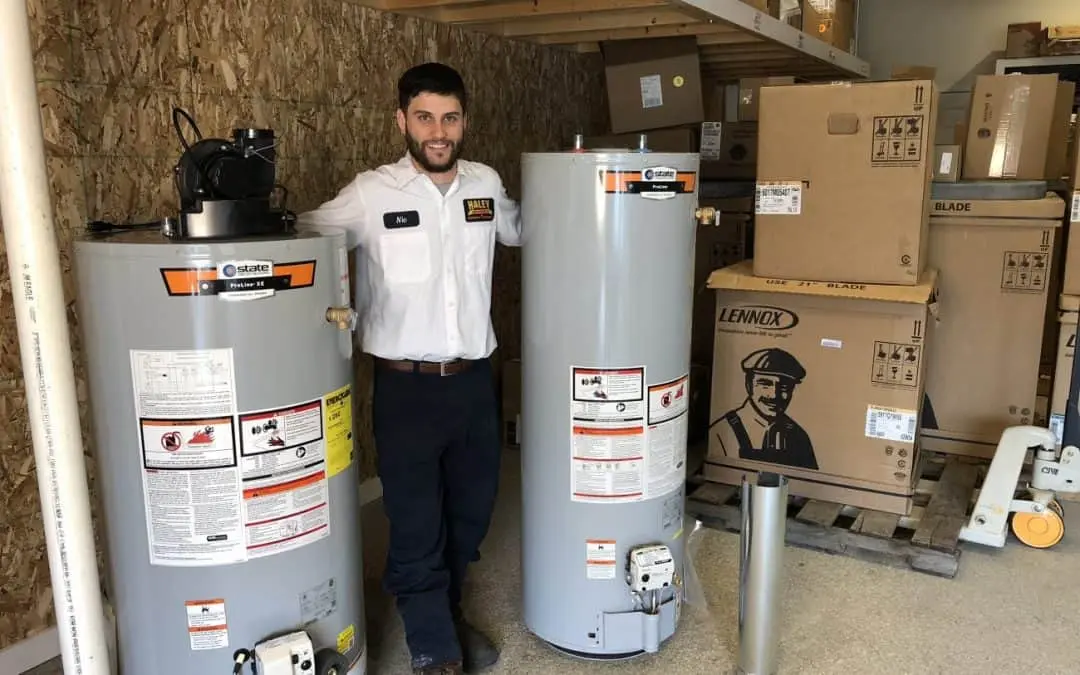
Credit: haleymechanical.com
Reliability And Maintenance
Direct Vent Reliability
- Fewer moving parts mean fewer things can break.
- Sealed combustion keeps dust and lint out of the burner.
- Maintenance is usually limited to inspecting and cleaning the vent pipes yearly.
Power Vent Reliability
- The fan or blower is the main point of failure. It can last 5–10 years, but may need replacement.
- If the fan fails, the water heater won’t run.
- Electronic controls and sensors add complexity.
- Vent pipes should be checked for blockages or leaks.
Maintenance Tips
- Clean Air Intake (Direct Vent): Check the outside intake for leaves, snow, or spider webs.
- Test the Fan (Power Vent): Listen for changes in noise—grinding or squealing means the fan may be wearing out.
- Check for Gas Leaks: No matter the type, always check joints and connections yearly.
- Flush the Tank: Sediment buildup affects all water heaters. Flush the tank once a year.
Safety Considerations
Both systems are designed to be safe, but there are some important differences:
- Direct Vent: Sealed system greatly reduces risk of carbon monoxide leaks. Good for bedrooms, living spaces, or apartments.
- Power Vent: Fan helps prevent backdrafts, but the system depends on electricity and the fan working properly. If the fan fails, the heater will shut down, but you need to fix it quickly.
Both systems must be installed according to code. Never try to install a gas water heater vent yourself unless you are a licensed plumber.
Choosing Between Direct Vent And Power Vent
How do you decide which is best for your home? Here are the main factors:
- Location of Water Heater: If it’s next to an outside wall, direct vent is usually simpler and quieter. If it’s far from an outside wall, power vent is often the only choice.
- Noise Sensitivity: If silence matters (bedrooms nearby), direct vent is better.
- Electricity Availability: If power outages are common, direct vent models can keep working.
- Venting Route: If you need long or complicated vent runs, power vent is more flexible.
- Budget: Direct vent is usually cheaper to operate and maintain, but may cost more to install if venting is difficult.
- Energy Codes and Local Laws: Some areas require sealed combustion or specific venting. Check with your local building department before buying.
Environmental Impact
Both systems are cleaner and safer than old-style atmospheric water heaters. Direct vent models are a bit more energy efficient, since they don’t pull heated indoor air outside. However, the difference is usually small.
Power vent models use a little more electricity, which adds to your carbon footprint. But both types are much better than unvented or poorly vented systems from the past.
Common Myths And Mistakes
Myth 1: Power Vent Heaters Are Always More Efficient.
While some power vent models have higher EF ratings, the extra electricity and fan losses can cancel out the gains. Always check the yellow Energy Guide label for real operating costs.
Myth 2: Direct Vent Systems Can Be Installed Anywhere.
They need a short, straight path to the outside. If your heater is in the middle of the house, direct vent is not an option without costly remodeling.
Mistake: Ignoring Noise
Many buyers regret installing a power vent in a quiet room. Test the noise level in the showroom if you can.
Mistake: Diy Installation
Improper venting is a top cause of carbon monoxide poisoning. Always use a licensed plumber or HVAC contractor for installation.
How To Decide: Step-by-step Guide
- Check Heater Location: Is it near an outside wall? Choose direct vent.
- Look for an Electric Outlet: No outlet? Power vent may require extra wiring.
- Measure Vent Path: Short and straight? Direct vent is easy. Long or twisting path? Power vent is better.
- Think About Noise: Is the heater near bedrooms? Direct vent is quieter.
- Review Local Codes: Some cities only allow certain vent types.
- Compare Upfront and Long-Term Costs: Ask your installer for a full quote, including venting and electric work.
Credit: www.hotwater.com
Real-world Examples
- Small Bungalow: Water heater in a utility room with an outside wall. Direct vent is quiet, efficient, and easy to install.
- Large Home: Water heater in a basement, far from any exterior wall. Power vent is the only practical choice.
- Apartment: Space is tight, and outside venting is required. Direct vent improves safety and meets code.
Which Brands Make Direct And Power Vent Water Heaters?
Leading brands offer both types. Popular models include:
- Rheem: Both direct and power vent, Energy Star certified options.
- AO Smith: Wide range, known for reliability.
- Bradford White: Durable, often used by professional installers.
- State Water Heaters: Both types, with high-efficiency models.
- Navien: Makes advanced condensing power vent units.
Always check for Energy Star ratings and local rebates. Some utility companies offer cash back for high-efficiency models.
Direct Vent Vs Power Vent: Pros And Cons Summary
Here’s a quick snapshot to help you decide:
| Feature | Direct Vent | Power Vent |
|---|---|---|
| Best For | Near exterior wall, quiet areas | Interior rooms, long vent runs |
| Noise | Very low | Moderate (fan noise) |
| Electricity Use | None (usually) | Yes (fan) |
| Maintenance | Low | Moderate (fan replacement) |
| Energy Efficiency | Good | Slightly better (some models) |
| Cost | Lower (if easy venting) | Higher upfront, more flexible install |
Frequently Asked Questions
What Is The Main Difference Between Direct Vent And Power Vent Water Heaters?
The main difference is how they move exhaust gases. Direct vent heaters use two pipes—one brings in outside air for combustion, the other sends exhaust out, using natural draft. Power vent heaters use a fan to push exhaust gases out, and take combustion air from inside the home.
Which Water Heater Is Quieter?
Direct vent water heaters are much quieter because they have no fan. Power vent heaters always make some noise due to the fan or blower.
What Happens If The Power Goes Out?
A direct vent water heater will usually keep working during a power outage (unless it has electronic controls). A power vent water heater will not work because the fan needs electricity.
Which Type Is Safer For Indoor Air Quality?
Direct vent systems are safer for indoor air because they are sealed and don’t use indoor air for combustion. This reduces risk of carbon monoxide leaks and doesn’t affect your home’s air pressure.
Can I Install A Power Vent Water Heater Myself?
It’s not recommended. Power vent water heaters require careful venting and electrical work. Improper installation can lead to gas leaks, exhaust leaks, or electric hazards. Always use a licensed professional.
Making the right choice between direct vent and power vent water heaters depends on your home’s layout, your budget, and your preferences. Both options are safe and efficient if installed correctly. Understanding the differences will help you ask the right questions and avoid costly mistakes. For more detailed information on water heater safety and technology, visit the U.S. Department of Energy site.
With the right system, you’ll enjoy reliable hot water, lower energy bills, and peace of mind for years to come.
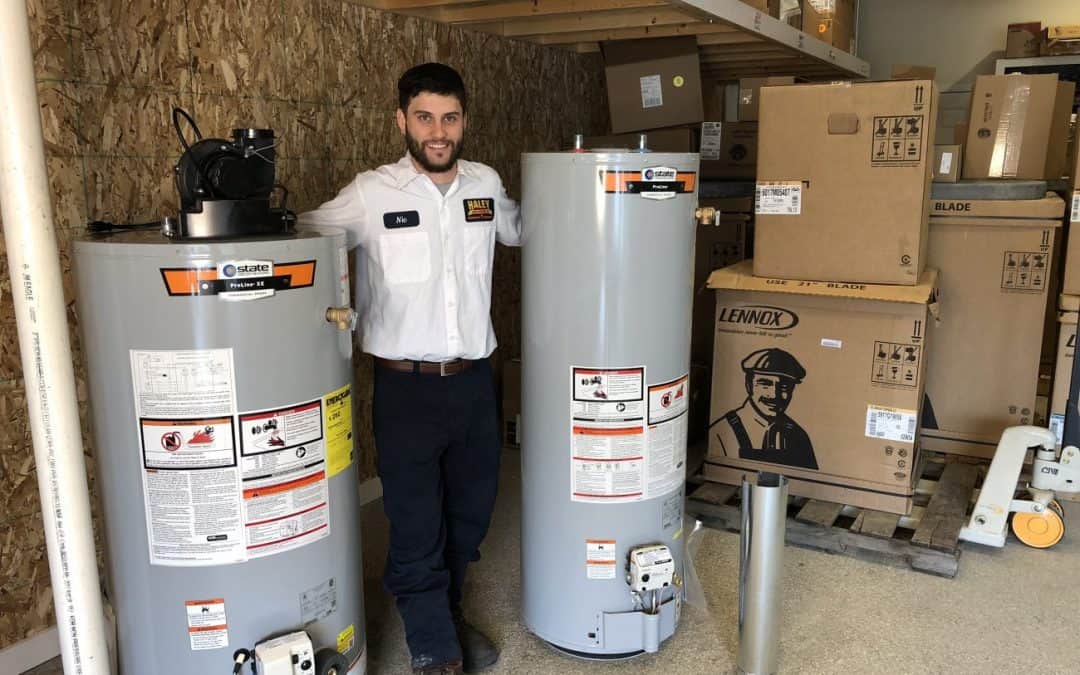
Credit: haleymechanical.com