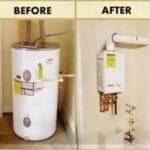
Every home needs hot water, but how you get it can make a big difference in comfort, energy bills, and even your daily routine. You might be choosing between a standard water heater'});}" target="_blank" rel="nofollow sponsored">standard water heater (also called a tank water heater) and a tankless water heater. This decision is not just about price—it’s about how each system fits your home, your lifestyle, and your future costs. Many people think all water heaters are the same, but there are real differences in how they work, how much they cost over time, and how reliable they are. This guide will break everything down, so you can make a smart choice, avoid common mistakes, and feel confident about your hot water system for years to come.
How Standard Water Heaters Work
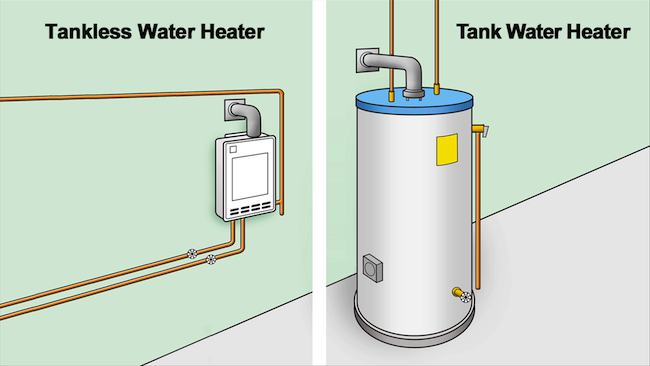
A standard water heater uses a large tank—usually between 30 and 80 gallons—to store hot water. The tank fills with cold water, which is heated by either a gas burner or electric heating elements. The heater keeps the water at a set temperature all day, so it’s ready when you need it. When you turn on a hot water tap, hot water flows out, and the tank refills with cold water, which is then heated again.
This design has been used for decades and is found in most American homes. Because the tank keeps water hot 24/7, you get hot water quickly. But if you use a lot at once—say, if several people shower back-to-back—you can run out and have to wait for the tank to heat more.
Key Features
- Tank size: 30-80 gallons common in homes
- Fuel source: Natural gas, propane, or electricity
- Recovery rate: How fast it heats new cold water after use
- Standby loss: Heat lost from the tank when not in use
How Tankless Water Heaters Work
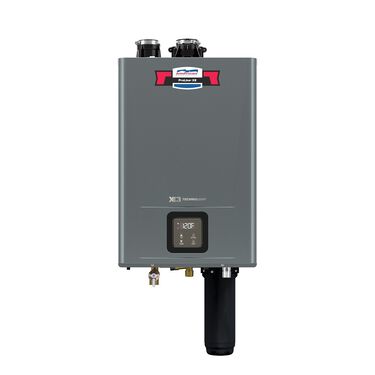
A tankless water heater, sometimes called an “on-demand” heater, does not use a storage tank. Instead, it heats water only when you turn on the tap. Cold water travels through a pipe into the unit, where a powerful gas burner or electric element heats it instantly. The water comes out hot and keeps flowing for as long as the tap stays open.
Because there’s no tank, you never technically “run out” of hot water, but the flow is limited. If several people use hot water at the same time, or if you run multiple showers and appliances, the unit may struggle to keep up unless it’s sized correctly.
Key Features
- No tank: Heats water only as needed
- Fuel source: Natural gas, propane, or electricity
- Flow rate: Measured in gallons per minute (GPM)
- No standby loss: No hot water sitting unused
Comparing Installation And Upfront Costs
When it comes to upfront cost, standard and tankless water heaters are very different. Most standard water heaters cost less to buy and install. Tankless units are more expensive—sometimes twice as much or more, especially for gas models.
| Type | Average Unit Price | Typical Installation Cost | Total Upfront Cost |
|---|---|---|---|
| Standard (Tank) | $500 – $1,200 | $500 – $1,000 | $1,000 – $2,200 |
| Tankless | $1,000 – $2,500 | $1,000 – $2,000 | $2,000 – $4,500 |
Why is installation more expensive for tankless? Tankless units often need new venting, gas lines, or electrical upgrades. Some older homes need major changes to support the high power demand of tankless heaters.
Non-obvious insight: Many people forget to include the cost of permits and any required inspection, which can add $100–$500 more to the total.
Energy Efficiency And Operating Costs
Energy efficiency is one of the main reasons people consider switching to tankless water heaters. Let’s look at how they compare.
Standard Water Heaters
These units keep water hot all the time, even when nobody is using it. This “standby loss” means you pay to reheat the same water over and over. According to the U. S. Department of Energy, a standard electric water heater is about 60-67% efficient, while a gas model is around 58-62%.
Tankless Water Heaters
Tankless units only heat water when you need it, so there’s no standby loss. The U. S. Department of Energy reports tankless models are typically 80-98% efficient, depending on the type. This means you save energy, especially if your hot water use is spread out during the day.
Real savings: A family that uses 41 gallons or less of hot water daily can save 24–34% on energy costs with a tankless model. For heavy users (86 gallons/day), savings are smaller—about 8–14%.
Non-obvious insight: If your hot water needs are very high, installing more than one tankless unit (“point-of-use” systems) can actually use more energy overall, canceling out some savings.
Lifespan And Maintenance
How long will your water heater last? Maintenance and expected lifespan are big factors in value over time.
Standard Water Heaters
A tank unit usually lasts 8 to 12 years. The main reason they fail is rust and corrosion inside the tank. Manufacturers recommend draining the tank every 6-12 months to remove sediment, which can extend life, but most homeowners skip this step.
Tankless Water Heaters
Most tankless units last 20 years or more. They have replaceable parts, so you can fix issues without replacing the whole unit. However, they do need annual maintenance—especially descaling in areas with hard water. Ignoring this can cause early failure and poor performance.
Practical tip: If you live where water is hard, a water softener can double the life of a tankless unit.
Performance: Hot Water Supply And Flow Rate
Hot water is all about comfort. Here’s how both systems perform in real homes.
Standard Water Heaters
These units supply hot water until the tank is empty. After that, you must wait for it to reheat. For example, a 50-gallon tank can provide two to three showers in a row, then it runs cold. The recovery time—how long until you have another hot shower—depends on tank size and power source.
Gas models recover faster than electric.
Common mistake: Choosing a tank that’s too small for your family leads to frequent cold showers.
Tankless Water Heaters
Tankless systems provide endless hot water, but only up to their maximum flow rate. For example, a typical whole-house unit delivers 2–5 gallons per minute (GPM). One shower may use 2 GPM, so if you run a shower and dishwasher at the same time, you may hit the limit.
Sizing matters: You must choose a tankless unit that matches your peak hot water demand. Undersized units will struggle.
Space And Location
Where you put your water heater can affect how much storage space you have in your home.
Standard Water Heaters
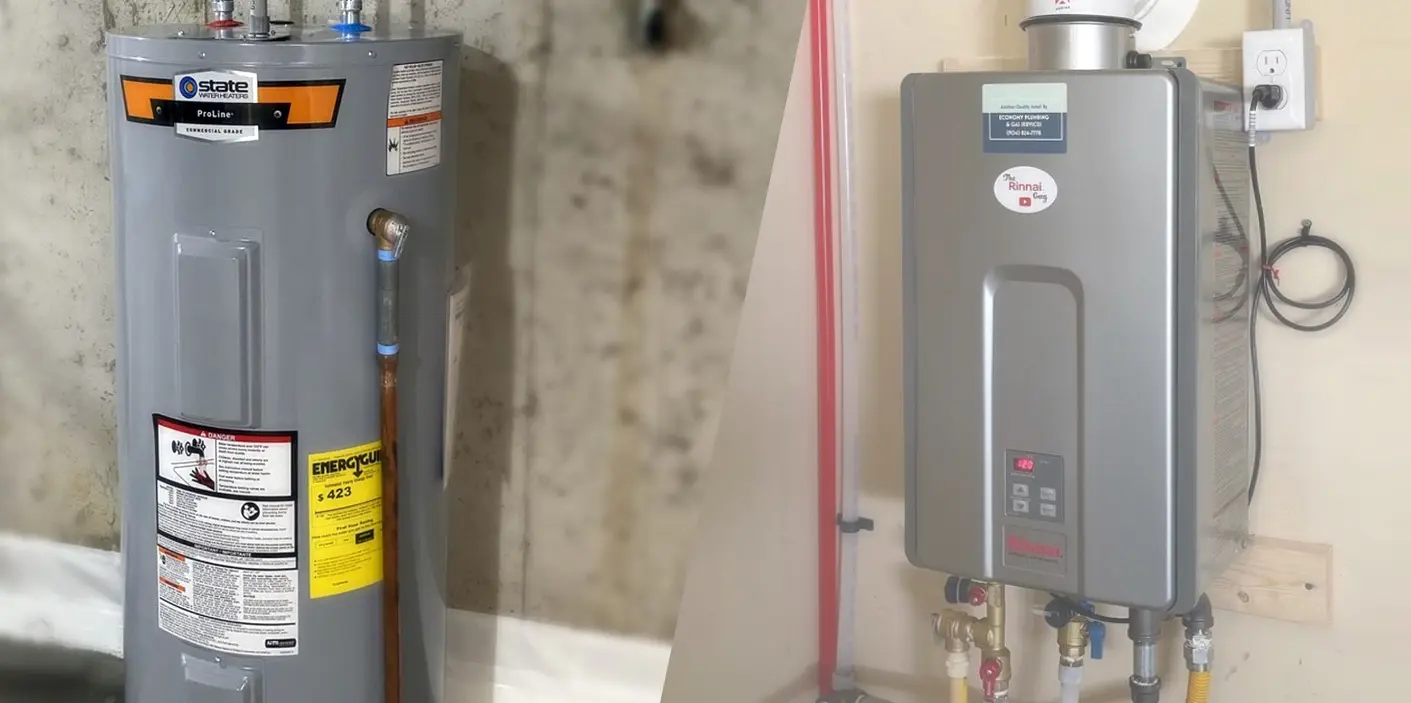
A large tank needs a lot of space—often in a basement, garage, or closet. Some units are up to 5 feet tall and 2 feet wide.
Tankless Water Heaters
Tankless units are much smaller. Many are the size of a suitcase and mount on the wall. Some models even fit under a sink or outside on a wall, freeing up valuable space indoors.
Extra benefit: If you’re remodeling or building a small home, tankless saves room for other uses.
Environmental Impact
Choosing a water heater can affect your home’s carbon footprint.
Standard Water Heaters
Since these use more energy (especially if powered by fossil fuels), they have a higher environmental impact. Older tanks may also end up in landfills.
Tankless Water Heaters
Because they use less energy and last longer, tankless units are greener over their lifetime. Some models qualify for energy efficiency tax credits or rebates.
Non-obvious insight: If you pair a tankless unit with solar panels, you can cut your hot water emissions to nearly zero.
Reliability And Common Issues
Every system has strengths and weaknesses. Here’s what to expect.
Standard Water Heaters
- Leaks: Most failures are caused by tank leaks due to rust.
- Heating element failure: Electric units may stop working if the element burns out.
- Anode rod corrosion: This part protects the tank but needs replacing every few years.
Tankless Water Heaters
- Mineral buildup: Hard water can clog the heat exchanger.
- Ignition failure: Gas units may fail to ignite if venting is blocked or sensors fail.
- Cold water sandwich: A brief burst of cold water can happen between uses.
Hot Water For Large Families Vs. Small Households
The best choice often depends on how many people live in your home and how you use hot water.
Large Families
Standard tanks (especially 50+ gallon models) can handle several showers and appliances at once, but may run out during busy times. A large, properly sized tankless unit (or two smaller ones) can also handle big homes, but at a higher cost.
Small Households
Tankless heaters are ideal for singles, couples, or small homes with less demand. You save space and energy, and never run out of hot water for normal use.
Practical tip: For vacation homes or places with low hot water use, a small tankless heater may be the best long-term value.
Credit: www.americanwaterheater.com
Winter Performance And Extreme Climates
Cold weather can affect both types of water heaters.
Standard Water Heaters
Because they store hot water, tanks are less affected by incoming cold water temperature. However, tanks in unheated spaces can lose heat faster in winter.
Tankless Water Heaters
These must work harder to heat very cold incoming water. This can reduce the flow rate in winter. Some units have “freeze protection” if installed outdoors, but this adds cost.
Expert insight: In very cold climates, an oversized tankless unit or a hybrid system may be the best choice.
Smart Features And New Technology
Recent years have brought smart features to both types of water heaters.
Standard Water Heaters
- Wi-Fi modules: Some can be controlled by smartphone for adjusting temperature or checking status.
- High-efficiency models: Newer tanks use better insulation and heat pump technology.
Tankless Water Heaters
- Remote controls: Adjust temperature from your phone or a wall panel.
- Self-cleaning cycles: Reduce mineral buildup.
- Condensing technology: Some gas units reuse exhaust heat for even higher efficiency.
Non-obvious insight: Smart features are not just for convenience—they can help you spot leaks or problems early, saving money on repairs.
Safety Considerations
Both types of water heaters are safe when installed correctly, but there are some differences.
Standard Water Heaters
- Pressure relief valves: Prevent explosions if the tank overheats.
- Scald risk: Tanks set too hot can cause burns.
- Flooding: If a tank fails, it can release all its water at once.
Tankless Water Heaters
- No large water storage: Less risk of major flooding.
- Temperature controls: Easier to set safe hot water temperature.
- Gas safety: Gas models need proper venting to avoid carbon monoxide.
Tip: Always use a licensed plumber for installation to avoid code violations and insurance issues.
Comparing Standard And Tankless: Quick Reference Table
To help visualize the main differences, here’s a side-by-side comparison.
| Feature | Standard (Tank) | Tankless |
|---|---|---|
| Upfront Cost | Lower | Higher |
| Energy Efficiency | Lower (60-67%) | Higher (80-98%) |
| Lifespan | 8-12 years | 20+ years |
| Hot Water Supply | Limited by tank size | Endless (within flow rate) |
| Space Required | Large | Small |
| Maintenance | Simple, but often ignored | Annual, more critical in hard water areas |
Credit: www.hardknoxplumbing.com
Which Is More Cost-effective Over Time?
Let’s look at total cost of ownership over 10–20 years, including purchase, installation, and energy use.
Standard Water Heaters
- Cheaper upfront, but higher monthly energy bills
- May need to be replaced twice in 20 years
Tankless Water Heaters
- Higher upfront cost, but lower energy bills
- Lasts twice as long as tank model
- Maintenance costs may be higher if water is hard
Example calculation: If a standard tank costs $1,500 to install and $500/year to run, and lasts 10 years, total cost over 20 years is $5,000. A tankless unit might cost $3,500 to install, $400/year to run, and last 20 years, for a total of $7,500. Over 20 years, the tankless saves $2,000 in energy, but costs more up front. The break-even point depends on local energy prices, hot water use, and utility rebates.
Non-obvious insight: Many utility companies offer rebates for installing energy-efficient (tankless) models, which can offset the higher initial cost.
Choosing The Right Water Heater For Your Home
Here’s how to decide which system fits your needs.
- Assess your hot water demand: How many people use hot water at once? Do you have large bathtubs or multiple showers?
- Check your installation options: Is your home set up for gas or electric? Is there enough space for a tank, or would a tankless fit better?
- Consider your budget: Can you afford a higher upfront cost for lower bills later?
- Think long-term: Do you plan to stay in your home long enough to benefit from longer life and energy savings?
- Research local incentives: Check for rebates or tax credits that could make tankless more affordable.
Common mistake: Many people choose the cheapest option, only to pay more in repairs or energy bills later.
Credit: arnicaheatingandair.com
Real-world Example: Family Of Four
Let’s say you have a family of four. You run two showers at once, plus the dishwasher. A 50-gallon tank may struggle if everyone showers in the morning, and you may run out of hot water. A properly sized tankless unit (minimum 6 GPM at your coldest winter water temperature) can supply both showers and the dishwasher without running out—but the right size is critical.
Real-world Example: Small Apartment
A single person or couple in a small apartment may never need more than one shower or appliance at a time. In this case, a compact tankless unit saves space and energy, and the higher upfront cost will pay off over time.
What Most Homeowners Miss
- Water quality matters: Hard water shortens the life of both types, but especially tankless. Using a water softener or filter can double your unit’s lifespan.
- Sizing is critical: Tankless units must be sized for your peak use, not just average use. Undersized units lead to poor performance and unhappy families.
- Maintenance isn’t optional: Skipping annual maintenance on a tankless heater can void your warranty and shorten its life.
Noise Levels
Noise can be a concern, especially if your water heater is near living spaces.
- Standard tanks usually make a low “humming” or “whooshing” sound, and sometimes loud popping noises as sediment builds up.
- Tankless units may make a clicking sound when they ignite, and a low fan noise during operation, but are often quieter overall.
Practical tip: Install either type away from bedrooms if possible.
Brand And Warranty Differences
Both types are made by major brands like Rheem, A. O. Smith, Rinnai, and Noritz. Warranties for standard tanks are usually 6–12 years. Tankless units often have 10–15 year warranties on the heat exchanger, but less on other parts.
Non-obvious insight: Registering your unit with the manufacturer right after installation often extends warranty coverage.
Environmental And Utility Incentives
Installing a tankless water heater may qualify you for federal tax credits or local utility rebates, making the upgrade more affordable. Details can be found at the ENERGY STAR website.
Final Thoughts
Choosing between a standard water heater and a tankless water heater is about more than just buying a new appliance. It’s a decision that affects your energy bills, comfort, home value, and environmental impact for years to come. For homes with high hot water use, multiple bathrooms, or frequent guests, a large, high-efficiency tank or a properly sized tankless system is best. For small families or those who value energy savings and space, tankless offers real advantages. Whatever you choose, proper installation and regular maintenance are key to long life and reliable performance. Take the time to understand your needs, and you’ll enjoy hot water without surprises.
Frequently Asked Questions
What Size Water Heater Do I Need For My Home?
The right size depends on your peak hot water use. For standard tanks, 40-50 gallons suits most families of four. For tankless, add up the GPM of all appliances you might use at once, and choose a unit that meets or exceeds that number.
Are Tankless Water Heaters Worth The Higher Upfront Cost?
They can be, especially if you use less hot water or plan to stay in your home for many years. Lower energy bills and longer lifespan can offset the initial investment, especially with rebates or incentives.
Can I Install A Tankless Water Heater Myself?
It’s not recommended. Tankless units often require new gas lines, venting, or electrical work. Improper installation can be dangerous and may void your warranty.
How Often Do Water Heaters Need Maintenance?
Standard tanks should be flushed every 6-12 months to prevent sediment buildup. Tankless units need annual descaling, especially in hard water areas, plus regular filter and vent checks.
Which Type Heats Water Faster?
Tankless units heat water instantly, but hot water may take the same amount of time to reach your tap due to pipe length. Standard tanks always have hot water ready, but once used up, they need time to reheat.
By understanding the real differences between standard water heaters and tankless water heaters, you can choose the best system for your family, your budget, and your future.