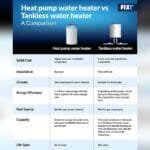
Choosing a new water heater can be confusing. You’ve probably heard about hybrid water heaters (also called heat pump water heaters) and tankless water heaters. Both are advanced options compared to traditional tanks, but they work in different ways and fit different homes. If you’re not sure which is right for you, this guide will break down how each works, their advantages, costs, and what daily life is like with each system. By the end, you’ll feel confident picking the best water heater for your needs.
How Hybrid Water Heaters Work
Hybrid water heaters combine two technologies. They use a heat pump to move heat from the surrounding air into the water tank and, when needed, switch to electric heating elements. This makes them much more efficient than standard electric water heaters, which only use electricity to heat water directly.
A hybrid unit looks like a tall cylinder, similar to a traditional tank, but has a compressor and fan on top. The heat pump pulls warm air from the room, extracts the heat, and transfers it to the water. If you use a lot of hot water in a short time, the electric element kicks in to help.
This makes hybrid heaters fast and reliable.
Key points about hybrid heaters:
- They always have a storage tank (usually 50–80 gallons).
- They work best in warm areas, like a garage or basement, where there’s enough air to draw heat from.
- They are sometimes called “heat pump water heaters.”
Non-obvious insight: Hybrid heaters actually cool and dehumidify the air around them a little. This can help in hot or humid climates but may not be ideal for small, cold rooms.
How Tankless Water Heaters Work
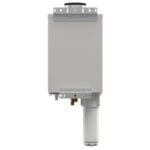
A tankless water heater, or “on-demand” unit, heats water directly as you need it. When you turn on the hot water tap, cold water flows through the device and is instantly heated by gas burners or electric coils. There’s no big storage tank, so the unit is much smaller and can often hang on a wall.
Key points about tankless heaters:
- No storage tank; water is heated only when you use it.
- Can be powered by natural gas or electricity.
- Available in different sizes for whole-house or single-point use.
Non-obvious insight: Tankless units have a maximum flow rate. If too many people use hot water at the same time (like multiple showers), the water can turn lukewarm.
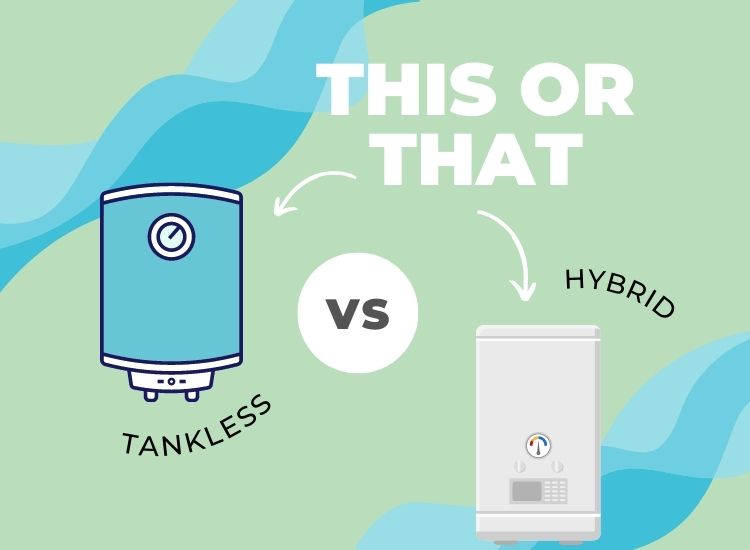
Credit: stogagirlssoccer.com
Comparing Energy Efficiency
Energy efficiency is one of the top reasons people switch to advanced water heaters. Let’s see how hybrid and tankless models compare.
| Type | Efficiency (Uniform Energy Factor) | Annual Energy Use (approx.) | Main Energy Source |
|---|---|---|---|
| Hybrid (Heat Pump) | 3.0–4.0 UEF | ~1,500 kWh | Electricity |
| Tankless (Gas) | 0.82–0.99 UEF | ~150–200 therms | Natural Gas |
| Tankless (Electric) | 0.95–0.99 UEF | ~4,000 kWh | Electricity |
Hybrid heaters are highly efficient, often using less than half the energy of a standard electric tank. The heat pump can produce 3–4 times more heat energy than the electricity it uses. Gas tankless units are also efficient, but not as much as hybrids.
Electric tankless units are efficient at converting electricity to heat but use a lot of power because they heat water instantly.
What this means for you: If you want the lowest possible energy bills and your home is suitable, a hybrid heater often wins. If you care more about endless hot water and have access to natural gas, a tankless unit is a strong choice.
Installation: Space, Location, And Costs
Installing a new water heater is not always simple. Here’s what to expect for each type.
Hybrid Water Heater Installation
- Needs a space at least 7 feet tall and 10×10 feet wide, for good airflow.
- Commonly placed in garages, basements, or utility rooms.
- Needs a drain for condensation.
- May require electrical upgrades (30 amps or more).
Installation cost: Typically $1,500–$3,000, including labor. Some areas offer rebates for heat pump heaters, which can lower the price.
Example: If you live in Florida or Texas, your garage is often the best spot for a hybrid. In a small apartment, it’s harder to find room.
Tankless Water Heater Installation
- Wall-mounted, saving floor space.
- Can be installed indoors or outside (with a special cover).
- Gas units need a vent to the outside, which can be expensive to add.
- Electric units need heavy wiring (often 120–200 amps), which may require a new electrical panel.
Installation cost: Gas tankless: $1,000–$3,500 (more if venting is complex). Electric tankless: $800–$2,500, but may need costly electric upgrades.
Example: In older homes, adding a tankless electric heater can mean upgrading your electric service, which can add $1,000 or more.
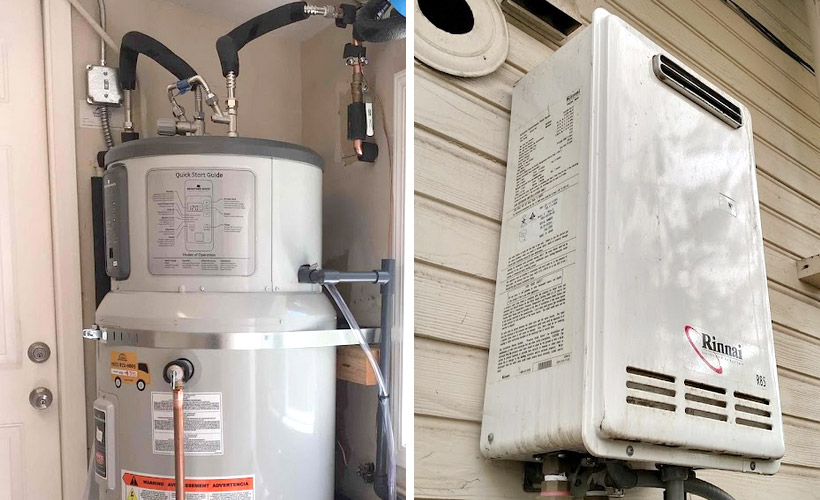
Credit: philbarnettplumbing.com
Hot Water Supply And Performance
You want hot water when you need it, but both types have limits.
Hybrid Water Heater Performance
- Heats a large tank (50–80 gallons), so you can use hot water for showers, dishes, and laundry at the same time.
- If you use all the hot water, recovery can take 1–2 hours, though the electric element helps speed this up.
- Most models have different modes: “Efficiency” (uses heat pump only), “Hybrid” (both), and “Electric” (heats quickly).
Practical tip: If you have a large family, choose a bigger tank size (75–80 gallons). If your family uses a lot of hot water in the morning, set the heater to “Hybrid” mode.
Tankless Water Heater Performance
- Heats water instantly, so you never “run out” as long as the flow is below the unit’s limit.
- Each unit has a maximum flow rate (measured in gallons per minute, or GPM).
- If you run two showers and a dishwasher at once, you might exceed the flow rate, leading to cooler water.
Practical tip: Calculate your home’s peak hot water demand before buying. For example, a shower (2 GPM), dishwasher (1.5 GPM), and washing machine (2 GPM) together need a tankless unit with at least 5.5 GPM output.
Non-obvious insight: Cold incoming water (like in winter) means the tankless unit delivers less hot water per minute. Always check specs for your climate.
Lifespan And Maintenance
Both hybrid and tankless water heaters can last longer than traditional tanks, but only with proper care.
Hybrid Water Heaters
- Expected life: 10–15 years.
- Needs annual maintenance: Clean the air filter, check condensate drain, flush tank to remove minerals.
- Compressor is the most expensive part to replace.
Tankless Water Heaters
- Expected life: 15–20 years.
- Needs yearly descaling (especially if you have hard water).
- Gas units need vent inspection and burner cleaning.
- Electric units have fewer moving parts, but need regular flushing.
Practical tip: Install a water softener if you have hard water. This reduces scale and extends the life of both types.
Credit: everestkitchennc.com
Upfront Costs And Operating Expenses
Let’s compare what you’ll pay at the beginning and over time.
| System Type | Unit Cost | Installation Cost | Annual Operating Cost |
|---|---|---|---|
| Hybrid Water Heater | $1,200–$2,800 | $1,500–$3,000 | $100–$300 |
| Tankless (Gas) | $1,000–$2,000 | $1,000–$3,500 | $200–$400 |
| Tankless (Electric) | $500–$1,500 | $800–$2,500 | $250–$600 |
Key insight: While a hybrid water heater often costs more up front, its lower energy use can pay for itself in 2–5 years, especially in areas with high electricity prices. Gas tankless units save energy compared to tanks, but not as much as hybrids.
Don’t miss: Many utility companies and governments offer rebates of $300–$1,000 for heat pump water heaters.
Environmental Impact
If you want to reduce your carbon footprint, both options are better than an old tank, but there are differences.
- Hybrid water heaters use electricity but are 3–4 times more efficient, which means less power generation and fewer emissions. If your electricity is from renewable sources, your hot water is almost “green.”
- Tankless gas heaters use natural gas (a fossil fuel), but because they only heat water when needed, they produce less CO2 than a standard tank.
- Electric tankless units don’t burn gas, but they use a lot of electricity at once, which can stress the grid if many homes use them during peak hours.
Non-obvious insight: In cold climates, hybrid heaters’ efficiency drops if installed in unheated spaces. In this case, their environmental benefit is less.
Everyday Experience: Noise, Comfort, And Convenience
Some details are only noticed once you live with these systems.
Hybrid Water Heaters
- Make a quiet humming sound when running (like a fridge).
- Slightly cool and dry the air around them.
- Have a control panel with different modes (vacation, boost, energy saver).
- Hot water is always ready, but recovery time is slower in heat pump-only mode.
Tankless Water Heaters
- Nearly silent except for the “click” when starting.
- Need a few seconds to heat water after you turn on the tap (“cold water sandwich” effect).
- Many units offer Wi-Fi connectivity for remote control.
- If undersized, hot water may drop to lukewarm during heavy use.
Practical example: If you take long showers back-to-back, a tankless heater never “runs out.” With a hybrid, after 2–3 showers, you may have to wait for the tank to refill.
Choosing The Right System For Your Home
Here’s how to decide which is best for you.
Pick A Hybrid Water Heater If:
- You have space (large garage or basement).
- Electricity is cheaper than gas in your area.
- You want the lowest possible energy bills.
- You use hot water at different times (not all at once).
Pick A Tankless Water Heater If:
- You have limited space and need a wall-mounted unit.
- Your home already uses natural gas.
- You want endless hot water for showers and tubs.
- Your peak demand is not higher than the unit’s flow rate.
Common mistake to avoid: Don’t choose a tankless unit that’s too small for your needs. Always size based on your highest expected demand.
Real-life Examples
Family in Atlanta, GA: Switched from a gas tank to a hybrid water heater. Saves $250/year on bills, but noticed their garage is cooler in winter.
Couple in Los Angeles: Upgraded to a gas tankless unit. Loves endless hot water for their two bathrooms, but paid $900 extra to add new venting.
Retiree in Arizona: Picked an electric tankless for a small guest house. Installation was fast, but during winter, the shower is less hot because the incoming water is colder.
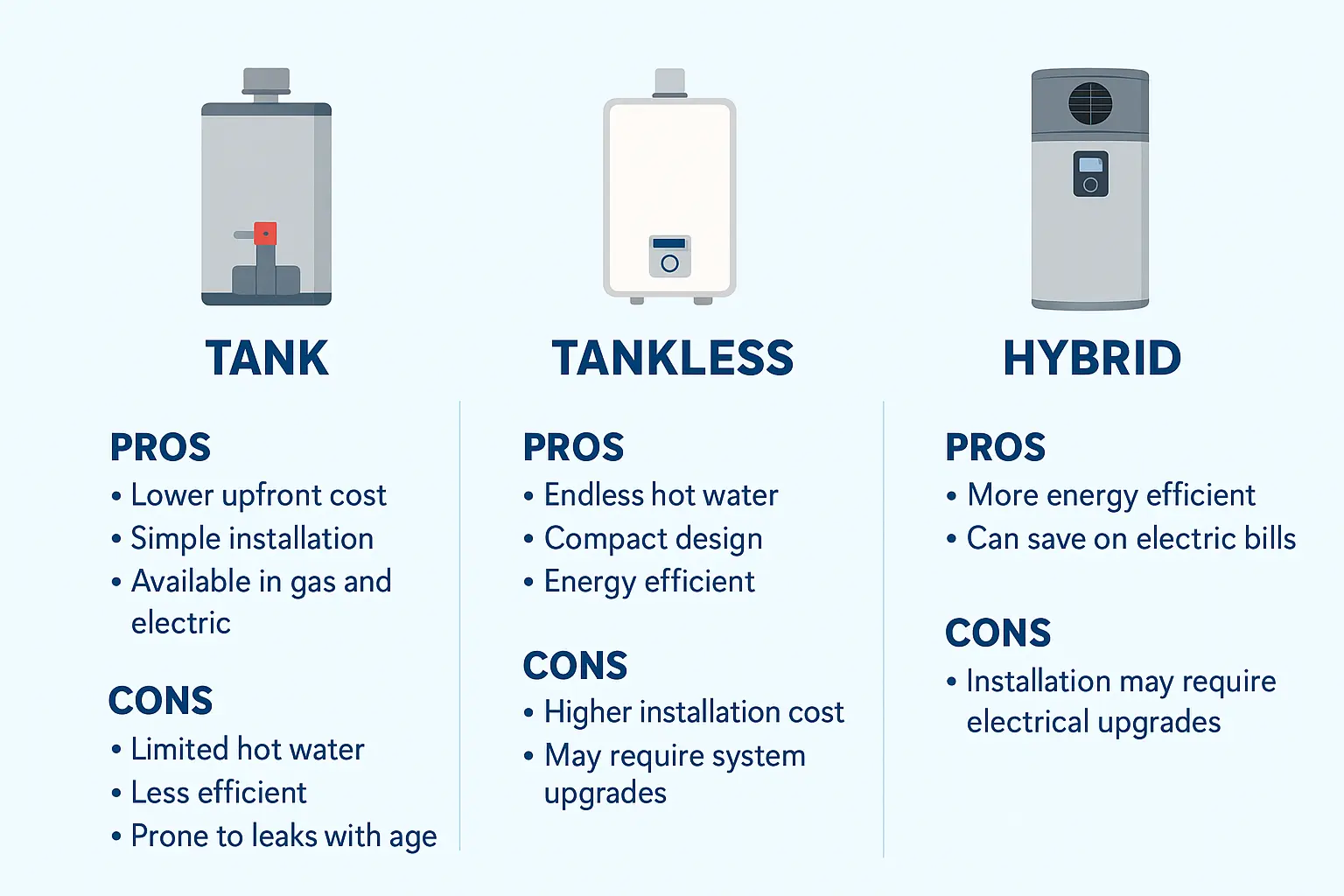
Pros And Cons At A Glance
Here’s a quick summary for easy comparison.
| Hybrid Water Heater | Tankless Water Heater | |
|---|---|---|
| Pros |
|
|
| Cons |
|
|
Common Buyer Mistakes
- Ignoring installation requirements: Many people don’t realize hybrid heaters need a lot of space and airflow, while electric tankless units need heavy wiring.
- Choosing the wrong size: Undersized tankless units lead to lukewarm water during peak times.
- Not factoring in maintenance: Both systems need yearly care, or efficiency drops.
- Overlooking climate effects: Hybrid units are less efficient in cold spaces; tankless units’ output drops with very cold water.
- Skipping rebates: Many buyers miss out on $300–$1,000 in available incentives.
Rebates And Incentives
The US government, states, and some utility companies offer rebates for installing high-efficiency water heaters. Heat pump (hybrid) water heaters often qualify for the largest rebates. Check the ENERGY STAR website or your local utility for current offers. This can lower your upfront cost by hundreds of dollars.
For more info, see the ENERGY STAR Heat Pump Water Heaters page.
Final Thoughts: Which Is Better?
There’s no single answer, but here’s a confident summary:
- If you want the lowest energy bills and have enough space, a hybrid water heater is usually best.
- If you want endless hot water and have limited space or a large family, go for a tankless water heater—but make sure you pick the right size.
Both options are a big improvement over old tank-style heaters. Take time to check your home’s needs, your energy costs, and what rebates are available. With the right choice, you’ll enjoy reliable hot water and save money for years.
Frequently Asked Questions
How Long Do Hybrid And Tankless Water Heaters Last?
Hybrid water heaters last about 10–15 years with proper maintenance. Tankless water heaters can last 15–20 years or more, especially if you flush and descale them regularly.
Do Hybrid Water Heaters Work In Cold Climates?
Hybrid heaters are less efficient in very cold rooms because they need warm air to extract heat. They still work, but may use more electricity. For best results, install them in a heated space.
Can A Tankless Water Heater Supply Hot Water To The Whole House?
Yes, but you must choose a whole-house model with enough flow rate (GPM) for your peak demand. For large homes, you may need more than one unit.
Are There Tax Credits Or Rebates For These Heaters?
Yes. In the US, many hybrid water heaters qualify for federal tax credits and local rebates. Tankless heaters sometimes qualify too, especially ENERGY STAR models. Check with your utility and government websites.
Which Is Cheaper To Run: Hybrid Or Tankless?
A hybrid water heater is usually cheaper to operate than a tankless, especially if you use a lot of hot water. Tankless gas units are efficient but can cost more if gas prices are high.
—
If you’re ready for a new water heater, take your time, compare options, and talk to a trusted installer. The right choice will keep your showers hot and your bills low for many years.