Storing eggs for the long term is a practical skill that many people overlook. Whether you have backyard chickens, buy in bulk, or want to prepare for emergencies, knowing how to keep eggs fresh for months can save money and reduce waste.
Many think that eggs go bad quickly, but with the right methods, you can store them safely and use them when needed.
Most people simply put eggs in the refrigerator and forget about them. While this works for a few weeks, eggs can last much longer if you use special storage techniques. Some methods have been used for hundreds of years, while others use modern technology.
This guide will cover everything you need to know about keeping eggs for the long term—explaining each method, what you need, and common mistakes to avoid. You’ll also find practical tips, clear comparisons, and answers to the most common questions.
Why Store Eggs For The Long Term?
There are several reasons you might want to store eggs for months instead of just weeks:
- Food security: If you live in a rural area, have backyard hens, or worry about supply chain problems, having eggs on hand is a smart backup.
- Bulk buying: Buying eggs in large quantities is often cheaper, but only if you can keep them fresh.
- Seasonal production: Chickens lay fewer eggs in winter. Preserving eggs during peak season means you’ll have them when hens aren’t laying.
- Emergency prep: Eggs provide protein and nutrients, making them a valuable food during power outages or disasters.
But not all eggs or methods work equally well. Understanding egg structure and how spoilage happens is key to picking the best storage option for your situation.
Understanding Egg Freshness And Spoilage
An egg seems simple, but it’s a smart natural package. The eggshell is covered with a protective layer called the bloom or cuticle. This layer keeps bacteria out and moisture in. Washing or rough handling can damage the bloom, making eggs spoil faster.
Inside, eggs have:
- Egg white (albumen): A clear fluid that surrounds the yolk and provides protection.
- Egg yolk: The yellow part, full of nutrients.
- Air cell: A small pocket of air at the wide end, which gets larger as the egg ages.
Spoilage happens when bacteria enter through the shell, or when moisture and carbon dioxide leave the egg. Temperature, humidity, and handling all affect how long eggs last.

Credit: www.youtube.com
Choosing The Right Eggs For Long-term Storage
Not all eggs are created equal when it comes to long-term storage. Some simple rules can make a huge difference:
- Use fresh, clean, unwashed eggs. Eggs laid within the last 24 hours are best. The natural bloom helps keep eggs fresh.
- Check for cracks or defects. Even tiny cracks let in bacteria and air. Never store cracked eggs long-term.
- Size and breed: Larger eggs have bigger air cells, which may shorten shelf life slightly. But for most home storage, this is a minor issue.
You can test freshness by placing eggs in a bowl of water: fresh eggs sink and lay flat, while older eggs stand upright or float.
Refrigeration: The Most Common Method
For most households, refrigeration is the easiest way to store eggs for longer than a week. But a few details can make a big difference in shelf life.
How Long Do Refrigerated Eggs Last?
In a properly set refrigerator (1–4°C or 34–39°F), unwashed eggs can last up to three months. Washed eggs, like those from most supermarkets, last around five weeks.
Best Practices For Refrigeration
- Leave eggs in the carton: The carton protects eggs from moisture loss and odors.
- Keep eggs in the main fridge, not the door: The temperature is more stable inside.
- Do not wash farm-fresh eggs: Keep the bloom intact.
- Store eggs with the pointed end down: This helps keep the yolk centered.
Common Mistakes
- Storing eggs near strong odors: The eggshell is porous and can absorb smells from onions, fish, or garlic.
- Temperature fluctuations: Avoid moving eggs in and out of the fridge, which causes condensation and speeds up spoilage.

Credit: www.youtube.com
Freezing Eggs: For Months Of Freshness
If you want to store eggs for six months or more, freezing is a reliable option. However, you can’t just freeze eggs in the shell—they’ll crack and make a mess.
How To Freeze Eggs
- Crack the eggs into a bowl. You can freeze yolks and whites together or separately.
- Beat gently (if freezing whole eggs) to blend yolk and white.
- Add a pinch of salt or sugar (optional) to help preserve texture.
- Pour into ice cube trays or freezer-safe containers.
- Label with the date and number of eggs.
- Freeze.
Frozen eggs last up to a year. Thaw overnight in the refrigerator before use.
Uses And Limitations
Frozen eggs are best for:
- Scrambled eggs
- Baking
- Casseroles
They’re not ideal for recipes needing runny yolks or for frying eggs sunny-side up.
Pro Tips
- Freeze in small batches (like 1 or 2 eggs per compartment) for easy measuring.
- Always label with the date and number of eggs—once frozen, it’s hard to tell.
Water Glassing: A Traditional Preservation Method
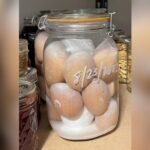
Water glassing is an old but effective way to keep eggs fresh without refrigeration. This method uses a solution of pickling lime (calcium hydroxide) and water.
How Water Glassing Works
The lime solution seals the shell’s pores, preventing air and bacteria from getting in. Properly stored, eggs can last up to a year.
Step-by-step Guide
- Use clean, unwashed, fresh eggs (laid within 24 hours).
- Mix the solution: Add 1 ounce (by weight) of pickling lime to 1 quart of water. Stir until dissolved.
- Pour the solution into a clean, food-safe container (like a glass or ceramic crock).
- Gently add the eggs, pointy side down. Make sure they’re fully covered by the solution.
- Store in a cool, dark place (10–18°C or 50–65°F).
To use, rinse eggs under running water.
Safety And Common Mistakes
- Never use washed or dirty eggs—the protective bloom is needed.
- Check for cracks before adding eggs.
- Label the container with the date.
Non-obvious Insights
- Water glassing works only with fresh, unwashed eggs. Store-bought eggs are usually washed and won’t keep as long.
- The solution may look cloudy or form a crust—this is normal.

Credit: www.reddit.com
Mineral Oil Coating: Simple But Effective
Covering eggs with a thin layer of mineral oil slows moisture loss and blocks bacteria. It’s a method used by some commercial producers and works well for home storage.
How To Apply Mineral Oil
- Warm the oil to about 120°F (49°C) for better coverage.
- Wash your hands and dry eggs (if slightly dirty, use a dry cloth).
- Dip or rub a small amount of oil on each egg, covering the shell.
- Store eggs in a carton in the refrigerator or a cool place.
Shelf Life
- In the fridge: Up to 6–9 months
- At room temperature: 3–4 weeks (less safe in hot climates)
Key Tips
- Use food-grade mineral oil only.
- Don’t apply too much—just a thin, even coat.
- Label cartons with the date.
Comparison With Other Methods
Here’s a quick comparison of refrigeration, water glassing, and mineral oil coating:
| Method | Best For | Storage Time | Egg Type Needed | Notes |
|---|---|---|---|---|
| Refrigeration | Everyday use | 3 months | Any | Easy, but needs power |
| Water Glassing | Off-grid, emergencies | 1 year | Unwashed, fresh | Requires pickling lime |
| Mineral Oil Coating | Extending shelf life | 6-9 months (refrigerated) | Any (best if unwashed) | Oil must be food grade |
Dehydrating And Powdered Eggs
Turning eggs into powder is a long-term solution, especially for camping, emergencies, or storage without refrigeration.
How To Make Powdered Eggs
- Crack and beat eggs until smooth.
- Cook gently (scramble) until just set.
- Spread cooked eggs on dehydrator trays or a baking sheet.
- Dehydrate at 135°F (57°C) until completely dry and brittle.
- Grind into powder using a blender or food processor.
- Store in airtight containers in a cool, dry place.
Shelf Life
- Up to 1 year at room temperature if kept dry and airtight.
How To Use
- Mix 2 tablespoons of egg powder with 2 tablespoons of water to replace 1 egg.
- Great for baking, omelets, and pancakes.
Practical Insights
- Commercial powdered eggs are more consistent and last longer (up to 5–10 years).
- Homemade powders may have a shorter shelf life due to moisture.
Pickling Eggs
Pickling is another method that preserves eggs and adds unique flavor. It’s popular in many cultures and works best for hard-boiled eggs.
How To Pickle Eggs
- Hard boil eggs and peel.
- Prepare pickling brine (vinegar, water, salt, and spices).
- Pack eggs into sterilized jars.
- Pour brine over eggs to cover.
- Seal jars and store in the refrigerator.
Pickled eggs last 3–4 months in the refrigerator.
Flavors And Variations
- Add beet juice for pink eggs.
- Use hot peppers for spicy versions.
- Experiment with herbs and garlic.
Safety Tips
- Always keep pickled eggs refrigerated.
- Never use eggs with cracks.
Storing Eggs Without Refrigeration
Before modern refrigerators, people kept eggs at room temperature. With the right conditions, this still works—especially if you live off-grid or want to prepare for a power cut.
Key Factors
- Temperature: Best between 10–18°C (50–65°F).
- Humidity: 70–80% is ideal.
- Airflow: Good ventilation helps prevent mold.
How Long Do Eggs Last At Room Temperature?
- Unwashed, farm-fresh eggs: Up to 3 weeks
- Washed or store-bought eggs: 1 week or less
Tips For Success
- Store eggs in a cool pantry, cellar, or basement.
- Turn eggs every few days to keep the yolk centered.
- Use the oldest eggs first.
Common Mistakes
- Trying to store washed eggs—without the bloom, they spoil quickly.
- Storing eggs near heat sources or in direct sunlight.
Storing Boiled Eggs
Hard-boiled eggs have a shorter shelf life because cooking removes the protective bloom.
How Long Do Boiled Eggs Last?
- Refrigerator: 1 week (in-shell), 3–5 days (peeled)
Best Practices
- Store unpeeled if possible to reduce drying out.
- Keep in a covered container to avoid odor absorption.
- Write the boiling date on the container.
Long-term Storage: Safety And Testing
Storing eggs for months means you must check for safety before eating. Never take risks with eggs—a bad one can cause illness.
How To Test Eggs For Freshness
- Float Test: Place egg in water. If it sinks and lays flat, it’s fresh. If it stands upright, it’s older but likely safe. If it floats, throw it away.
- Sniff Test: Crack the egg and smell it. A bad egg has a strong, sulfur smell.
- Visual Check: Look for cracks, discoloration, or unusual texture.
Signs An Egg Is Bad
- Sulfur (rotten egg) smell
- Pink, green, or iridescent white/yolk
- Slimy or chalky shell
When in doubt, throw it out.
Comparison Of Storage Methods
For a clear overview, here’s how the main methods compare:
| Method | Room Temp | Refrigerated | Special Equipment | Max Shelf Life |
|---|---|---|---|---|
| Unwashed eggs | 3 weeks | 3 months | No | 3 months |
| Water glassing | 6-12 months | n/a | Lime, crock | 1 year |
| Mineral oil | 3-4 weeks | 6-9 months | Mineral oil | 9 months |
| Freezing | n/a | 1 year | Freezer, containers | 1 year |
| Dehydrating | 1 year | n/a | Dehydrator | 1 year |
| Pickling | n/a | 3-4 months | Jars, vinegar | 4 months |
Practical Tips For Storing Eggs Long Term
To get the best results, keep these tips in mind:
- Rotate stock: Always use the oldest eggs first.
- Label everything: Write dates on cartons or containers.
- Temperature stability: Avoid frequent changes.
- Check regularly: Test eggs before use.
- Choose the right method: Match your needs (backup food, daily use, no power, etc.)
- Buy or collect in bulk: Store only what you can use before the eggs go bad.
- Keep storage areas clean: Prevent mold and pests.
- Use food-safe materials: For containers and coatings.
- Store away from strong odors: Eggs absorb smells easily.
- Don’t store eggs with cracks: They spoil much faster.
Two Common Myths About Egg Storage
Many people believe things about egg storage that simply aren’t true:
- “Eggs need to be refrigerated right away.” In Europe and many countries, eggs are sold unrefrigerated because the bloom is left on. Refrigeration is not needed if eggs are fresh and unwashed.
- “Eggs last forever if refrigerated.” Even in the fridge, eggs slowly lose moisture and quality. Use within the recommended time.
When To Discard Stored Eggs
Even the best storage can’t make eggs last forever. Discard eggs if:
- The shell is cracked, slimy, or moldy.
- The egg floats in water.
- The egg smells bad after cracking.
- You see unusual colors inside.
Don’t take chances with your health.
Real-world Example
During World War II, British families used water glassing to keep eggs when fresh supplies were hard to find. Today, some homesteaders and preppers keep a year’s supply using the same method. With careful rotation and regular checks, it’s possible to enjoy eggs all year—even when hens stop laying.
Where To Learn More
For more scientific details about egg storage, check the research at the Egg as food Wikipedia page.
Frequently Asked Questions
How Long Do Eggs Last Without Refrigeration?
Unwashed, fresh eggs can last up to three weeks at room temperature if kept cool and dry. Store-bought eggs (usually washed) last about one week without refrigeration.
Can You Freeze Eggs In The Shell?
No, freezing eggs in the shell causes them to crack and leak. Always crack and mix eggs before freezing.
Is It Safe To Eat Eggs Past The Expiration Date?
If stored properly and they pass the float and sniff tests, eggs are often safe past the printed date. Always check for smell, appearance, and float before use.
What Is The Best Way To Store Eggs For Emergencies?
Water glassing is ideal for long-term, non-refrigerated storage (up to a year). Freezing works well if you have power and want to store for several months.
Do I Need To Wash Eggs Before Storing?
No. Washing removes the natural bloom that protects eggs. Only wash eggs right before using, not before long-term storage.
Storing eggs for the long term is both an art and a science. With the right method, attention to detail, and regular checks, you can enjoy the taste and nutrition of eggs for months—even when fresh ones are hard to find.