Maximizing Kitchen Space: How to Organize Pots And Pans under Cabinet
A well-organized kitchen can turn cooking from a chore into a joy. But for many people, cluttered pots and pans under the cabinet can make even simple meals feel stressful. The noise of digging through stacked pans, the frustration of finding matching lids, and the wasted space can add up over time. If you’ve ever wished for a smoother way to store your cookware, you’re not alone. The good news is: with a few practical strategies and the right tools, you can completely transform the space under your cabinet into an efficient, tidy, and accessible storage area.
No matter if you cook daily or only on weekends, pots and pans are essential tools. Yet, their different shapes, sizes, and the need for quick access often make them one of the hardest things to organize. Many people simply stack everything in a pile and hope for the best.
But this method leads to scratches, wasted space, and broken handles. Instead, organizing pots and pans under your cabinet requires a bit of planning, smart use of vertical and horizontal space, and sometimes, a little creativity. This article will show you how to get it right, avoid common mistakes, and make your kitchen a place where you actually want to cook.
Understanding Your Space And Needs
Before you start buying organizers or rearranging everything, it’s important to look at what you have and the space available. Not all cabinets are the same, and not every kitchen needs the same system.
Measure And Assess
Take a measuring tape and note:
- The width, depth, and height of the cabinet
- Where the hinges, pipes, or other obstacles are inside
Also, look at the layout. Is it a single cabinet or corner cabinet? Does it have shelves or just open space? These details will help you decide which solutions will actually fit and work for you.
Count And Sort Your Cookware
Lay out all your pots, pans, and lids. Group them by type and size. You may find you have duplicates or items you never use. This is a good time to declutter. If you haven’t used a pot in over a year, consider donating or storing it elsewhere. Less clutter means more space for what you really need.
Think About Your Cooking Habits
Do you use a big stockpot every week, or only for special occasions? Do you prefer non-stick pans, or do you have cast iron that needs special care? Place the items you use most often where they are easiest to reach, and keep rarely used ones toward the back or higher up.
The Best Ways To Organize Pots And Pans Under Cabinets
Organizing pots and pans isn’t just about making things look neat. It’s about making your daily life easier. There are several effective ways to do this, each with pros and cons. The best solution often combines several methods.
1. Vertical Pan Racks
Vertical racks hold pans upright, much like files in a filing cabinet. This system is great for maximizing vertical space and keeping each pan easy to grab.
Benefits:
- No more stacking (prevents scratches)
- Easy to see and grab what you need
- Works well for both cabinets with and without shelves
Tip: Choose a rack that fits your cabinet’s height and number of pans. Some racks are adjustable.
2. Pull-out Drawers Or Sliding Shelves
Installing pull-out shelves turns the deep, dark space under your cabinet into an easy-to-access storage area. You can see everything at once and avoid reaching to the back.
Advantages:
- No more kneeling or stretching
- Great for heavy pots and pans
- Can be added to most standard cabinets
Downside: Installation can be tricky and sometimes requires a handyman.
3. Pot Lid Organizers
Lids are often the biggest mess-makers. Dedicated lid racks or holders can be mounted on the cabinet door or inside the cabinet.
Options:
- Door-mounted racks (for lightweight lids)
- Stand-up racks (inside the cabinet for heavier lids)
Non-obvious insight: Some people use a small tension rod inside the cabinet to hold lids upright—a cheap, DIY option that works surprisingly well.
4. Deep Drawer Inserts
If your cabinets have deep drawers instead of doors, use adjustable dividers or pegboards. These keep each pot or pan from sliding around when you open the drawer.
Why it works: Deep drawers are usually underused or chaotic. With dividers, every item has its place.
5. Corner Cabinet Solutions
Corner cabinets are often wasted space. Use lazy Susans (rotating trays) or special corner pull-out racks to make the most of these tricky areas.
Example: A half-moon pull-out tray can swing all the way out, bringing pots and pans with it.
6. Stackable Organizers
For people with limited height, stackable racks let you make use of vertical space. Some models have adjustable shelves so you can fit different sizes.
Caution: Don’t stack too high, or you’ll end up with the same old problem—unstable piles.
7. Hanging Racks (inside Cabinets)
If your cabinet is tall enough, install hooks or a mini hanging rack at the top. Hang pots and pans by their handles to free up shelf space below.
Non-obvious insight: This method also allows air circulation, which helps dry cookware and prevent musty smells.
8. Roll-out Trays For Heavy Items
Heavy Dutch ovens or cast iron pans can be hard to lift in and out of cabinets. A roll-out tray, often with reinforced sides, makes it safe and easy.
Tip: Check the weight limit before installing; some trays are designed for lighter items.
9. Adjustable Shelf Risers
Shelf risers double your usable space, especially in tall cabinets with only one shelf. Place pans below and above the riser for easy separation.
Why it’s smart: You avoid stacking pans directly, which prevents scratches and makes it easier to see everything.
10. Magnetic Strips For Lids
Mount a strong magnetic strip inside your cabinet door or wall. Metal lids can stick to the strip, saving space and keeping lids visible.
Caution: Only works with metal lids, not glass or plastic.
11. Custom Cabinet Inserts
If you have a bit more budget, custom inserts are built specifically for your cookware and cabinet shape. These can include fitted slots, dividers, or even dedicated pan drawers.
Benefit: Maximum efficiency and a perfect fit.
Drawback: Higher cost and may require a kitchen remodel.
12. Diy Solutions With Tension Rods Or Bins
Don’t want to spend much? Tension rods, baskets, or plastic bins can be arranged to separate pans and lids. Slide bins in and out for easy access.
Practical tip: Use non-slip liners in bins to prevent sliding.
13. Cabinet Door Storage
The inside of your cabinet door is often ignored. Use adhesive hooks, wire racks, or small caddies for lids, small pans, or cleaning supplies.
Note: Make sure the door can still close easily.
14. Layered Pan Racks
Layered racks allow you to store pans on different levels, not just in a straight line. This is good for cabinets that are wide but not very deep.
Why it works: You can see every pan at a glance without stacking.
15. Drawer Pan Holders
Special drawer holders grip each pan by the handle, keeping them upright. This method is neat and prevents pans from bumping into each other.
Insight: This is especially useful for people with arthritis or limited hand strength.
16. Under-shelf Hanging Baskets
These baskets hook onto an existing shelf and hang below it, adding a new layer of storage. Good for lightweight pans or lids.
Tip: Don’t overload; baskets have weight limits.
17. Labeling For Easy Access
Adding small labels to shelves, racks, or bins can help everyone in the house know where each item goes. This keeps the system working long-term.
Pro tip: Use wipeable labels so you can change them as your cookware changes.
18. Nested Storage (with Protection)
When you must nest pans, place a soft liner (felt or silicone) between them to prevent scratches. This is especially important for non-stick or ceramic cookware.
Non-obvious insight: Coffee filters work as cheap pan protectors in a pinch.
19. Use Of Open Space Above Cabinet Base
Some cabinets have a bit of “dead” space above the base or toe kick. With a shallow pull-out tray, you can hide flat pans or baking sheets here.
Warning: Don’t forget about airflow—keep this area clean and dry.
20. Regular Maintenance
No system lasts forever without attention. Set a reminder every few months to review your setup, clean out crumbs, and reorganize as needed.
Why it matters: A little upkeep prevents clutter from creeping back in.
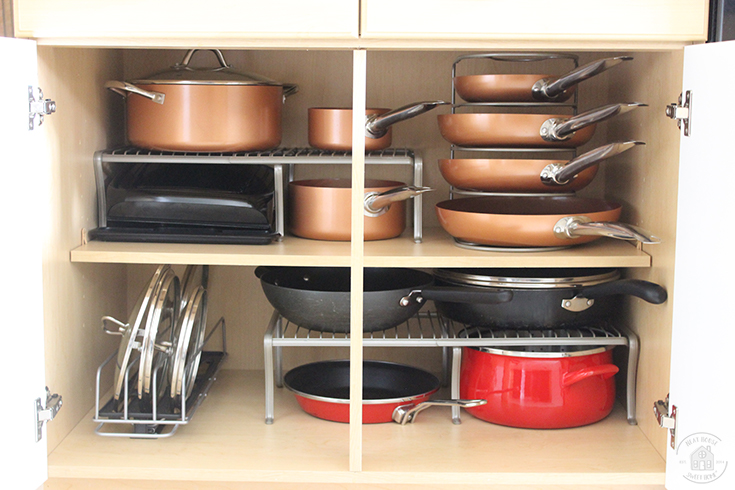
Credit: www.neathousesweethome.com
Choosing The Right Organizers For Your Kitchen
There is no one-size-fits-all organizer. Your kitchen, your cookware, and your daily habits will determine which products or DIY solutions are best for you.
Materials Matter
Organizers come in many materials, like metal, plastic, or wood. Metal racks are sturdy and last a long time, but they can scratch delicate cookware. Plastic is lightweight and cheap but might not hold heavy pots. Wood looks great but needs to be kept dry to avoid warping.
Capacity And Flexibility
Think about how your collection might grow. Choose adjustable or expandable organizers if you plan to buy more cookware. Stackable or modular systems let you change things up as needed.
Cost Vs. Value
You don’t always need the most expensive solution. Simple hacks, like tension rods or bins, can be just as effective as custom inserts. Decide where you want to invest and where you can save.
Installation Difficulty
Some organizers simply sit on the shelf, while others need screws or drilling. Make sure you’re comfortable with the installation process. If not, consider hiring help or choosing no-install options.
Here’s a quick comparison of common organizer types:
| Organizer Type | Best For | Installation | Average Cost |
|---|---|---|---|
| Vertical Rack | Everyday pans | None | $10-$30 |
| Pull-out Drawer | Heavy cookware | Moderate | $40-$100 |
| Door Rack | Lids, small pans | Easy | $8-$25 |
| Custom Insert | Special needs | Professional | $100+ |
Practical Steps To Organize Your Pots And Pans
Now that you know the options, it’s time for action. Here’s a step-by-step guide to organizing your pots and pans under the cabinet:
Step 1: Empty And Clean
Take everything out of the cabinet. Wipe down shelves, walls, and doors. This is a good time to check for water leaks or signs of pests.
Step 2: Declutter
Look at each pot, pan, and lid. Ask yourself:
- Do I use this at least once a month?
- Is it in good condition?
- Do I have another item that does the same job?
Remove anything broken, rarely used, or duplicated.
Step 3: Sort By Type And Size
Group similar items together: frying pans, saucepans, stockpots, lids. This helps you see how much space you need for each group.
Step 4: Choose Your Organizers
Based on your cabinet size and cookware, pick the organizers that make sense for you. Don’t try to fit a system that doesn’t suit your space.
Step 5: Arrange For Accessibility
Place items you use most often at the front or on top. Heavier pans should be stored lower down to avoid lifting injuries.
Step 6: Install Or Set Up Organizers
Follow the instructions for each organizer. Use a level to make sure everything sits straight, especially with sliding shelves or racks.
Step 7: Test And Adjust
Put your cookware in place. Open and close the cabinet, remove and replace pans, and see if anything feels awkward. Adjust as needed.
Step 8: Add Labels (optional)
If you share your kitchen or just like extra order, label each spot so everything goes back in the right place.
Step 9: Maintain
Every few months, take a quick look at your system. Clean up crumbs, check for clutter, and adjust if your needs change.
Mistakes To Avoid When Organizing Pots And Pans
Many people make the same errors when trying to organize their kitchen. Here’s how to avoid them:
- Overstacking: Stacking too many pans leads to scratches and wasted time searching for the right one.
- Ignoring Lids: Lids take up a lot of space if not stored properly. Use racks, hooks, or bins.
- Using the Wrong Organizer: Not all organizers fit every cabinet or cookware type. Measure carefully before buying.
- Skipping Decluttering: Holding onto unused items makes it harder to keep things neat.
- Forgetting Accessibility: Store daily-use items where they’re easiest to reach, not at the back or bottom.
Real-life Examples And Data
According to a 2022 survey by the National Kitchen and Bath Association, over 60% of homeowners say kitchen storage is their biggest frustration. Of those, pots and pans were listed as the most difficult items to organize.
A case study from a family of four found that after installing a pull-out drawer with adjustable dividers, they saved 10 minutes per meal on average searching for cookware. Over a year, that’s more than 60 hours saved just from a simple organizing change.
Another overlooked point: people with well-organized kitchens are more likely to cook at home, according to a study by the Food Marketing Institute. This can lead to healthier eating habits and significant savings compared to frequent takeout.

Credit: www.ramblingrenovators.ca
Advanced Tips For Small Or Unusual Spaces
If you have a very small kitchen or odd-shaped cabinets, you’ll need a bit more creativity.
- Use every inch: The sides of cabinets can hold slim racks for lids or utensils.
- Double up: If you have a very deep cabinet, put rarely used items in a bin at the back and daily-use items in front.
- Go vertical: Tall, narrow spaces can fit a stack of pans upright with a simple rack.
- Try under-shelf baskets: These are great for storing smaller pans or lids in tight spots.
Here’s a quick comparison of organizing strategies for different cabinet types:
| Cabinet Type | Best Storage Solution | Space Efficiency |
|---|---|---|
| Standard Base Cabinet | Pull-out drawers, vertical racks | High |
| Corner Cabinet | Lazy Susan, half-moon pull-out | Medium |
| Deep Drawer Cabinet | Pegboard inserts, drawer dividers | Very High |
| Small Cabinet | Stackable racks, door organizers | Medium |
Organizing For Special Cookware Types
Not all pots and pans are the same. Some require special storage care.
Non-stick Cookware
Non-stick pans can scratch easily. Always use pan protectors or soft liners between them if you must stack. Avoid metal racks that could damage the coating.
Cast Iron
Cast iron is heavy and can rust. Store in a dry place, preferably on a pull-out tray. Allow some space for air to circulate.
Copper
Copper pans are beautiful but scratch easily. Store with a soft liner or hang them if possible.
Glass Lids
Glass lids break easily and take up space. Store upright in a dedicated lid organizer, or use a bin with dividers.
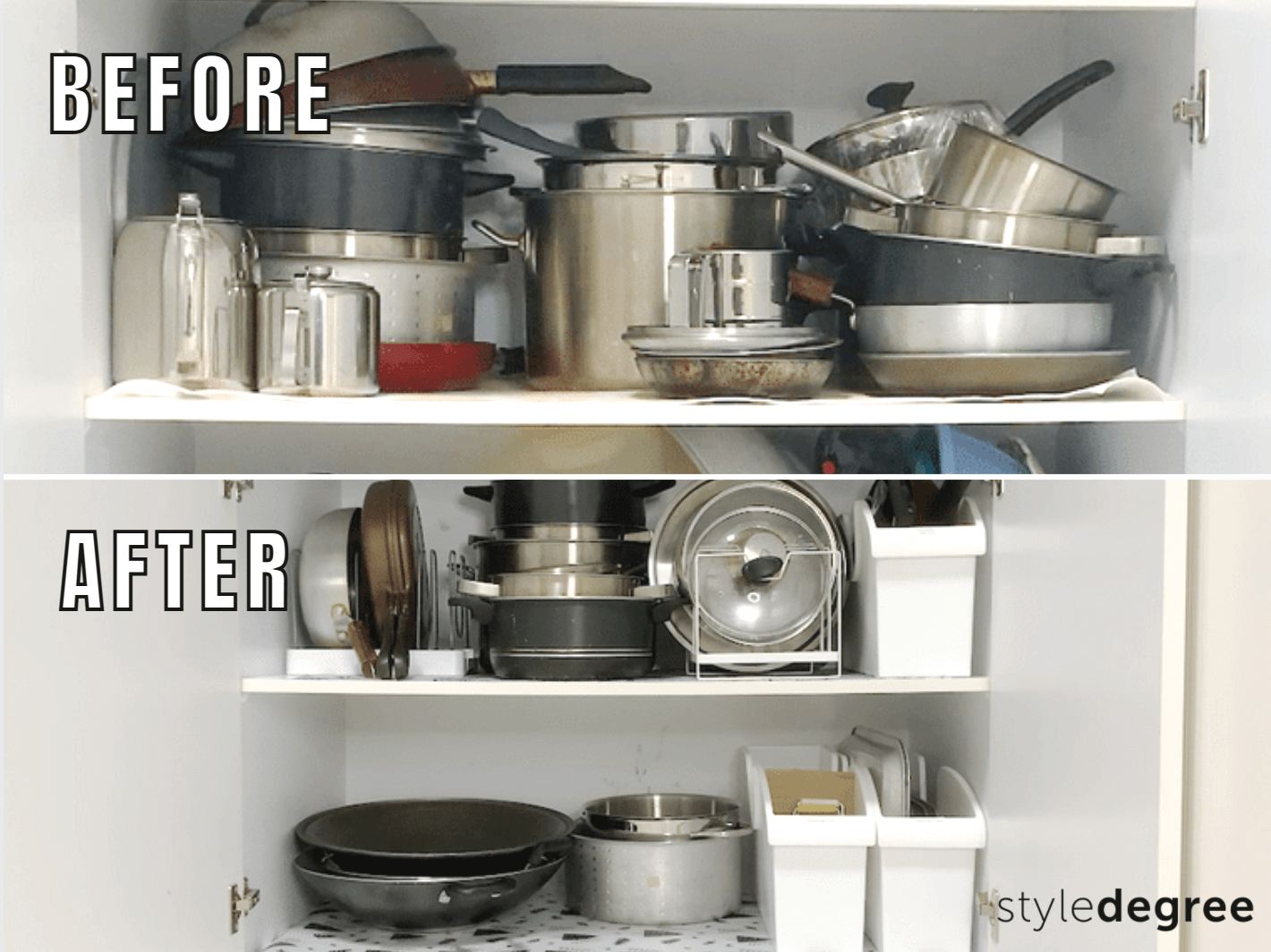
Credit: styledegree.sg
Keeping Your System Working
Even the best organization system can fall apart if it’s not easy to maintain. Here are some proven ways to keep your under-cabinet storage tidy:
- Quick Clean-Up: Wipe down shelves after cooking to prevent grease and crumbs from building up.
- Monthly Check: Once a month, take a minute to put everything back in its place.
- Teach Family Members: Show everyone in the house how the system works. The more people follow the system, the longer it lasts.
- Be Flexible: Your needs may change. Be ready to adjust your system as your cookware collection grows or shrinks.
Frequently Asked Questions
How Do I Store Pots And Pans In A Small Kitchen?
Use vertical racks or stackable organizers to save space. Hang pans if your cabinet is tall enough. Door-mounted racks are great for lids or small pans. Declutter often—only keep what you use regularly.
Can I Stack Non-stick Pans?
Yes, but always put a soft liner, like felt or a coffee filter, between each pan to prevent scratches. Avoid stacking too high to keep pans easy to reach and prevent damage.
What Is The Best Way To Organize Lids?
Use a dedicated lid rack, either inside the cabinet or mounted on the door. For a simple solution, a tension rod inside the cabinet can hold lids upright. Bins with dividers also work well for glass lids.
Are Pull-out Drawers Worth The Investment?
Pull-out drawers make it much easier to reach heavy pots and pans. They prevent bending and kneeling, saving time and effort. If you use your cookware often, they are usually worth the cost and installation.
How Often Should I Reorganize My Pots And Pans?
Check your system every few months. If you add new cookware, adjust your organizers to fit. Quick monthly clean-ups and regular decluttering help keep everything tidy and easy to use.
Organizing pots and pans under your cabinet can seem like a big job, but with the right approach, it’s easier than you think. By understanding your space, choosing the best organizers, and keeping up with small maintenance steps, you can create a kitchen that is both beautiful and functional. For more inspiration and product ideas, visit trusted sources like Good Housekeeping. Your future self will thank you every time you cook.