
Cleaning an oven is often a job people avoid. The smell of strong chemicals and the effort of heavy scrubbing make it easy to put off. But there is a method that is both natural and simple: cleaning your oven with lemon. This method not only gets rid of grime and smells, but it also uses ingredients you probably already have at home. In this guide, you will learn how to clean your oven with lemon, why it works, what to avoid, and how to keep your oven fresh for longer. You will also see a comparison with other cleaning methods and get answers to common questions.
Why Clean Your Oven With Lemon?
Ovens collect grease, burned food, and bad smells over time. If you do not clean your oven, it can smoke, transfer odors to your food, and even become a fire hazard. Most cleaning products for ovens are strong and contain chemicals that can be harsh on your skin and dangerous if not rinsed away completely.
Lemon is a natural cleaner. It contains citric acid, which helps cut through grease and break down burnt-on food. The fresh scent of lemon can also remove stubborn odors from your oven. Cleaning with lemon is safe, affordable, and environmentally friendly.
Key Benefits Of Using Lemon
- Non-toxic: Safe for children and pets.
- Natural deodorizer: Removes bad smells without artificial fragrances.
- Degreaser: Citric acid breaks down grease.
- Affordable: Lemons are cheap and easy to find.
- Gentle on surfaces: Less likely to damage oven finish or glass.
How Lemon Cleans Your Oven
To understand why lemon works, it helps to look at what is inside a lemon. The main cleaning agent is citric acid, which is strong enough to dissolve grease and loosen baked-on stains but mild enough not to damage metal or glass. The natural oils in lemon peel also help to lift dirt and add a pleasant smell.
When you heat lemon juice in the oven, the steam helps to soften grime. This makes it easier to wipe everything away. The process is simple and requires little effort compared to scrubbing with harsh chemicals.
Step-by-step: Cleaning Your Oven With Lemon
Here’s a practical guide to cleaning your oven with lemon. You do not need any special skills or tools. Follow these steps for a cleaner, fresher oven:
What You’ll Need
- 2 large lemons
- 1 oven-safe baking dish (glass or ceramic)
- Water
- Cleaning cloth or sponge
- Small scraper (plastic or wooden)
- Paper towels
Preparation
- Remove oven racks. Take out all racks and trays from your oven. These can be cleaned separately with warm, soapy water.
- Wipe loose debris. Use a dry cloth or paper towel to sweep away any loose crumbs or burnt food.
The Lemon Cleaning Method
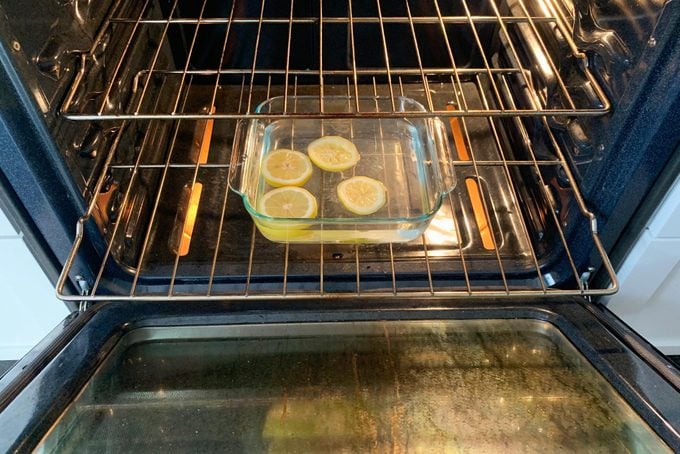
- Cut lemons in half. Squeeze the juice from both lemons into your baking dish.
- Add water. Fill the dish halfway with water. You can also place the squeezed lemon halves in the dish for extra power.
- Place in oven. Set the dish on the middle rack of your oven.
- Heat the oven. Turn your oven to 250°F (120°C). Let the lemon water steam for 30 minutes.
- Turn off and cool. After 30 minutes, turn off the oven. Let it cool for 10-15 minutes, but not completely cold—the warmth helps the cleaning process.
- Wipe down surfaces. Open the oven and carefully remove the dish. Use a damp sponge or cloth to wipe the walls, door, and bottom of the oven. Most grease and stains should come off easily.
- Tackle tough spots. For any stubborn stains, dip your sponge in the warm lemon water and scrub gently. Use a plastic scraper if needed—never use metal, as it can scratch the surface.
- Dry and finish. Wipe with a dry towel to remove any remaining moisture.
Example Of Cleaning Timeline
Here’s what your cleaning schedule might look like:
| Step | Time Required |
|---|---|
| Preparation (removing racks, wiping debris) | 5 minutes |
| Lemon steam cleaning | 30 minutes |
| Cooling and wiping | 20 minutes |
| Total time | 55 minutes |
Deep Cleaning For Heavily Soiled Ovens
If your oven has not been cleaned for months, you may need a deeper clean. Lemon can still help, but you might need to repeat the process or add extra steps.
- Repeat the lemon steam. If stains remain after the first round, refill the dish with fresh lemon and water, and steam again.
- Make a lemon paste. Mix lemon juice with baking soda to create a thick paste. Spread this on stubborn spots, let sit for 10 minutes, then scrub gently.
- Use a soft brush. For hard-to-reach areas, a soft toothbrush dipped in lemon water can help.
- Rinse well. Always wipe with a damp cloth after cleaning to remove any residue.

Credit: www.ovenclean.com
Cleaning Oven Racks With Lemon
Oven racks also get greasy. Here’s how to clean them using lemon:
- Fill a bathtub or large sink with hot water.
- Add lemon juice from 2-3 lemons and a small amount of dish soap.
- Soak racks for at least 30 minutes.
- Scrub with a brush or sponge, focusing on sticky spots.
- Rinse and dry before putting them back in the oven.
What To Avoid When Cleaning With Lemon
Lemon is safe for most ovens, but there are a few things you should not do:
- Do not use metal scrubbers. These can scratch the oven’s interior.
- Do not leave lemon juice on surfaces for too long. Extended exposure may dull some finishes.
- Avoid using lemon on unsealed stone or cast iron parts. The acid can damage these materials.
- Never pour water directly onto electrical parts. Always use a damp—not soaking—cloth.

Credit: www.thecooldown.com
Lemon Vs. Other Oven Cleaning Methods
How does lemon compare to other popular cleaning options? Here is a quick comparison:
| Method | Effectiveness | Safety | Odor | Cost |
|---|---|---|---|---|
| Lemon | Moderate (excellent for light to medium grime) | Very safe | Fresh, pleasant | Low |
| Baking Soda & Vinegar | High (good for tough stains) | Safe | Neutral/strong vinegar smell | Low |
| Chemical Cleaners | Very high | Can be hazardous | Strong, chemical | Medium to high |
| Self-Cleaning Oven Cycle | Very high | Safe for oven, but fumes can be an issue | Burnt smell | None (built-in) |
When Is Lemon The Best Choice?
- When you want a quick, light clean
- If you have sensitivities to chemicals
- To maintain your oven between deep cleans
- When you want to remove bad smells
When Should You Use Other Methods?
- For very heavy, baked-on grease (combine lemon with baking soda or use a self-clean cycle)
- If you need fast, heavy-duty results (chemical cleaners, though not recommended for regular use)
How Often Should You Clean Your Oven With Lemon?
For most home cooks, cleaning the oven with lemon every 1-2 months is enough. However, if you bake or roast often, you might want to do a quick lemon steam every few weeks. This keeps grease from building up and your oven smelling fresh.
If you notice smoke or strong odors when you turn on your oven, it’s a sign you need to clean it soon.
Does Lemon Cleaning Work For All Oven Types?
Lemon is safe for most electric and gas ovens. It also works for countertop toaster ovens. However, there are a few exceptions:
- Self-cleaning ovens: You can still use lemon, but do not use abrasive tools, as these ovens have a special coating.
- Convection ovens: Lemon steam is safe, but avoid letting moisture enter the fan or vents.
- Old or delicate ovens: Always check your manual before using any cleaner.
The Science Behind Lemon Cleaning
Some people wonder if lemon is really strong enough to clean an oven. The answer comes down to chemistry.
Citric acid in lemon juice acts as a mild acid. It breaks the bonds between grease molecules and the oven surface. The steam created when you heat lemon water helps to loosen dried food and soften grime. As a result, wiping becomes easier and requires less force.
A study by the US Department of Agriculture showed that citric acid can break down organic matter and is effective as a natural cleaner. While it may not remove every old, burnt-on stain in one go, regular use keeps your oven in much better shape.
How To Keep Your Oven Clean Longer
A little prevention saves a lot of cleaning time. Here are some habits to keep your oven fresher between deep cleans:
- Wipe up spills immediately after cooking. Use a damp cloth while the oven is still warm (but not hot).
- Use oven liners. These catch drips and crumbs and are easy to remove and wash.
- Cover dishes when roasting or baking. This prevents splatter.
- Regular lemon steams. Even a 10-minute steam with lemon water can keep odors away.
- Check for leaks. Make sure oven doors seal properly to avoid messes escaping the oven.
Real-world Example: Lemon Cleaning In Action
Let’s look at a typical scenario. Anna, a busy mom, bakes cookies and roasts chicken in her oven every week. After a few months, she noticed a burnt smell every time she preheated the oven. Instead of buying a chemical cleaner, she decided to try lemons.
She followed the steps outlined above. After the first steam, most of the grease wiped off easily. For a few tough spots, she used a lemon and baking soda paste. In less than an hour, her oven looked and smelled fresh.
Anna now uses this method every month, and her oven stays clean with minimal effort.
Common Mistakes To Avoid
Many people try natural cleaning methods but do not get good results. Here are mistakes beginners often make:
- Not using enough lemon: One lemon is usually not enough for a full-size oven. Use two or more for best results.
- Skipping the heat: The steam is what makes this method work—never skip the heating step.
- Letting the oven cool too much: Wipe while the oven is still warm (but safe to touch).
- Forgetting to clean the racks: Dirty racks will make your oven smell, even after cleaning the inside.
- Using abrasive tools: Metal pads can damage the oven’s surface.
Extra Tips For A Better Clean
- Add lemon peel for extra scent: Place squeezed peels in the dish for a stronger aroma.
- Use microfiber cloths: These pick up grease better than paper towels.
- Mix with baking soda for extra power: If you have stubborn stains, a paste of lemon juice and baking soda helps.
- Clean oven glass with lemon: Dip a sponge in lemon water and wipe the glass door for a streak-free finish.
- Try oranges or limes: If you do not have lemons, other citrus fruits work too.
Environmental And Health Benefits
By choosing lemon instead of chemical cleaners, you help the environment. Chemical oven cleaners can release volatile organic compounds (VOCs) into the air, which are linked to indoor air pollution and breathing problems. Lemons are biodegradable and safe for the planet.
For your health, using lemon means you are not exposed to harsh fumes or chemical residues. This is especially important if you have children, pets, or allergies.
Cost Comparison: Lemon Vs. Other Cleaners
Let’s see how much you save by using lemon compared to store-bought cleaners:
| Cleaning Product | Average Cost per Clean | Number of Uses |
|---|---|---|
| Lemons (2 per clean) | $1.00 – $1.50 | 1 |
| Baking soda & vinegar | $0.80 | 1-2 |
| Chemical oven cleaner | $4.00 – $6.00 | 1 |
| Self-cleaning cycle (electricity) | $0.50 – $1.00 | 1 |
As you can see, using lemon is one of the most affordable ways to keep your oven clean and fresh.
When Lemon Cleaning Is Not Enough
While lemon is excellent for regular cleaning and odor control, there are times when it may not be enough. If your oven has years of baked-on grease or if you notice a sticky, tar-like build-up, you may need to:
- Use a combination of lemon and baking soda for a stronger effect
- Try a self-cleaning oven cycle
- Use a commercial cleaner for the toughest spots (but always follow up with a lemon steam to remove odors)
Safety Tips When Cleaning With Lemon
- Always let your oven cool before reaching inside.
- Wear gloves if you have sensitive skin—lemon juice can sting small cuts.
- Make sure your oven is unplugged or off before cleaning electrical parts.
- Do not mix lemon with bleach or ammonia, as this can create dangerous fumes.
How To Make Your Own Lemon Oven Spray
If you want a quick way to freshen your oven between deep cleans, you can make a lemon cleaning spray:
- Mix the juice of 2 lemons with 1 cup of water in a spray bottle.
- Shake well.
- Spray on oven surfaces after cooking, let sit for 5 minutes, and wipe with a damp cloth.
This spray can be used on oven doors, knobs, and even stovetops for a quick clean.
What Beginners Often Miss
Many first-time users think lemon alone will remove every stain. In reality, regular cleaning is the secret. Lemon works best as a part of ongoing care. It is also important to remember that the heat and steam are what make this method effective. Simply wiping with cold lemon juice will not give the same results.
Another tip beginners overlook: always clean the oven door glass. This is where grease splatters collect, and cleaning it makes your whole oven look better.
Credit: www.tasteofhome.com
When To Call A Professional
If you notice electrical problems, smoke that will not go away, or melted plastic smells, stop cleaning and call a professional. Some issues are more serious and should not be handled with home remedies.
Where To Learn More
For more details on natural cleaning methods and the science behind citric acid, you can visit Wikipedia’s page on Citric Acid.
Frequently Asked Questions
How Often Should I Clean My Oven With Lemon?
For best results, clean your oven with lemon every 1-2 months. If you cook often, a quick lemon steam every few weeks helps keep it fresh and reduces the need for deep cleaning.
Can I Use Bottled Lemon Juice Instead Of Fresh Lemons?
Yes, bottled lemon juice can work, but fresh lemons give better results. The oils in the peel and the stronger acidity of fresh juice make cleaning more effective and add a better scent.
Is It Safe To Use Lemon Cleaning In A Self-cleaning Oven?
Yes, but be gentle. Do not use abrasive tools or let lemon juice sit too long, as self-cleaning ovens have special coatings that can be damaged by scrubbing or strong acids.
What If I Still Smell Burned Food After Cleaning With Lemon?
If the smell remains, try repeating the lemon cleaning process or combine it with baking soda. Sometimes, lingering odors mean some grease or food is still present. Clean the racks and oven glass as well.
Can I Use This Method For Cleaning Other Kitchen Appliances?
Absolutely. Lemon cleaning works well for microwaves, stovetops, and even refrigerators. Always check the manual for your appliance, but most surfaces can be safely cleaned with lemon and water.
Keeping your oven clean does not have to be a chore. With just a few lemons and a bit of time, you can have a fresh, sparkling oven without the smell or danger of harsh chemicals. The next time you notice grime or a strange odor, try the lemon cleaning method—you might be surprised at how easy and satisfying it can be.