Converting grades into a single number, known as GPA (Grade Point Average), is something students and parents encounter all over the world. Whether you are applying to a university, transferring schools, or just want to understand how well you are doing, you will often see requirements and performance measured with this number. But here’s where it gets tricky: not every country, or even every school, uses the same grading system. This is where a GPA conversion calculator becomes incredibly helpful. If you have ever wondered how your grades translate in another system, or what your local marks mean in terms of GPA, you are not alone. Many people find this process confusing, especially when moving between countries or applying to international programs.
But don’t worry—this guide will explain everything you need to know. We’ll look at what GPA is, why conversions matter, how calculators work, and how to use them correctly. We’ll also address the different grading scales, show real-world examples, and warn about common mistakes.
By the end, you’ll feel confident using a GPA conversion calculator and understanding your academic standing, no matter where you are.
What Is Gpa And Why Does It Matter?
GPA is a number that shows your average academic performance. It is usually on a scale—commonly from 0 to 4.0, but sometimes up to 5.0 or 10.0. Schools, colleges, and employers use GPA to compare students. It helps them quickly see how well you did in your classes overall.
For example, in the United States, a 4.0 GPA means you have mostly A grades. In other countries, like India or Germany, grades may be given as percentages or on different scales. This makes direct comparisons hard.
GPA matters because:
- Universities often set a minimum GPA for admission.
- Scholarships and jobs may require a certain GPA.
- Some programs, like medicine or law, are highly competitive and look closely at GPA.
But if your school uses a different system, you need to convert your grades so others can understand them. This is where a GPA conversion calculator is essential.
Different Grading Systems Around The World
Before you can convert grades, you need to understand the system your school uses and the one you want to convert to.
Common Grading Scales
- Percentage (%): Used in many Asian and European countries (e.g., 75%).
- Letter Grades: Common in the US, Canada, and some international schools (A, B, C, etc. ).
- Points Scale (10 or 5 Point): India and some European countries use a 10-point scale; some American schools use a 5-point scale for advanced classes.
- German System (1.0 to 5.0 or 6.0): Lower numbers mean better performance.
- UK Honours Degree Classification: First Class, Upper Second, Lower Second, Third.
Each of these systems means something different. For example, an “A” in the US is usually 90-100%, but in some countries, getting over 70% is already excellent.
Example Of Global Grading Differences
| Country | Typical Scale | Top Grade Meaning | US GPA Equivalent |
|---|---|---|---|
| United States | 4.0 scale | A (90-100%) | 4.0 |
| India | 10-point CGPA / % | 10 / 100% | 4.0 |
| Germany | 1.0–5.0 | 1.0 (best) | 4.0 |
| UK | Honours Class | First Class | 4.0 |
Notice how the same “top performance” looks very different across countries. This is why conversion is needed.
What Is A Gpa Conversion Calculator?
A GPA conversion calculator is an online tool or software that helps you change your grades from one system to another. For example, it can take your percentage grades from India and show what they mean on a 4.0 scale, or turn letter grades into numbers.
These calculators usually ask for:
- Your current grades (as letters, percentages, or numbers)
- The system you are using (e.g., Indian, US, German)
- The target system (usually US 4.0 scale)
Some calculators are simple, while others let you enter credit hours, course weights, or advanced class bonuses.
Why Use A Gpa Conversion Calculator?
- Saves time and avoids mistakes compared to manual calculation
- Standardizes results for applications
- Helps you see if you meet requirements
- Makes it easier to explain your grades to others
But calculators are only as accurate as the data and rules they use. It’s important to understand how they work.
How Gpa Conversion Calculators Work
Let’s break down how a typical calculator turns your grades into a different system.
Step 1: Collecting Your Grades
You gather your grades for each course. These might be letters (A, B+), percentages (88%), or numbers (7.5 out of 10). Some calculators let you enter the credit hours or the “weight” of each course—this shows how important or large the course is.
Step 2: Mapping To The Target System
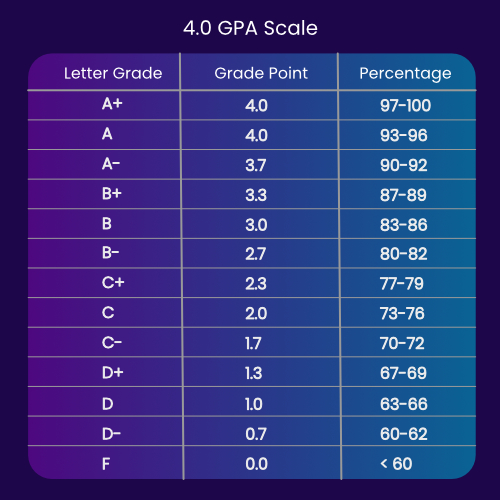
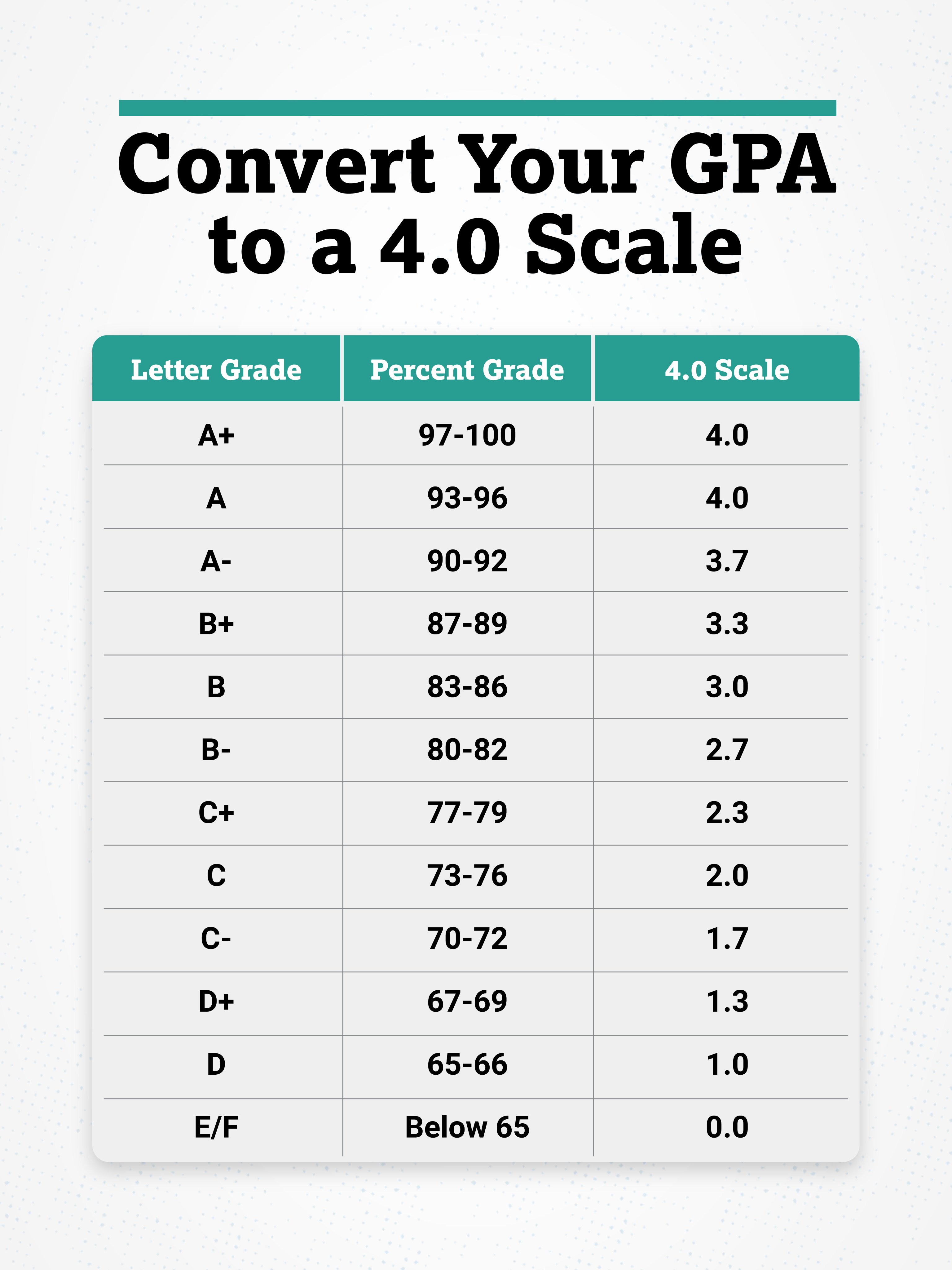
The calculator uses a conversion chart to match your grades to the new system. For example, in the US:
- A (90-100%) = 4.0
- B (80-89%) = 3.0
- C (70-79%) = 2.0
- D (60-69%) = 1.0
- F (below 60%) = 0
But in India, 70% can be an “A” or even the top grade. That’s why calculators often have country-specific rules.
Step 3: Calculating The Average
If your grades have different weights or credit hours, the calculator multiplies each grade by its weight, adds them up, and divides by the total weight.
Example:
- You have three courses: Math (A, 4 credits), Science (B+, 3 credits), English (A-, 2 credits).
- Convert letter grades to points: A = 4.0, B+ = 3.3, A- = 3.7.
- Multiply by credit hours: Math (4.0 x 4 = 16), Science (3.3 x 3 = 9.9), English (3.7 x 2 = 7.4).
- Add: 16 + 9.9 + 7.4 = 33.3.
- Divide by total credits: 33.3 / 9 = 3.7 GPA.
Step 4: Showing The Result
The calculator displays your converted GPA. Some calculators also show a breakdown, with each subject and its contribution.
Example: Converting Percentages To Gpa
Here is a simple example using a GPA conversion calculator for an Indian student with these grades:
- Math: 85%
- Physics: 78%
- Chemistry: 90%
- English: 70%
Assume the US conversion chart is:
- 90-100% = 4.0
- 80-89% = 3.7
- 70-79% = 3.0
- 60-69% = 2.0
So:
- Math: 85% = 3.7
- Physics: 78% = 3.0
- Chemistry: 90% = 4.0
- English: 70% = 3.0
Average: (3.7 + 3.0 + 4.0 + 3.0) / 4 = 3.425 GPA
Types Of Gpa Conversion Calculators
Not all calculators are the same. Some are very basic, while others are designed for specific needs.
1. Simple Gpa Converters
- Only need your grades and the grading system.
- Good for quick checks, but not always precise.
2. Weighted Gpa Calculators
- Let you enter credit hours or course weights.
- More accurate for college-level work.
3. Country-specific Calculators
- Use local rules (e.g., Indian, German, Chinese systems).
- Often used for international university applications.
4. Customizable Calculators
- Allow you to set grade boundaries and conversion rules.
- Useful if your school has unique grading.
5. Batch Converters
- Handle large numbers of grades at once.
- Used by schools and organizations.
Credit: gpacalculator.memorymaps.io
Key Features To Look For In A Gpa Conversion Calculator
Choosing the right tool can make a big difference. Here’s what matters most:
- Supports Your Grading System: Make sure it handles your country’s or institution’s system.
- Clear Conversion Rules: Does it show how it maps grades? Trust calculators that are transparent.
- Handles Weighted Courses: For higher education, you often need to enter credit hours or weights.
- Breakdown of Results: Good calculators show each subject’s conversion, not just the final number.
- User-Friendly Interface: Easy to enter grades, no confusing steps.
- Data Privacy: If entering personal info, check if your data is safe.
- Updates: Modern calculators stay updated with current conversion standards.
- Export Options: Some let you save or print results for applications.
- Mobile Compatibility: Useful if you want to check GPA on your phone.
- Support for Advanced Courses: AP, IB, or honors classes may need extra points.
Common Conversion Scenarios
Let’s look at real-life situations where a GPA conversion calculator is helpful.
Applying To Us Universities From Abroad
Many US schools require a GPA on a 4. 0 scale. If you have grades from China, India, France, or elsewhere, you must convert them. Most schools accept a conversion done with a trusted calculator or service.
Transferring Schools Within Your Country
If your country has more than one grading system, you may need to convert grades when moving to a different school or region.
Applying For Scholarships
Some scholarships have strict GPA cutoffs. Accurate conversion helps you know if you qualify.
Explaining Grades In Job Applications
Employers, especially international companies, may not understand your local system. A converted GPA gives a clear picture.
Limitations And Pitfalls Of Gpa Conversion Calculators
While these tools are helpful, they are not perfect. Here are some things to watch out for:
- Grade Inflation or Deflation: Some systems have “tougher” or “easier” grading. A calculator may not adjust for this.
- Rounding Issues: Small differences in conversion rules can change your GPA.
- Course Difficulty: Calculators usually don’t know if a course was very hard or easy.
- Lack of Standardization: Not all universities agree on one method. You might get slightly different results from different tools.
- Special Courses: Honors, AP, or IB classes may need extra points, but not every calculator adds these.
- Missing Local Nuances: Some countries have unique grading traditions that simple calculators miss.
Pro tip: Always check if your target university or employer has a preferred conversion method or recommends a specific tool.
How To Use A Gpa Conversion Calculator Effectively
If you want accurate results, follow these steps:
- Collect Full Grade Information: Include all courses, weights, and grades.
- Select the Correct Systems: Double-check both your current and target grading systems.
- Enter All Data Carefully: Mistakes can change your GPA.
- Review the Conversion Chart: Make sure it matches your country’s rules.
- Save or Print the Result: You may need proof for applications.
- If Unsure, Ask an Expert: University admission offices or official evaluation services can help.
Real-world Example: Indian Percentage To Us 4.0 Gpa
Let’s go deeper with a detailed example.
Suppose you finished your bachelor’s degree in India and want to apply for a US master’s program. Here are your marks:
| Subject | Marks (%) | Max Marks | Grade |
|---|---|---|---|
| Mathematics | 82 | 100 | |
| Physics | 75 | 100 | |
| Chemistry | 68 | 100 | |
| English | 90 | 100 | |
| Computer Science | 88 | 100 |
First, use a common Indian-to-US conversion:
- 85-100% = 4.0
- 70-84% = 3.0
- 50-69% = 2.0
- <50% = 0
Assign grades:
- Mathematics: 82% = 3.0
- Physics: 75% = 3.0
- Chemistry: 68% = 2.0
- English: 90% = 4.0
- Computer Science: 88% = 4.0
Now, calculate the GPA:
(3. 0 + 3. 0 + 2. 0 + 4. 0 + 4. 0) / 5 = 3. 2 GPA
This GPA can now be reported on your application.
Comparing Gpa Conversion Methods
Not all calculators use the same approach. Some use direct mapping, others use statistical methods or “percentile” conversions.
Here’s a comparison of three common methods:
| Method | Description | Best For | Drawback |
|---|---|---|---|
| Direct Mapping | Each local grade matches a US GPA | Simple systems | Misses local nuances |
| Statistical Conversion | Uses class rank/percentile | Large classes, competitive exams | Needs more data |
| Expert Evaluation | Manual review by experts | High-stakes applications | Slower, can cost money |
For most students, direct mapping with a transparent calculator is enough. But for top universities or scholarships, expert evaluation may be required.
Two Non-obvious Tips When Using Gpa Conversion Calculators
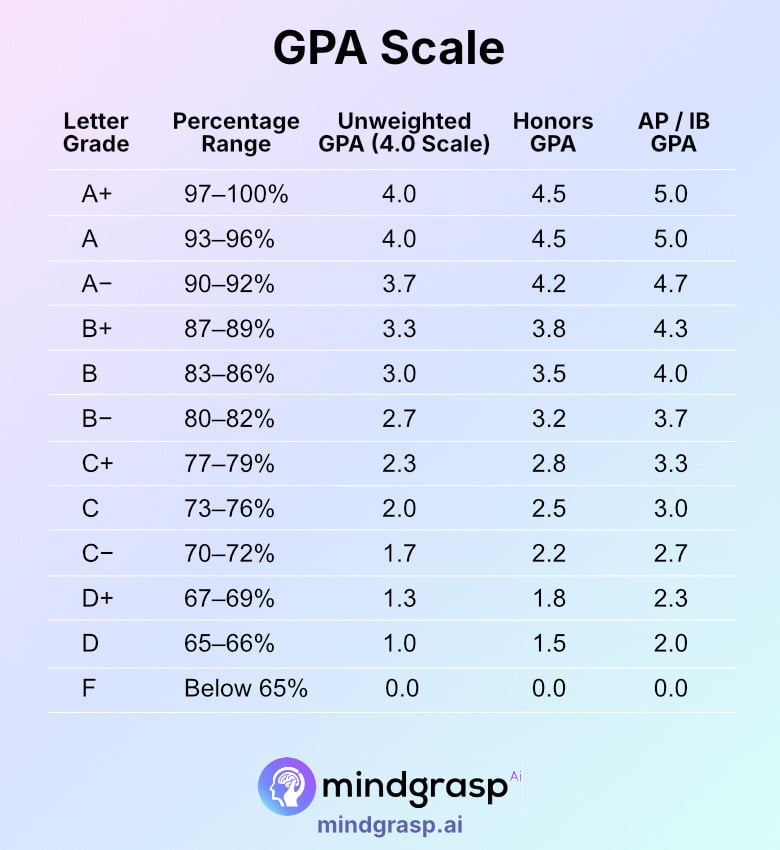
- Check for Honors and Advanced Courses: Many calculators do not automatically adjust for advanced classes (like AP, IB, or honors). If your school reports these, find a calculator that lets you add “bonus points” or adjust the weighting. This can raise your converted GPA and make your application stronger.
- Know the Grade Distribution at Your School: If your school is known for tough grading, or if very few students get high grades, include a class rank or percentile (for example, “top 10% of class”) in your application. This gives context to your GPA, especially if it seems low after conversion.
Popular Gpa Conversion Calculators Online
Many websites offer free calculators. Some of the most respected include:
- WES iGPA Calculator: Used by World Education Services for US and Canadian applications.
- Scholaro GPA Calculator: Supports many countries’ systems.
- Grading System Conversion Tools: Found on university and embassy websites.
Always check for the latest version and whether the calculator supports your country’s system.
When Manual Calculation Is Better
Sometimes, you may need to do your own conversion. This is the case if:
- Your school uses a unique grading system.
- The calculator does not support your country or program.
- The university asks for a specific formula.
Manual conversion is slower, but it can be more accurate for special cases.
How Schools And Universities View Converted Gpas
Most international universities understand that grades mean different things in different places. They look for:
- The official transcript (original grades)
- A converted GPA for comparison
- An explanation of your country’s grading
Some may use their own conversion tools. Others accept a third-party evaluation, such as from World Education Services or similar organizations. Be sure to check the requirements for each school.
Gpa Conversion For Postgraduate Applications
For graduate programs, your GPA is often calculated only from your most recent years or your major subjects. Some calculators let you select which courses to include. Focus on the grades that matter most to your application.
Frequently Asked Questions
Credit: www.mindgrasp.ai
What Is The Difference Between Weighted And Unweighted Gpa?
Weighted GPA considers the difficulty of your courses (such as honors or AP classes) and gives extra points for harder classes, often using a 5.0 scale. Unweighted GPA treats all courses equally, with the highest possible score usually being 4.0. If you took many advanced classes, your weighted GPA might be higher than unweighted.
Can I Use Any Gpa Conversion Calculator For My University Application?
Not always. Some universities have their own rules or require an official evaluation. Check if your target university accepts self-calculated GPAs or if you need to use a service like World Education Services.
My Gpa After Conversion Seems Low. What Can I Do?
Include extra information, like your class rank or a letter from your school explaining their grading policies. Some schools have tougher grading, so your converted GPA may look lower than it really is. Adding context can help admission officers understand your true performance.
Are Online Gpa Calculators Accurate?
They are accurate for general purposes, but the result depends on the conversion chart used. For official applications, always follow your university’s instructions or use their recommended tool.
Credit: mars-asso.fr
Is It Better To Calculate Gpa By Myself Or Use A Service?
For simple applications, doing it yourself is fine if you use a reliable calculator. But for high-stakes or competitive programs, or if your grading system is complex, it’s safer to use an official evaluation service.
Converting your grades doesn’t have to be a mystery. With the right GPA conversion calculator and a clear understanding of your own grades, you can present your academic story anywhere in the world. Take your time, check the details, and you’ll be ready for any application or opportunity that comes your way.