GCSE Old to New Grade Converter: Everything You Need to Know
If you, your child, or someone you know has taken GCSE exams in England, you might have heard about the old letter grades (like A*, B, C) and the new number grades (9–1). Many people find this change confusing, especially when comparing results or applying for jobs or further education. How does a grade B compare to a grade 6? What is the difference between a C and a 4? This article is here to help you fully understand the GCSE old to new grade converter system, why the change happened, and how to translate between the two formats accurately.
You will learn how the grading system works, see real examples, understand the impact on students, and get practical tips for using the converter. Whether you’re a parent, student, teacher, or employer, this guide will clear up the confusion and give you tools to make smart decisions based on these grades.
Why Did The Gcse Grading System Change?
In 2017, England’s education system introduced a new grading system for GCSEs. Instead of the familiar letters (A*, A, B, etc.), students started receiving numbers from 9 (highest) to 1 (lowest). This change was part of a major reform aiming to:
- Increase challenge: The exams became tougher, with more difficult content and less coursework.
- Differentiate high achievers: The new grades provide more detail at the top end, especially between students who would have received an A or A*.
- Reduce grade inflation: It became harder to get the top grades, so results better reflect students’ abilities.
The change does not apply to all subjects at the same time. Some subjects used the new system in 2017, others in 2018 and 2019.
The Old Gcse Grading System Explained
Before 2017, GCSE grades were given as letters:
- A (the highest)*
- A
- B
- C
- D
- E
- F
- G (the lowest pass)
- U (ungraded)
A grade of C or higher was usually considered a “good pass.” Many employers and universities required at least a C in key subjects like English and Maths.
The New Gcse Grading System (9–1)
With the reform, the system now uses numbers:
- 9 is the highest grade, higher even than the old A*
- 8 is between A* and A
- 7 matches a solid A
- 6 is just above a B
- 5 is a “strong pass,” between B and C
- 4 is a “standard pass,” roughly equal to a C
- 3 is close to a D
- 2 is between E and F
- 1 is the lowest, close to a G
- U is still “ungraded” or failed
This change can make it hard to compare old and new grades directly. That’s why a clear converter is essential.
Gcse Old To New Grade Converter: The Official Mapping
The official mapping is set by the Department for Education and Ofqual. However, the match is not always one-to-one. For example, a grade 4 is considered a “standard pass” (like a low C), while a 5 is a “strong pass” (high C/low B).
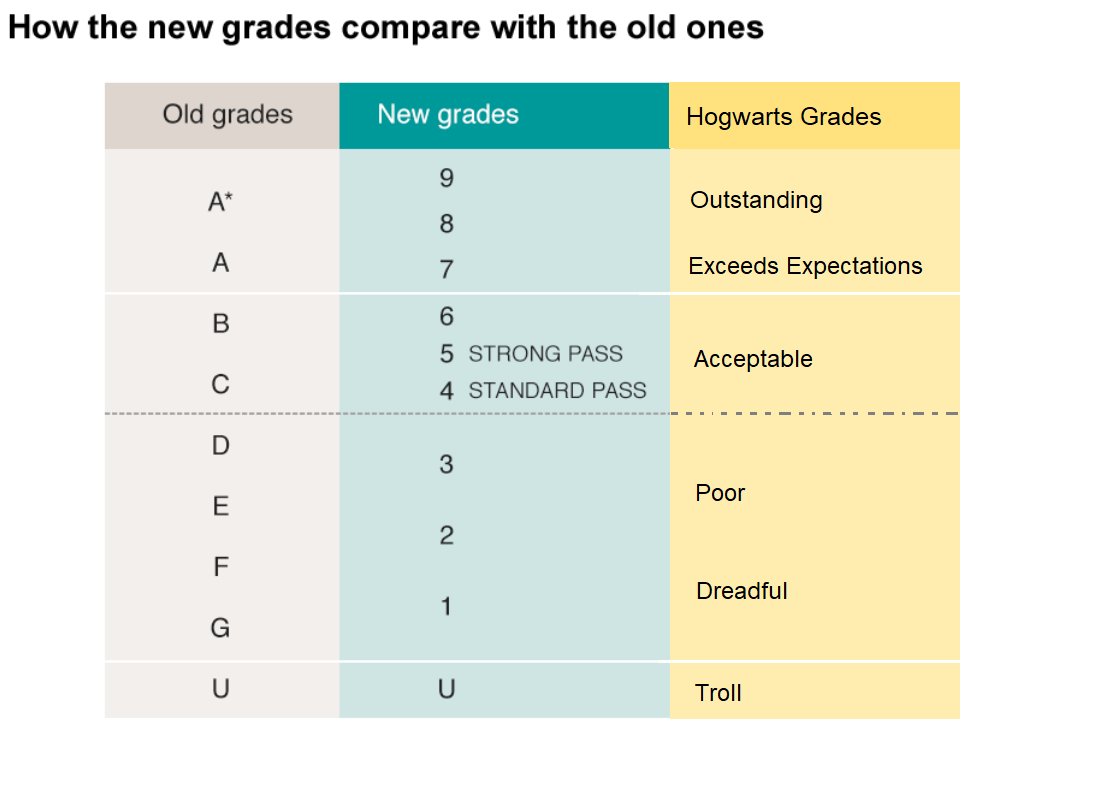
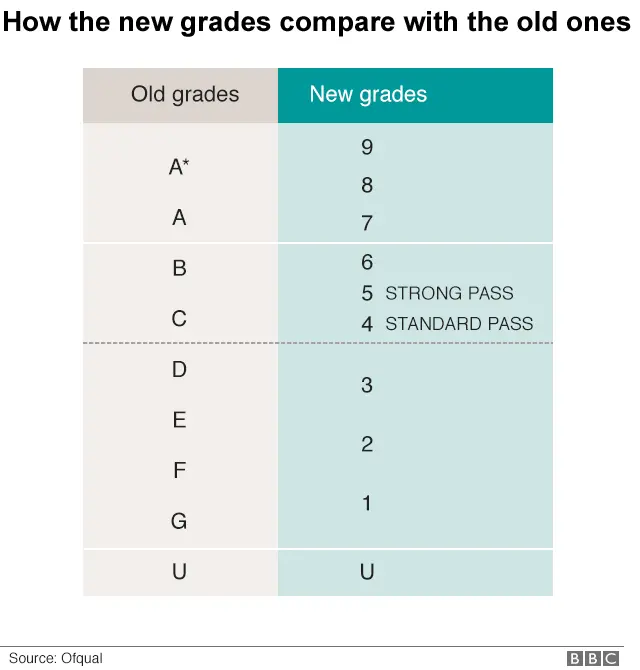
Below is a useful comparison table showing how old letter grades map to new number grades:
| Old Grade | New Grade | Comments |
|---|---|---|
| A* | 8–9 | 9 is higher than A*; 8 is lower A* |
| A | 7 | Direct match |
| B | 6 | Just above B |
| C | 4–5 | 4 = standard pass, 5 = strong pass |
| D | 3 | Just below C |
| E | 2 | Low pass |
| F | 1–2 | 1 = lowest pass |
| G | 1 | Lowest grade |
| U | U | Ungraded/Fail |
This table is a quick reference, but there are some details and exceptions you should know.
How To Use A Gcse Old To New Grade Converter
Most people use a grade converter to compare old grades and new grades for:
- Job applications: Employers want to know if a grade 5 is as good as a C.
- Further study: Colleges and universities may ask for specific grades.
- International recognition: Other countries or qualifications (like IB or SAT) may need clear equivalence.
To use the converter, you simply:
- Find the old letter grade.
- Check the matching number grade (or range) in the table above.
- If you have a number grade, look for the old letter in the same row.
Example:
- An old B becomes a 6 in the new system.
- A new 4 is a “standard pass,” same as a low C.
What Do “strong Pass” And “standard Pass” Mean?
One source of confusion is the difference between strong pass and standard pass. In the new system:
- Grade 5 is a strong pass (more demanding, above a C but below a B)
- Grade 4 is a standard pass (roughly a low C)
Some schools and employers may require a “strong pass” in English and Maths. Others accept a “standard pass. ” Always check the exact requirements.
How Employers And Universities View The New Grades
Most organizations now understand the new grading system, but some still ask for “C or above.” Here’s what you need to know:
- Grade 4 is the minimum for a “standard pass” (old C).
- Grade 5 is safer for competitive jobs or courses (closer to a high C/low B).
- For high-demand fields, a 6 or 7 may be preferred.
If you are showing your grades to someone unfamiliar with the new system, it helps to include the letter/number equivalent.
Examples: Converting Real Gcse Results
Let’s look at some examples to show how the converter works in practice.
- A student with old grades:
- English: B → 6
- Maths: C → 4/5
- Science: A → 7
- History: D → 3
- A student with new grades:
- English: 5 → “Strong pass” (high C/low B)
- Maths: 7 → A
- French: 9 → A* (even higher than before)
- Geography: 3 → D
This approach helps you translate any set of results for applications or comparisons.
Credit: x.com
Common Questions About The Converter
You may still be wondering about some details. Here are some answers based on real-world experience and official guidance.
Is A Grade 4 Good Enough For Most Purposes?
A grade 4 is considered a standard pass and is usually enough for most jobs and further education. However, some competitive paths may want a 5 or higher. Always check the entry requirements.
Why Is There Overlap In Some Grades?
You may notice, for example, that both 4 and 5 map to the old C. This is because the new system gives more detail, especially in the middle range, where many students’ grades fall. It helps schools see small improvements and rewards higher achievers more clearly.
What About Subjects Graded Differently?
Some older GCSEs used alternative grading (like “Pass,” “Merit,” “Distinction”). These are not part of the 9–1 or A*–G system. For those, you should ask your school or the exam board for guidance.
Can You Convert Grades Exactly?
In most cases, the converter gives an approximate match. But a grade 9 is not exactly the same as an A*, just as a 4 is not always the same as a C. The exams are different, and the new grades sometimes cover a wider range of marks.
Detailed Comparison: Old Vs. New Grade Boundaries
To understand the conversion in more depth, it helps to look at the boundaries. For example, in a typical year, the percentage marks needed for each grade might look like this:
| Old Letter Grade | Typical % Marks (Old) | New Number Grade | Typical % Marks (New) |
|---|---|---|---|
| A* | 90%+ | 9 | 96%+ |
| A | 80–89% | 7–8 | 78–95% |
| B | 70–79% | 6 | 67–77% |
| C | 60–69% | 4–5 | 51–66% |
| D | 50–59% | 3 | 41–50% |
| E | 40–49% | 2 | 31–40% |
| F | 30–39% | 1–2 | 21–30% |
| G | 20–29% | 1 | 11–20% |
| U | Below 20% | U | Below 11% |
Remember, these marks can change each year, but this gives you an idea of how the boundaries compare.
The Impact Of The New Grading System
The switch to the new system affected students, teachers, and parents in several ways:
- More stress for students: The exams are harder, and small differences in marks can change a grade.
- More detail for schools: Schools can track progress more closely, especially for top and middle students.
- Employers/colleges need to adapt: Many still ask for “C or above,” but now should use 4/5 or higher.
One thing beginners often miss: a grade 9 is very rare—only about 4–6% of students get it. In the old system, about 8–10% got an A*. This means it is now even harder to get the very top grade.
Tips For Using The Converter Accurately
Here are some practical tips to avoid mistakes:
- Always check the subject and year: Not all subjects switched at the same time. Confirm whether your result is from the old or new system.
- Read the exact requirement: If a course or employer asks for a “C or above,” check if they mean a 4 or a 5 in the new system.
- Use official sources: For important decisions, use the converter from Ofqual or a trusted school website.
- Translate for international uses: If you’re applying abroad, explain the system and include the converted grade.
- Don’t guess for grades in the middle: If you have a 5, make clear it’s a “strong pass” and show how it compares to a B/C.
Many people overlook the importance of context. For example, a 5 in Maths may be good enough for many courses, but not all university programs. Always double-check.
Real-world Scenario: Job Application
Imagine you are applying for a job that asks for “GCSE Maths and English at C or above.” You have new grades: Maths 5, English 4.
- Maths 5: “Strong pass,” above a C, so you meet the requirement.
- English 4: “Standard pass,” equal to a low C, so you also meet the requirement.
However, if the employer is strict and wants a “strong pass,” they may only accept a 5 or above. Always clarify if unsure.
Real-world Scenario: College Entry
A college asks for at least a B in Science. Your new grade is a 6. Is that enough?
- Grade 6 is just above a B, so it should be accepted.
- If they want an A, you need at least a 7.
If you’re not sure, show the official converter table in your application.
Is The Converter Reliable For All Years?
The converter works for exams taken after 2017 in England. In Wales and Northern Ireland, some subjects still use letter grades. Always check the exam board and year to be sure.
Advanced Insight: Grade 9 And Grade Boundaries
Grade 9 is a unique feature of the new system. It is designed to recognize the very top students, even above the old A*. Each year, the grade boundary for 9 is set so only a small percentage achieve it.
This is not just a higher A*—it’s a new level.
Some students and parents think a 9 is just like a high A*. In fact, a 9 is only given to the very top scorers. This means students should not be worried if they do not get a 9; a 7 or 8 is still an excellent result.
International Comparison: How Do Gcse Grades Compare Globally?
If you are applying to study or work abroad, you may need to compare GCSE grades to other systems, like the US GPA or IB scores. While there is no exact match, here is a rough guide:
| GCSE (New) | GCSE (Old) | US GPA | IB (out of 7) |
|---|---|---|---|
| 9 | A* | 4.0 | 7 |
| 7–8 | A | 3.7–3.9 | 6 |
| 6 | B | 3.3 | 5 |
| 4–5 | C | 2.0–2.7 | 4 |
| 3 | D | 1.0 | 3 |
| 1–2 | E–F | 0.0–0.7 | 2 |
| U | U | 0.0 | 1 |
Different countries may use slightly different conversions. For official purposes, check with the relevant authority or see the Wikipedia GCSE page.
Common Mistakes When Using The Converter
Beginners often make these errors:
- Assuming grade boundaries are fixed: Each year, the mark needed for a certain grade may change, especially for grade 9.
- Ignoring subject differences: Some subjects have different grade boundaries or assessment methods.
- Forgetting to check the exam year: The old and new systems overlapped for some subjects in 2017–2019.
- Not explaining the grade system to others: When applying internationally, always provide context.
- Mixing up “standard” and “strong” pass: Many students think a 4 is always enough. For some paths, a 5 is required.
Credit: www.bbc.com
How To Explain Your Grades To Others
If you have both old and new grades (for example, you took some subjects before the change), list both grades on your CV or application, and use the converter table for clarity.
Example:
- English: 6 (equivalent to a B)
- Maths: B (equivalent to a 6)
This helps avoid confusion and shows you understand the system.
Future Of The Gcse Grading System
The 9–1 system is now standard in England. Other UK countries (Wales, Northern Ireland, Scotland) use different systems. There are no plans to return to letter grades in England.
However, there is ongoing debate about whether the new system is fairer, especially for students who struggle with exams. The key advice is to focus on your own progress, not just the grade.
Credit: www.reddit.com
Where To Find Official Converters
For major decisions, always use an official converter or guidance from Ofqual, your school, or the exam board. Many websites offer online calculators, but check their accuracy.
Frequently Asked Questions
What Is The Easiest Way To Convert Old Gcse Grades To New Grades?
The best way is to use a clear comparison table, like the one above. Find your old letter grade and match it to the new number. For most uses, the mapping is:
- A = 8–9
- A = 7
- B = 6
- C = 4–5
- D = 3
- E = 2
- F/G = 1
- U = U
Is A Grade 5 Better Than A C In The New System?
Yes, a grade 5 is a “strong pass” and is higher than a standard C. It is between a high C and a low B. Some employers and courses now prefer a 5 or above.
What Grade Do I Need For A University Application?
Most universities ask for at least a 4 or 5 in English and Maths. For competitive courses, a 6 or 7 may be needed. Always check the specific requirements of the university and course.
Can I Still Get A Job With A Grade 4 In Maths And English?
Yes, a grade 4 is a “standard pass” and is accepted by many employers. However, for some jobs or apprenticeships, a 5 or higher may be required. It is always best to check with the employer.
Where Can I Find More Information About The New Gcse Grades?
For detailed and official guidance, visit the UK government factsheet or ask your school or college.
GCSE grades are an important part of education in England. Knowing how to use the old to new grade converter helps you make sense of results, plan your future, and communicate clearly with schools, employers, and universities. Remember to check official sources and always explain your grades when needed. With the right information, the new system can be just as clear as the old one.