Every year, thousands of students move between universities across the world. One of the biggest challenges they face is understanding how their academic achievements transfer from one system to another. If you have studied in Europe, you may be familiar with the ECTS credit system. But if you want to apply for further studies or a job in a country like the USA, you will likely be asked for your GPA (Grade Point Average). So, how do you convert ECTS credits to GPA? Is it a simple calculation, or are there hidden details you must know? This guide will help you understand the full process, giving you the confidence to handle your academic records wherever you go.
What Are Ects Credits?
The European Credit Transfer and Accumulation System (ECTS) is a standard used across European universities. It helps measure and compare learning achievements, and makes it easier to move between institutions.
Each ECTS credit represents 25-30 hours of student work, including classes, homework, and exams. A full year of study is usually worth 60 ECTS credits, which means about 1,500-1,800 hours of work per year.
How Ects Credits Are Used
- Course Weight: Each course is given a certain number of credits based on its workload.
- Degree Structure: Bachelor’s degrees typically require 180–240 ECTS credits, while Master’s degrees often need 60–120 ECTS.
- Mobility: ECTS makes it easier for students to transfer credits if they move to another university or country within Europe.
Example
If you take a course worth 6 ECTS credits, it’s expected you’ll spend about 150-180 hours on it (including lectures, assignments, and studying).
What Is Gpa?
GPA stands for Grade Point Average. It is the standard way of measuring academic achievement in North America and many other countries.
- Scale: Most often, GPA is calculated on a 4.0 scale, though some countries or universities use 5.0 or even 10.0 scales.
- Calculation: GPA is the average of all your course grades, weighted by the number of credits each course is worth.
Example
If you get A (4. 0) in a 3-credit course and B (3. 0) in a 1-credit course, your GPA is (4. 0x3 + 3. 0x1) / (3+1) = (12+3)/4 = 3. 75.
Why Gpa Matters
- Admissions: Most US and Canadian universities require a GPA for admissions decisions.
- Scholarships: Many scholarships are only available to students with a certain GPA.
- Jobs: Some employers, especially in the US, ask for GPA as part of the hiring process.

Credit: www.studying-in-germany.org
Why Convert Ects Credits To Gpa?
Moving between countries or applying for international programs often requires translating your academic performance into a format others understand.
- University Applications: Most American and Canadian universities require a GPA.
- Work Applications: Some jobs require a GPA, especially in competitive fields.
- Scholarships: International scholarships often use GPA to compare students from different countries.
- Visas and Licenses: Some visa and professional license processes need GPA scores.
Main Differences: Ects Vs. Gpa
Understanding the differences helps you avoid mistakes when converting.
- ECTS measures workload and credits, not just grades.
- GPA measures average performance across courses, using grades and credit weight.
- Grading Scales: European countries use different grading scales (often 1-10, 1-5, or A-F), while GPA is usually 0-4.0 or 0-5.0.
Example: Grading Scales
| Country | Common Scale | Highest Grade | Passing Grade |
|---|---|---|---|
| Germany | 1-5 (1=best, 5=fail) | 1.0 | 4.0 |
| France | 0-20 | 20 | 10 |
| Italy | 0-30 (18=pass) | 30 | 18 |
| UK | A-F or % | A / 70%+ | E / 40% |
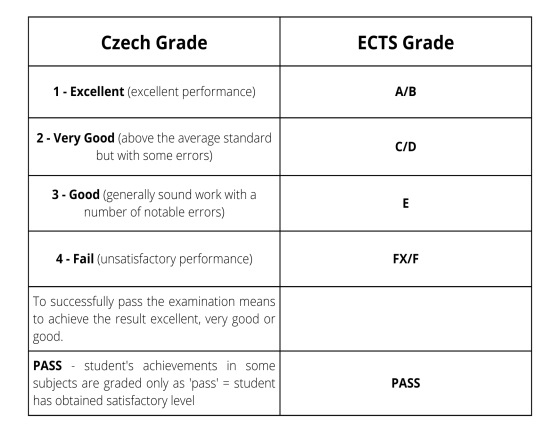
Credit: cuni.cz
How To Convert Ects Credits To Gpa: Step-by-step Guide
There is no single, official formula for converting ECTS credits and grades to GPA. Every country and university may have its own method. However, there are accepted steps you can follow.
Step 1: Gather Your Academic Records
Start by collecting your transcript, which includes:
- Course names
- ECTS credits per course
- Grades (with the local grading scale)
Step 2: Understand Your Grading Scale
Know your university’s grading system. For example:
- Germany: 1.0–5.0 (1.0 = best, 5.0 = fail)
- France: 0–20 (10 = pass)
- Spain: 0–10 (5 = pass)
- Italy: 0–30 (18 = pass)
Check your transcript or university website for details.
Step 3: Convert Your Local Grades To The Us/international Scale
This is the most important and often the most confusing step. Most universities use a 4. 0 scale, but some use 5. 0 or 10. 0. The goal is to translate your grade to a comparable value.
Common Methods
A. Grade Equivalency Tables
Many universities publish tables showing how their grades convert to other systems. For example:
| German Grade | US GPA Equivalent |
|---|---|
| 1.0-1.5 | 4.0 |
| 1.6-2.5 | 3.7 |
| 2.6-3.5 | 3.0 |
| 3.6-4.0 | 2.0 |
| 4.1-5.0 | 0.0 |
B. Formula Conversion
If your university or destination doesn’t provide a table, use a formula. A common formula is:
> US GPA = (Your Grade – Minimum Passing Grade) / (Maximum Grade – Minimum Passing Grade) × (US GPA Scale)
For example, in France (0-20 scale), to convert a grade of 15:
> US GPA = (15-10) / (20-10) × 4 = (5/10) × 4 = 2. 0
But note: Some universities use different formulas or add adjustments.
Hidden Insight: Grade Compression
Converting high grades in tough systems (like France or Germany) often results in lower GPA than expected. For example, in Germany, a 2. 0 is a very good grade, but it converts to only about 3. 7 on the US scale.
Many US schools understand this and may adjust their requirements. Always check if the destination university has a policy for your country.
Step 4: Weight Grades By Ects Credits
GPA is an average, but each course may have a different weight. Multiply each grade’s equivalent GPA by the ECTS credits for that course.
Example:
- Course A: 6 ECTS, grade = US GPA 4.0
- Course B: 3 ECTS, grade = US GPA 3.0
Weighted GPA = [(6×4. 0) + (3×3. 0)] / (6+3) = (24+9)/9 = 33/9 = 3. 67
Step 5: Calculate Your Overall Gpa
Add up the weighted scores for all your courses, then divide by the total ECTS credits.
Example Calculation
Let’s say you have three courses:
- Course 1: 5 ECTS, grade = 18/20 (US GPA 3.6)
- Course 2: 6 ECTS, grade = 16/20 (US GPA 3.2)
- Course 3: 4 ECTS, grade = 14/20 (US GPA 2.8)
Weighted sum = (5×3. 6) + (6×3. 2) + (4×2. 8) = 18 + 19. 2 + 11. 2 = 48. 4
Total Ects = 5 + 6 + 4 = 15
Gpa = 48.4 / 15 = 3.23
Step 6: Present Your Results
When applying, always include:
- Your original grades and scale
- The conversion method used
- Any official supporting documents
Some universities may ask for an official evaluation by a service like WES (World Education Services).
Common Conversion Examples By Country
Every country has a unique grading culture and conversion quirks. Here are specific examples for popular European countries.
Germany
- Grades: 1.0 (best) to 5.0 (fail)
- Pass: 4.0
- Conversion: US GPA = 4.0 – [(German Grade – 1) × 1.0]
A 2.0 would be: 4.0 – [(2.0–1) × 1.0] = 4.0 – (1.0) = 3.0
France
- Grades: 0–20
- Pass: 10
- Conversion: US GPA = (French Grade/20) × 4
A 15/20 Would Be: (15/20) × 4 = 3.0
Italy
- Grades: 18–30 (pass range)
- Conversion: US GPA = ((Italian Grade – 18)/12) × 4
A 27 would be: ((27–18)/12) × 4 = (9/12) × 4 = 3.0
Spain
- Grades: 0–10
- Pass: 5
- Conversion: US GPA = (Spanish Grade/10) × 4
A 7/10 Would Be: (7/10) × 4 = 2.8
The Netherlands
- Grades: 1–10
- Pass: 5.5 or 6
- Conversion: US GPA = (Dutch Grade/10) × 4
A 8/10 Would Be: (8/10) × 4 = 3.2
United Kingdom
- Grades: 1st, 2:1, 2:2, 3rd
- Conversion: 1st (70%+) = 4.0, 2:1 (60–69%) = 3.3, 2:2 (50–59%) = 3.0, 3rd (40–49%) = 2.7
These are common conversions but always check with the receiving institution.
Ects Credits And Gpa: Key Differences And Misunderstandings
Ects Does Not Measure Grades
A common mistake is to think that ECTS credits show the quality of your work. In fact, ECTS credits measure workload, not performance. Your grade is shown separately.
Not All Ects Systems Are Equal
Some universities use ECTS credits but local grading, while others may have extra requirements or bonuses. Always check the details.
Gpa Calculation Can Vary
Even within the US, some universities ignore certain courses, use only major courses, or have other rules. Ask for specific instructions when applying.
Hidden Insight: Grade Deflation And Inflation
In some European countries, top grades are given rarely. For example, in France, a 16/20 is excellent, while in the US, a B is just “good. ” American universities may take this into account if you explain it in your application or if they are familiar with your country.
Practical Tips For Students
- Ask for Official Help: Many universities have conversion tables or can help you calculate your GPA. Always use their guidance if available.
- Use Evaluation Services: Organizations like WES or NARIC can provide official evaluations for a fee.
- Explain Your Grades: In your application, write a short note explaining your grading system, especially if you come from a country with tough grading.
- Include ECTS Credits: When listing your courses, add the ECTS credits to show the workload and importance of each course.
- Check the Requirements: Some universities want both original grades and converted GPA. Others only want the original transcript.
- Be Honest: Do not “inflate” your GPA. Most universities will check your conversion.
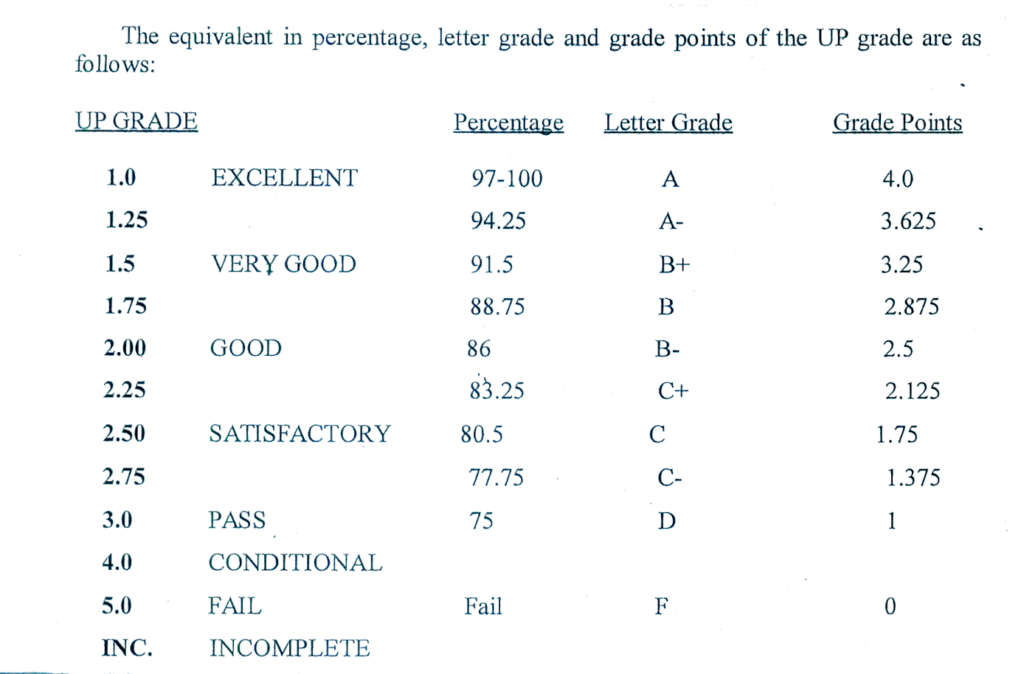
Credit: mymextscholarship.com
Sample Ects To Gpa Conversion Table
Here’s a practical example for a student from Germany:
| Course | ECTS Credits | German Grade | US GPA Equivalent |
|---|---|---|---|
| Mathematics | 6 | 1.7 | 3.7 |
| Chemistry | 5 | 2.3 | 3.3 |
| Biology | 4 | 2.0 | 3.5 |
Weighted GPA = [(6×3. 7) + (5×3. 3) + (4×3. 5)] / (6+5+4) = (22. 2+16. 5+14)/15 = 52. 7/15 = 3. 51
Challenges And Common Mistakes
Ignoring Local Context
If you convert your grades without considering your country’s grading culture, you might end up with a GPA that looks lower than it should. Always provide context.
Using The Wrong Formula
There are many formulas online, but not all are correct for your country or university. Always double-check.
Overlooking Ects Credit Weighting
Some students simply average their grades. This is incorrect. Always weight by ECTS credits.
Missing Documentation
Some universities may reject your conversion if you don’t provide clear evidence or an official explanation. Attach documents and transcripts.
Not Updating The Conversion
If you retake a course or get new grades, recalculate your GPA.
Not Checking For Rounding Rules
Some universities round GPA to one decimal place, others to two. Always check before submitting.
When To Use Professional Evaluation Services
Sometimes, the conversion can be complicated, or the university requires an official report. In these cases, use services like WES, NARIC, or your local education authority.
How They Work
- You send your transcripts and other documents.
- They review your grades and credits.
- They provide an official report with your GPA and course equivalents.
This can be helpful if you apply for jobs, graduate school, or visas.
Cost And Time
- Costs range from $100–$300.
- Processing time is usually 2–4 weeks.
When It’s Required
- For some US and Canadian universities.
- For certain visa or professional license applications.
If you’re unsure, ask the institution if they need a professional evaluation.
Insights That Most Students Miss
1. Gpa Is Not Always The Only Factor
Many universities look at more than just GPA. They check your statement of purpose, recommendation letters, and test scores. If your GPA looks low after conversion, highlight your strengths in these other areas.
2. Credit Systems Are Not Always Directly Comparable
A 6 ECTS course in Europe may not always match a 3-credit course in the US. Sometimes, universities review your transcript to see the actual content, not just the numbers. If a course was especially demanding, mention it in your application.
3. Some Countries Use Relative Grading
In some systems, grades are awarded based on class rank (like a “curve”). A B in a tough class may be worth more than an A in an easy one. If your country uses this system, explain it.
4. Official Conversion Policies May Change
Universities update their conversion policies. Always check the latest guidance before you apply.
5. Gpa Requirements May Be Flexible
If your converted GPA is just below the requirement, reach out to the admissions office. They may accept you if you have a strong application.
Real Example: Ects To Gpa Conversion For A Master’s Application
Sarah studied in France and wants to apply for a Master’s in the US. Her transcript shows:
- Course 1: 16/20 (6 ECTS)
- Course 2: 14/20 (4 ECTS)
- Course 3: 18/20 (5 ECTS)
Convert grades to US GPA:
- 16/20 = 3.2
- 14/20 = 2.8
- 18/20 = 3.6
Weighted GPA = [(6×3. 2)+(4×2. 8)+(5×3. 6)] / (6+4+5) = (19. 2+11. 2+18)/15 = 48. 4/15 = 3. 23
Sarah explains the French grading system and attaches an official letter from her university. The US university understands her grades and accepts her.
Key Takeaways
- ECTS credits show workload, not grade quality.
- GPA is a weighted average of grades, usually on a 4.0 scale.
- Conversion is not exact; always check with your target university.
- Use official tables or formulas for your country.
- Always provide documentation and context.
- Use professional evaluation services if required.
Frequently Asked Questions
How Can I Convert Ects Credits To Us Credit Hours?
There is no exact formula, but a common method is:
- 2 ECTS credits ≈ 1 US semester credit hour.
So, a 6 ECTS course is roughly equal to a 3-credit US course. However, always check with the target university, as some schools use 2. 5 ECTS = 1 US credit.
Do Ects Credits Affect My Gpa Calculation?
ECTS credits are used to weight your grades when calculating GPA. The more credits a course has, the more it affects your GPA. But ECTS credits themselves do not show your performance—your grade does.
What Should I Do If My Gpa Seems Low After Conversion?
Explain your grading system and provide context. Many universities are aware of tough grading in some countries. You can also use professional evaluation services for an official conversion.
Can I Calculate My Own Ects To Gpa Conversion, Or Do I Need An Official Service?
You can do your own conversion using official tables or formulas, but for official applications, many universities require a report from a service like World Education Services.
Are There Universities That Accept Ects Credits Or Grades Directly, Without Conversion?
Some European and international universities accept ECTS grades and credits as they are. However, most North American universities require a GPA. Always check the application requirements of your target institution.
Moving from ECTS credits to GPA can seem complicated, but with careful preparation, clear documentation, and a little research, you can show your achievements accurately wherever you go. If you are unsure, always ask for help from your university or a professional service.
Your hard work deserves to be recognized, no matter the system.