Choosing a water heater for your home can feel confusing, especially when you see terms like condensing and non-condensing tankless water heater. These two types look similar but work in different ways, and each has its own strengths and weaknesses. If you want to save energy, lower your gas bill, or just get reliable hot water, understanding these options is important before you buy.
In this guide, you’ll get a clear explanation of how both condensing and non-condensing tankless water heaters work. You’ll learn about their pros, cons, costs, and what to consider for installation. By the end, you’ll know which type fits your needs and budget.
We’ll also go over real-world examples, common mistakes, and answer the most asked questions. Let’s start by breaking down the basics.
What Is A Tankless Water Heater?
Unlike traditional water heaters that store hot water in a tank, a tankless water heater heats water only when you need it. This is called “on-demand” heating. When you turn on the hot water tap, cold water travels through the unit, and a gas burner or electric element heats it instantly. When you turn off the tap, the heater stops working. This means you never run out of hot water, and you don’t waste energy keeping a tank hot all day.
There are two main types of tankless water heaters based on how they handle exhaust gases and efficiency: condensing and non-condensing.
How Condensing Tankless Water Heaters Work
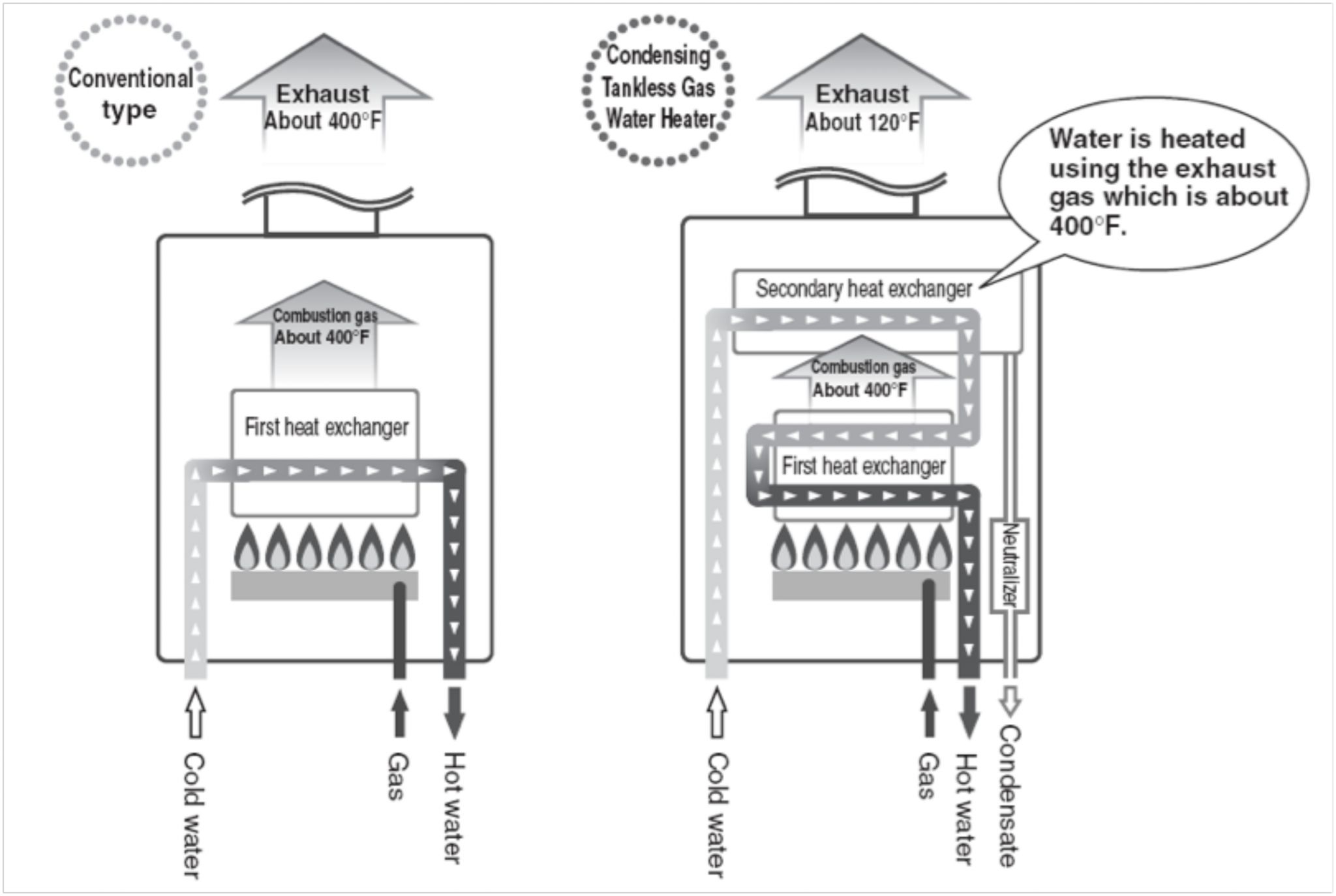
A condensing tankless water heater uses natural gas or propane to heat water, just like a non-condensing model. But it adds an extra step: after burning fuel to heat your water, hot exhaust gases leave the burner. Instead of releasing these gases right away, a condensing unit captures them and uses their heat to pre-warm incoming cold water. This process cools the exhaust gases until they turn into water vapor, or condensate, which is then drained out.
This extra step means less heat is wasted. The water heater uses almost all of the energy from the gas, so it operates at a higher efficiency.
Key features:
- Uses a second heat exchanger to recycle heat from exhaust gases
- Produces water condensate that must be drained away
- More efficient than non-condensing models
How Non-condensing Tankless Water Heaters Work
A non-condensing tankless water heater also heats water when you need it. However, after burning fuel, it releases hot exhaust gases directly outside through a vent. These gases can be very hot—sometimes over 300°F (150°C)—so special venting materials are needed.
There is no second heat exchanger to recover extra heat. As a result, more energy escapes, and efficiency is lower compared to condensing models.
Key features:
- Single heat exchanger
- No condensate drain required
- Simple design, but lower efficiency
Comparing Energy Efficiency
Energy efficiency is one of the main reasons people choose condensing models. Here’s how they compare:
| Type | Energy Factor (EF) | Efficiency (%) |
|---|---|---|
| Condensing | 0.92 – 0.98 | 92% – 98% |
| Non-Condensing | 0.80 – 0.85 | 80% – 85% |
Condensing water heaters use up to 98% of the energy in the fuel, while non-condensing models typically use only about 80–85%. This means condensing models waste less heat, saving you money over time.
Non-obvious insight: Actual energy savings depend on your hot water usage and local gas prices. If you use a lot of hot water, the higher efficiency of condensing units pays off faster.
Credit: www.woolyyarn.com
Venting Requirements
Venting is how water heaters get rid of hot exhaust gases. This is a crucial difference between condensing and non-condensing types.
Non-condensing Venting
Non-condensing units release very hot gases. They need special vent pipes—usually stainless steel—that can handle high temperatures. These pipes are more expensive and must be installed by a professional.
Condensing Venting
Condensing units cool their exhaust gases before venting. The gases are often cool enough to use PVC or ABS plastic pipes. These materials are cheaper, lighter, and easier to install.
Non-obvious insight: Venting can be a major part of installation costs. If you’re replacing an old non-condensing unit, you may need to change your venting system if switching to condensing.
How Condensate Is Handled
Condensing heaters create water vapor as a byproduct. This vapor cools and becomes condensate—slightly acidic water that needs to be drained safely.
- You must have a nearby drain, or install a condensate pump.
- Sometimes, a neutralizer is required to make the condensate less acidic before releasing it into the plumbing.
Potential issue: In cold climates, condensate lines can freeze if not installed properly. This is a detail many homeowners and even some contractors overlook.

Credit: dovisplumbing.com
Installation Differences
Non-condensing Tankless Installation
- May require only a simple gas hookup and stainless steel venting.
- No need for a drain or condensate management.
- Installation is often quicker and less disruptive, especially for replacements.
Condensing Tankless Installation
- Needs a drain for condensate water.
- May require a neutralizer.
- Venting is usually easier and cheaper (PVC).
- More components may mean longer installation time and higher labor costs.
Tip: Always check local building codes. Some areas require condensate neutralizers, and venting rules can vary.
Upfront Cost Comparison
Here’s how the costs generally compare:
| Type | Unit Cost | Installation Cost | Total (Typical) |
|---|---|---|---|
| Condensing | $1,200 – $2,500 | $800 – $1,500 | $2,000 – $4,000 |
| Non-Condensing | $700 – $1,500 | $700 – $1,300 | $1,400 – $2,800 |
Condensing models generally cost more to buy, but venting and long-term energy savings can balance the price over time. Non-condensing units are cheaper up front but may cost more to operate.
Operating Cost And Savings
Condensing units save you money on your gas bill because of their higher efficiency. The exact savings depend on:
- How much hot water you use
- Local gas prices
- Utility rebates or incentives
Let’s look at a rough example:
- If you spend $500/year on gas for hot water with a non-condensing heater (85% efficient), you might spend only $430/year with a condensing heater (95% efficient).
- Over 10 years, that’s a $700 savings.
Important: Some utility companies offer rebates for condensing models, which can further lower your costs. Always ask before you buy.
Maintenance Needs
Both types need yearly maintenance for best performance, but condensing units have a few extra steps.
Non-condensing
- Annual descaling (removing mineral buildup)
- Check vent pipes for leaks or corrosion
Condensing
- All the above, plus:
- Clean the condensate drain and neutralizer (if used)
- Inspect the second heat exchanger
Common mistake: Neglecting condensate drain cleaning can cause leaks or damage. Schedule regular checks to avoid problems.
Lifespan And Reliability
Both types can last 15–20 years with good maintenance. However, condensing models have more parts, which means more things can break. Non-condensing heaters are simpler, so some people find them more reliable in the long run.
Tip: Always buy from a trusted brand with a good warranty. Look for at least a 10-year heat exchanger warranty.
Environmental Impact
Condensing models are better for the environment because they use less fuel and release fewer greenhouse gases. The lower exhaust temperature also reduces the risk of accidental burns or damage to vents.
Extra note: The condensate from condensing units is mildly acidic but not dangerous to the environment if handled correctly.
Performance: Hot Water Output
Both types can provide unlimited hot water as long as they are sized correctly for your home. The most important factor is flow rate, measured in gallons per minute (GPM).
- Non-condensing models sometimes deliver slightly hotter water, since the exhaust isn’t recycled.
- Condensing units may need a few extra seconds to reach top temperature, especially in very cold climates.
Key advice: Always check the GPM needed for your household. Add up the flow rates for showers, sinks, and appliances that might run at the same time.
Pros And Cons Overview
Here’s a simple summary to help you compare:
| Type | Pros | Cons |
|---|---|---|
| Condensing | – Highest efficiency – Lower gas bills – Safer, cooler exhaust – Cheaper PVC venting | – Higher upfront cost – Needs drain for condensate – More parts to maintain |
| Non-Condensing | – Lower upfront cost – Simpler design – Fewer maintenance steps | – Lower efficiency – Hotter exhaust (stainless venting) – Higher gas bills |
Which One Is Right For You?
Choose a condensing tankless water heater if:
- You want lower long-term energy bills
- You care about efficiency and the environment
- You can handle a more complex installation
- Local codes require high-efficiency units
Choose a non-condensing tankless water heater if:
- You want the lowest upfront cost
- You’re replacing an older non-condensing unit and want an easy swap
- You don’t have a good place for a condensate drain
- Simplicity and lower maintenance are important
Real-world Examples
Let’s look at two families to see how the choice works out:
Family A: Lives in a cold climate, uses a lot of hot water for showers and laundry. They install a condensing tankless heater. Their upfront cost is higher, but they save about $100/year on energy bills. After 8 years, the savings have paid back the extra cost. They use local rebates to help with the purchase.
Family B: Lives in a small home, uses little hot water. They pick a non-condensing unit because it fits their budget and installation is simple. They spend a little more on gas each year, but the lower price makes sense for their needs.
Key takeaway: Think about your home size, hot water needs, and what matters most: upfront price or long-term savings.
Common Buyer Mistakes
- Ignoring venting needs: Non-condensing units need special venting, which can add $500 or more to installation.
- Forgetting about condensate: Condensing models must drain water. Not planning for this can cause leaks or code violations.
- Sizing wrong: Choosing a unit too small for your home will lead to cold showers.
- Skipping maintenance: Both types need yearly service. Neglect causes expensive repairs.
- Not checking rebates: Many local utilities help pay for high-efficiency heaters.
How To Choose The Right Size
To get the most from any tankless heater, sizing is critical. Here’s how to do it:
- Count your fixtures: Showers, sinks, washing machines, etc.
- Add up GPM: Each fixture uses a certain flow rate. For example:
- Shower: 2 GPM
- Sink: 1 GPM
- Washing machine: 2 GPM
- Find your peak demand: If you run two showers and a sink at the same time, you need at least 5 GPM.
- Check your temperature rise: This is the difference between incoming cold water and your desired hot water. In cold climates, you may need a more powerful unit.
Tip: Most manufacturers have sizing calculators on their websites.

Credit: www.navieninc.com
Installation Tips And Insights
- Always use a licensed plumber or HVAC professional.
- For condensing units, check that your drain can handle acidic condensate.
- For non-condensing, make sure your venting goes outside and meets code.
- Plan for regular maintenance: Flush the system once a year, check for leaks, and clean the air intake.
Pro insight: In older homes, installation may reveal old plumbing or venting that needs an upgrade. Budget extra if your home is more than 30 years old.
When To Replace Your Old Water Heater
If your current tank water heater is over 10 years old, it’s worth considering a tankless upgrade. Signs it’s time to replace:
- Rusty or leaking tank
- Water takes too long to heat
- Energy bills are rising
- Frequent repairs
Switching to tankless (condensing or non-condensing) can free up space, improve efficiency, and give you endless hot water.
Rebates And Incentives
Many US states and local utilities offer rebates for installing high-efficiency condensing units. These can range from $100 to $500 or more. Always check the Energy Star website or your local gas provider for current offers.
ENERGY STAR Tankless Water Heaters is a good place to start.
The Future Of Tankless Water Heating
Tankless technology keeps improving. Some new condensing models use self-cleaning features to reduce maintenance. Smart controls let you adjust water temperature from your phone. In the future, expect even higher efficiency and easier installation.
Frequently Asked Questions
What Is The Main Difference Between Condensing And Non-condensing Tankless Water Heaters?
The main difference is how they handle exhaust heat. Condensing models recycle heat from exhaust gases, making them more efficient. Non-condensing models vent hot gases directly outside, wasting more heat.
Do Condensing Tankless Water Heaters Always Save More Money?
Usually yes, because of higher efficiency and lower gas bills. But in homes with low hot water use, the savings may be small and take longer to pay off the higher price.
Is Condensate From A Condensing Water Heater Dangerous?
No, the condensate is only mildly acidic and not harmful if drained correctly. Some areas require a neutralizer to protect plumbing pipes.
Can I Install A Tankless Water Heater Myself?
It’s not recommended. Both types require gas, venting, and plumbing connections that must meet local codes. Mistakes can be dangerous or void your warranty.
How Long Do Tankless Water Heaters Last?
With good maintenance, both condensing and non-condensing units can last 15–20 years. Regular service is key to a long life.
Choosing between a condensing and non-condensing tankless water heater doesn’t have to be stressful. Think about your home’s hot water needs, budget, and installation possibilities. If you want the best efficiency and lower gas bills over time, a condensing unit is a smart choice.
If you prefer a lower upfront price and a simpler system, non-condensing can work well. Either way, a tankless heater gives you endless hot water and more space in your home. With the right planning and professional help, you’ll enjoy reliable hot water for years to come.