Calculating your position in a class or academic group has never been more important. Students, parents, and teachers often hear the terms class rank and class rank percentage when discussing academic performance, scholarships, or college admissions. But what do these terms really mean? And how can you quickly find your class rank percentage using a calculator or by hand?
Understanding your academic standing can open doors to scholarships, honors programs, and top universities. In some schools, even a small difference in class rank percentage can impact your options for the future. This is why learning to use a class rank percentage calculator is not just a technical skill—it’s a powerful tool for planning your educational journey.
Let’s explore what class rank percentage is, why it matters, how to calculate it, and how you can interpret the results. We’ll also look at common mistakes, real-life examples, and offer a simple, step-by-step approach to using a class rank percentage calculator.
By the end, you will have a complete understanding of class rank percentage and how to use it to your advantage.
What Is Class Rank Percentage?
Class rank is a way of comparing one student’s academic performance to that of their classmates. If there are 200 students in a grade and you are ranked 10th, your class rank is 10.
Class rank percentage shows where you stand as a percentage of your class. Instead of saying “ranked 10 out of 200,” you can say you are in the top 5% of your class. This percentage is often more meaningful, especially for scholarships and college applications, because it shows how you compare to everyone else.
In simple terms:
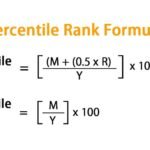
> Class rank percentage = (Your class rank ÷ Total number of students) × 100%
This formula tells you what percent of the class you are ahead of, or where you stand in comparison to your peers.
Why Class Rank Percentage Matters
Understanding your class rank percentage is important for several reasons:
- College Admissions: Many universities use class rank percentage as a key factor when deciding which students to admit. A higher class rank percentage can improve your chances, especially at competitive schools.
- Scholarship Opportunities: Some scholarships are only available to students in the top 10%, 20%, or 25% of their class.
- Academic Honors: Being in a certain class rank percentage can qualify you for honors, awards, or special programs.
- Self-Assessment: Knowing your class rank percentage helps you understand your academic strengths and weaknesses. It can motivate you to improve.
- Comparison Across Schools: Since schools have different grading systems, class rank percentage allows colleges and organizations to compare students fairly.
Many students focus only on their grades, but class rank percentage often paints a bigger picture. For example, a 3. 8 GPA might be excellent at one school but only average at another, depending on the competition.
Credit: www.educba.com
How To Calculate Class Rank Percentage
Calculating class rank percentage is straightforward if you have the right information. You need two numbers:
- Your class rank
- Total number of students in your class
Here’s how you can do it:
Step-by-step Calculation
- Find Your Class Rank: Ask your school or check your report card. The class rank is usually a number showing your position (for example, 15).
- Find Total Number of Students: This is the size of your graduating class or grade level.
- Apply the Formula:
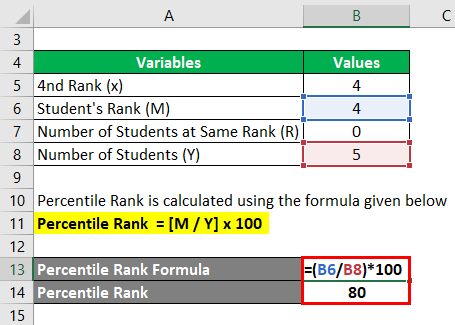
(Your class rank ÷ Total number of students) × 100 = Class rank percentage
Example Calculation
Suppose you are ranked 20th in a class of 250 students.
Class rank percentage = (20 ÷ 250) × 100 = 8%
This means you are in the top 8% of your class.
Interpreting The Percentage
- Lower percentage is better. If your percentage is 5%, you are in the top 5% of your class.
- Higher percentage means a lower rank. If your percentage is 80%, it means most students ranked above you.
What If Your School Uses Ties?
Sometimes, two or more students have the same GPA. Schools may handle ties differently:
- Average Rank Method: Both students get the same rank, and the next rank is skipped.
- Fractional Rank Method: Both get a fractional rank (for example, if two students tie for 2nd, both get rank 2.5).
Always check with your school to see how they handle ties, as it can affect your percentage.
Using A Class Rank Percentage Calculator
Many students prefer using an online calculator because it saves time and avoids mistakes. A class rank percentage calculator usually asks for two numbers: your class rank and the total number of students. It then gives you your percentage instantly.
How To Use An Online Calculator
- Go to a trusted calculator website.
- Enter your class rank (for example, 15).
- Enter the total number of students (for example, 200).
- Click “Calculate.”
- Read your percentage (for example, 7.5%).
When To Use A Calculator
- When applying to colleges that ask for your class rank percentage.
- When checking eligibility for scholarships that use rank percentage.
- When tracking your progress over time.
Manual Calculation Vs. Calculator
Manual calculation is simple, but calculators remove human error. However, calculators are only as accurate as the numbers you enter. Double-check your class rank and class size before entering them.

Credit: www.geeksforgeeks.org
Real-life Examples
Numbers make more sense when you see how they work in the real world. Here are three examples showing how class rank percentage can look in different situations.
Example 1: Large Public High School
- Class rank: 50
- Total students: 400
Class rank percentage = (50 ÷ 400) × 100 = 12.5%
You are in the top 12. 5% of your class.
Example 2: Small Private School
- Class rank: 3
- Total students: 30
Class rank percentage = (3 ÷ 30) × 100 = 10%
You are in the top 10% of your class.
Example 3: Tied Rank
- Class rank: 5 (shared with another student)
- Total students: 60
Class rank percentage = (5 ÷ 60) × 100 = 8.33%
Both students share this percentage.
Table: Comparison Of Class Rank Percentages
Here’s a quick look at how class rank percentage changes with different ranks and class sizes.
| Class Rank | Total Students | Class Rank Percentage |
|---|---|---|
| 1 | 100 | 1% |
| 10 | 100 | 10% |
| 25 | 200 | 12.5% |
| 50 | 500 | 10% |
| 100 | 500 | 20% |
Common Mistakes When Calculating Class Rank Percentage
Even though the calculation is simple, students often make mistakes. Here are the most common errors and how to avoid them.
1. Using The Wrong Class Size
Some students use the wrong number for total students. Make sure you use the number of students in your grade, not just your homeroom or section.
2. Mixing Up Rank And Percentage
Your class rank is your position (for example, 10th), while the percentage shows how you compare to everyone else. Don’t confuse the two.
3. Rounding Too Soon
If you round numbers too early, you might get the wrong percentage. Always do the division first, then round the final result to one or two decimal places.
4. Not Including Tied Ranks
If your school uses ties, make sure you use the rank your school gives you. Ties can affect the calculation.
5. Entering Incorrect Numbers
If you type the wrong numbers into a calculator, you’ll get the wrong answer. Double-check your inputs.
Table: Mistakes And How To Avoid Them
| Mistake | What Happens | How to Avoid |
|---|---|---|
| Wrong class size | Percentage is inaccurate | Check official class roster |
| Mixing up rank/percentage | Confusing results | Remember: rank is position, percentage is comparison |
| Rounding too soon | Calculation errors | Round at the end |
| Ignoring ties | Wrong percentage | Follow school’s ranking method |
| Wrong data entry | Wrong result | Double-check numbers |
How Schools Use Class Rank Percentage
Different schools have different rules for class rank percentage. Understanding these can help you avoid confusion.
Weighted Vs. Unweighted Rank
- Unweighted Rank: Counts all classes the same, no matter how hard they are.
- Weighted Rank: Gives extra points for honors, Advanced Placement (AP), or International Baccalaureate (IB) classes.
Weighted class ranks are common in the United States, especially in high schools that offer advanced courses. This system encourages students to take more challenging classes.
Reporting Class Rank Percentage
Some schools report class rank percentage directly on transcripts. Others only report the raw rank (for example, “rank 17 out of 300”). If your transcript doesn’t include the percentage, you can calculate it yourself using the method above.
Top Percentile Groups
Many honors and scholarships are based on being in the “top X%” of your class. Here’s what that looks like:
- Top 10%: Highly competitive, often eligible for top scholarships and honors.
- Top 25%: Still a strong standing, may qualify for some scholarships.
- Top 50%: Average standing.
Table: Top Percentile Cutoffs
| Percentile | Minimum Class Rank (for 100 students) |
|---|---|
| Top 10% | 10 |
| Top 25% | 25 |
| Top 50% | 50 |
| Top 75% | 75 |
| Bottom 25% | 76-100 |
Class Rank Percentage And College Admissions
Colleges and universities often ask for class rank percentage because it helps them compare students from different schools. It’s common for admissions officers to review your GPA, class rank, and class rank percentage together.
Why Colleges Care About Class Rank Percentage
- Fair Comparison: Schools have different grading scales. A student with a 3.8 GPA in one school might be in the top 5%, while in another school the same GPA could be only in the top 20%. Class rank percentage shows how you compare to your peers, not just your grades.
- Academic Rigor: Colleges sometimes use weighted class rank to see if students challenged themselves with tough classes.
- Holistic Review: Some schools, especially in the United States, use class rank percentage as part of a larger review process, including extracurricular activities and essays.
Examples Of College Policies
- Ivy League schools often look for students in the top 10% of their class.
- State universities may offer automatic admission to students in the top 7%, 10%, or 15%.
- Some colleges have stopped using class rank because not all schools report it, but it’s still common and important.
Scholarships And Honors
Many scholarships use class rank percentage as part of their eligibility requirements. For example:
- National Honor Society: Often requires students to be in the top 25% of their class.
- State Scholarships: Some states have scholarships for students in the top 10% or 20% of their class.
If you’re aiming for scholarships, always check the requirements and know your class rank percentage.

Credit: classrankcalculator.com
Class Rank Percentage Vs. Gpa
Some students wonder if class rank percentage or GPA is more important. Both matter, but in different ways.
Key Differences
- GPA shows your grades but not how you compare to others.
- Class rank percentage shows your position relative to classmates.
Which One Matters More?
- Colleges: Usually look at both. In competitive schools, class rank percentage may matter more.
- Scholarships: Many require a certain class rank percentage.
If you have a strong GPA but a low class rank percentage, it means your classmates are also high achievers. If you have a lower GPA but a high class rank percentage, you are performing better than most of your peers.
Using Class Rank Percentage To Set Goals
Knowing your class rank percentage is not just for applications. It can help you set academic goals and track your progress.
How To Use This Information
- Set a Target: Decide which class rank percentage you want to reach (for example, top 10%).
- Work Backward: Find out what grades or improvements you need to move up.
- Check Progress Each Term: Calculate your new class rank percentage after each grading period.
- Seek Help: If you want to improve, talk to teachers or counselors.
Non-obvious Insights
- Small Changes Can Move Your Rank: In smaller schools, a small improvement in grades can move you up several ranks and significantly lower your class rank percentage.
- Distribution Matters: In some classes, there’s a big gap between the top students and the rest. Understanding this can help you decide where to focus your efforts.
Tools And Resources For Calculating Class Rank Percentage
There are many tools online for calculating class rank percentage. Some popular options include:
- School Portals: Many schools provide this automatically in their student portals.
- Official Calculators: Websites like Calculator Academy offer simple tools.
- Spreadsheets: You can make your own calculator in Excel or Google Sheets.
How To Make Your Own Calculator
If you like, you can create a simple class rank percentage calculator in Excel. Here’s how:
- In cell A1, type “Class Rank.”
- In cell B1, type your rank (for example, 15).
- In cell A2, type “Total Students.”
- In cell B2, type the total number of students (for example, 200).
- In cell A3, type “Percentage.”
- In cell B3, enter the formula: `=B1/B2100`
The result in B3 is your class rank percentage.
Common Questions And Misconceptions
Many students have similar questions about class rank percentage. Let’s clear up the confusion.
“is A Lower Percentage Better?”
Yes. A lower class rank percentage means you are near the top of your class.
“can I Improve My Class Rank Percentage?”
Yes. Raising your grades can improve your class rank and lower your percentage, especially if you are close to the cutoff for the next group.
“what If My School Doesn’t Report Class Rank?”
Some schools have stopped ranking students. In this case, focus on your GPA, but you can still calculate your own percentage if you know your position.
“does Weighted Or Unweighted Rank Matter For College?”
It depends on the college. Some look at both; others focus on one. Check each school’s policy.
“do Colleges Care More About Class Rank Percentage Or Gpa?”
Both matter, but class rank percentage helps colleges compare students from different schools.
Frequently Asked Questions
What Is Class Rank Percentage?
Class rank percentage is the percentage of students in your class who have a GPA equal to or higher than yours. It shows your academic standing compared to your peers. For example, if you are ranked 10th in a class of 100, your class rank percentage is 10%.
How Do I Calculate My Class Rank Percentage If My School Has Ties?
If your school uses ties, follow the rank assigned by your school. For example, if two students are both ranked 5th, use “5” as your class rank in the calculation. Always use the official rank to avoid mistakes.
Why Do Colleges Ask For Class Rank Percentage?
Colleges use class rank percentage to compare students from different schools and backgrounds fairly. It helps them understand your academic performance in the context of your classmates.
What Should I Do If My School Doesn’t Provide Class Rank?
If your school does not provide class rank, you can still calculate your class rank percentage if you know your position and total class size. If you don’t know your rank, focus on maintaining a strong GPA and participating in extracurricular activities.
Are There Online Tools For Calculating Class Rank Percentage?
Yes. Many websites offer free class rank percentage calculators. You can also use Excel or Google Sheets to make your own. For a reliable tool, see Calculator Academy.
Understanding your class rank percentage can help you plan your academic future, apply for scholarships, and set personal goals. With the right calculation, you’ll have a clear picture of where you stand and what you need to do next. Take charge of your academic journey with this powerful tool.