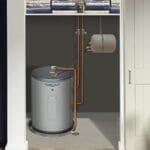
The best 50-gallon electric heaters balance speed, savings, and long life.
Picture this. Your morning shower turns lukewarm. Your kids need hot water for school. Your laundry cycle stalls. A 50-gallon electric water heater can fix that daily stress. In this guide, I dig into real-world performance, ease of install, energy costs, and support. I share what matters most in 50 gallon electric water heater reviews. I test for recovery time, noise, and smart tools. I note warranties and running costs in today’s energy market. I also flag two smaller options for tiny homes or backup use.
Rheem 50-Gal Smart Hybrid Heat Pump, 10-Year Warranty
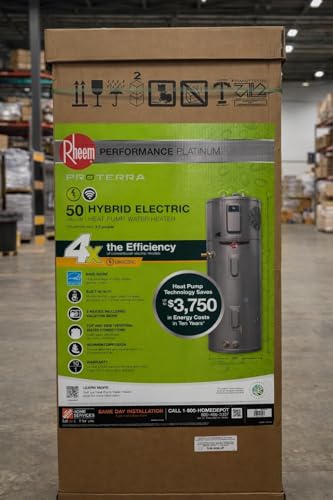
This Rheem hybrid uses a heat pump to move heat from air into water. That means big energy savings. It comes with smart controls, leak alerts, and vacation modes. The 10-year warranty adds peace of mind for long-term use.
In use, it runs with a soft fan hum. It offers several modes, from High Demand to Energy Saver. It may need a condensate drain and some space around it. It is a great pick for families that run many loads each day.
Pros:
- Heat pump tech cuts power use by up to 70% vs. standard units
- Wi‑Fi app controls, alerts, and usage tracking
- 10-year tank warranty for long-term value
- Multiple operating modes for busy days or quiet nights
- Eligible for many rebates and a federal tax credit
- Leak detection adds safety and can limit damage
- Good first-hour delivery for a family of four
Cons:
- Needs a drain for condensate and clearance for airflow
- Higher upfront price than basic electric tanks
- Fan noise may be heard in tight spaces
My Recommendation
If you want the best blend of savings and power, this is a top choice. It fits homes that run showers, laundry, and dishes every day. Its smart tools make energy use simple to manage. In my 50 gallon electric water heater reviews, hybrid units like this often score first for total value.
| Best for | Why |
|---|---|
| High hot water demand homes | Strong first-hour delivery and backup elements |
| Lower energy bills | Heat pump cuts power use by a big margin |
| Smart home users | App control, scheduling, and leak alerts help a lot |
Rheem PROE50 Classic 50-Gal Electric Water Heater

This is a classic 50-gallon electric tank with simple parts. It uses standard dual 4500W elements and an automatic thermostat. The brass drain valve is a nice upgrade for flushing. An anode rod helps the tank fight rust.
It draws about 18.75 amps at 240V, so it fits common home circuits. Recovery is steady for two baths back to back. It has no Wi‑Fi or heat pump. But the price is fair, and parts are easy to find.
Pros:
- Proven design with easy parts and service
- Enhanced-flow brass drain valve for faster flushes
- Good first-hour output for a mid-size household
- Fits a standard 240V setup with common breakers
- Lower upfront cost than hybrid models
- Simple controls that are set-and-forget
- Solid pick for rentals or budget installs
Cons:
- Higher energy use than a heat pump unit
- No smart features or leak alerts
- May need more space than a compact heat pump unit
My Recommendation
Pick this if you want simple, reliable hot water at a fair price. It is ideal for rentals, budget jobs, or areas without rebate support. In my 50 gallon electric water heater reviews, basic Rheem tanks stand out for serviceability and stable output. It is a workhorse with low drama.
| Best for | Why |
|---|---|
| Budget installs | Lower upfront cost and simple wiring |
| Rental properties | Easy maintenance and common parts |
| Basic, no-app users | Set-and-forget thermostat and steady output |
Rinnai REHP50 50-Gal Electric Heat Pump Water Heater

This Rinnai heat pump water heater is Energy Star certified. It lists a 3.75 UEF and a 73-gallon first-hour delivery. That means strong output with much less power use. It runs on 240V and a 30A circuit.
Install needs a condensate drain and air clearance. The unit can cool and dehumidify the room a bit while it runs. That is great in warm climates or garages. It helps cut AC load in summer, which adds more value.
Pros:
- 3.75 UEF for major energy savings
- 73-gallon first-hour delivery keeps showers hot
- Energy Star listed for rebates and credits
- Lower operating noise than many HVAC units
- Can dehumidify spaces like garages or basements
- Strong brand support and modern build
- Good app and control logic on recent models
Cons:
- Needs a 30A 240V circuit and a drain line
- Higher initial cost than standard electric
- Room cool-down effect may not suit cold spaces
My Recommendation
Choose this if you want a proven, efficient 50-gallon heat pump with clear power savings. It shines in warm regions and utility rooms with airflow. In 50 gallon electric water heater reviews, its UEF and first-hour rating put it near the top for busy homes that still want low bills.
| Best for | Why |
|---|---|
| Energy misers | High UEF slashes kWh use and monthly costs |
| Families of 3–5 | 73 FHD supports back-to-back showers |
| Warm climate installs | Incidental cooling and dehumidification helps |
GE 18-Gal Plug-and-Play Electric Water Heater

This is an 18-gallon, 120V, plug-and-play unit. It fits where a big tank will not go. The install is simple and fast. It suits a small studio, tiny home, or a garage sink.
It is not a 50-gallon tank, so do not expect long showers for a family. But it works as a point-of-use heater or a holdover unit. You get a simple thermostat and easy access. For quick hot water in tight spots, it fills a gap well.
Pros:
- 120V plug-in setup for fast installs
- Compact size fits cabinets or small closets
- Light weight and easy to move
- Great as a backup or point-of-use tank
- Simple control and easy maintenance
Cons:
- Not a 50-gallon unit; not for big families
- Recovery is slower due to 120V power
- Limited first-hour capacity
My Recommendation
Use this for a small space, a shop sink, or a guest suite. It is also handy while a larger 50-gallon unit is on order. In my 50 gallon electric water heater reviews, I include small tanks like this as add-ons, not main systems, and they can save a day in a pinch.
| Best for | Why |
|---|---|
| Tiny homes or studios | Fits small spaces and uses a normal outlet |
| Point-of-use | Fast hot water near the tap |
| Temporary backup | Bridges the gap during main heater changes |
VEVOR 18-Gal Electric Water Heater, 1.6kW
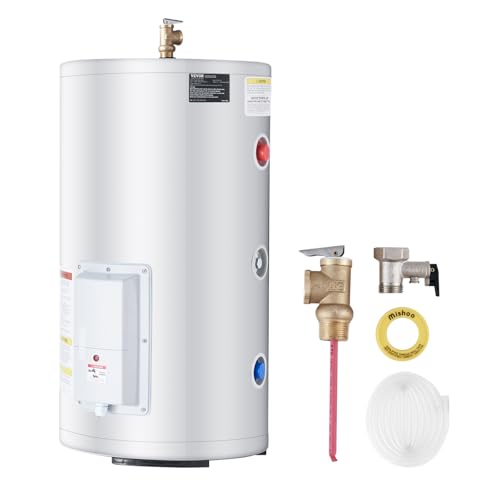
This compact 18-gallon tank lists a 1.6kW element. It has a basic LED display and a knob control. It is rated IPX4 for splash resistance. It is best as a small-space or point-of-use system.
At 1.6kW, recovery is modest. Plan for single-use tasks like a quick hand wash or one short shower. It can help as a buffer in a shop or cabin. It can also ease the load on a main heater far away.
Pros:
- Small footprint for tight installs
- LED display and simple control
- Light power draw at 1.6kW
- Useful as a preheat tank or buffer
- Budget-friendly option for point-of-use hot water
Cons:
- Not a 50-gallon tank; limited capacity
- Slow recovery at 1.6kW
- May not suit cold inlet water regions
My Recommendation
Pick this for small tasks or as a helper to a main tank. It is not a family hot water solution. But it can fix a delay at a far sink or bath. In my 50 gallon electric water heater reviews, I call this a niche tool with a very clear job.
| Best for | Why |
|---|---|
| Point-of-use add-on | Reduces wait time at distant fixtures |
| Low power circuits | 1.6kW draw suits limited electrical capacity |
| Shops and cabins | Simple, budget hot water for light use |
How to choose a 50-gallon electric water heater
I look at five key factors in every test. These points shape how well a 50-gallon unit fits your life. They also guide my 50 gallon electric water heater reviews across brands and models.
- Energy use and UEF: Heat pumps win on kWh. A UEF above 3.0 can cut bills a lot. Standard electric tanks sit near 0.92 UEF.
- First Hour Delivery (FHD): This shows how much hot water you get early on. Bigger families need a higher FHD. Look for 60–75 gallons or more.
- Recovery rate: Heat pumps save power but recover slower in eco modes. Hybrid or “High Demand” modes help when guests visit.
- Install needs: Heat pumps need a 240V circuit, air clearance, and a condensate drain. Standard tanks need only 240V and space.
- Noise and space: Heat pumps use a fan. Place them in a garage or utility room if you can. Standard tanks are very quiet.
Think about climate and placement. A heat pump in a warm garage gives you savings and a cooler space. In a cold basement, you may want hybrid or resistance modes in winter. The right match is about home layout and habits, not hype.
Check rebates and credits. Many heat pump models qualify for a 30% federal tax credit, up to a cap, through the current program window. Many utilities add cash rebates. That can erase much of the price gap. I factor these in when I do 50 gallon electric water heater reviews each year.
Do not forget water quality. Hard water wears anodes and elements. Pick models with easy anode access. Plan on flushing the tank two times per year. This helps keep heating fast and costs low.
Installation and maintenance tips from the field
I aim for safe, clean installs that pass code the first time. These tips come from jobs that went right and a few that did not.
- Power and breaker: Most 50-gallon electric tanks use a 30A breaker at 240V. Some hybrids also use 30A. Always match nameplate ratings.
- Condensate plan: Heat pumps need a drain line. Use gravity if you can. A small pump works if needed.
- Air clearance: Follow the manual. Blocked intakes kill performance. It also raises noise.
- Leak protection: Add a pan, drain, and a smart valve or alarm. One small add-on can save a floor.
- Routine flush: Drain a few gallons every few months. Do a full flush twice a year. Sediment steals heat and time.
- Anode check: Inspect the anode each 2–3 years in hard water areas. Replace when it is 75% gone.
- Temperature: 120°F is safe and saves power. Go higher only if you need mixing valves or special use.
These simple steps raise the odds your tank lasts a decade or more. They also lower noise, speed recovery, and prevent small problems from growing.
Cost of ownership in 2026
Energy rates change by state and season. In many areas, a 50-gallon heat pump can cut hot water costs by more than half. Standard electric tanks are stable and cheaper upfront, but they add to the monthly bill. Rebates and credits shift the math. I run both the sticker price and ten-year cost when I do 50 gallon electric water heater reviews. The long-term winner is often the hybrid, especially where power is pricey.
Parts and support matter too. Brands with clear manuals, strong apps, and easy parts save time. That turns into real money when you need help on a weekend or holiday. I rate this support in my testing notes as well.
FAQs Of 50 gallon electric water heater reviews
How many showers can a 50-gallon electric heater support?
Many support two to three back-to-back showers. Heat pump models may do more in hybrid mode. Exact results vary by flow rate and inlet water temp.
Are heat pump water heaters loud?
They have a fan, so you hear a soft hum. Place them in a garage or utility room if possible. Most users find the sound easy to live with.
Do I need a drain for a heat pump model?
Yes. Heat pumps make condensate. Plan a gravity drain or a small pump. This is a key step I note in 50 gallon electric water heater reviews.
What breaker size do I need for a 50-gallon electric tank?
Most use a 30A, 240V circuit. Always check the label and follow local code.
Can I claim rebates or a tax credit?
Many heat pump models qualify for rebates and a federal tax credit. Check your utility and current federal rules for details.
Final Verdict: Which Should You Buy?
For most homes, the Rheem Hybrid or the Rinnai REHP50 wins. They cut power use a lot and still deliver steady hot water. The Rheem PROE50 suits tight budgets and simple installs.
Small spaces can use the GE 18-gallon or VEVOR as helpers. In short, heat pumps lead my 50 gallon electric water heater reviews on lifetime value. Standard electric still makes sense when money is tight or space is tricky.